
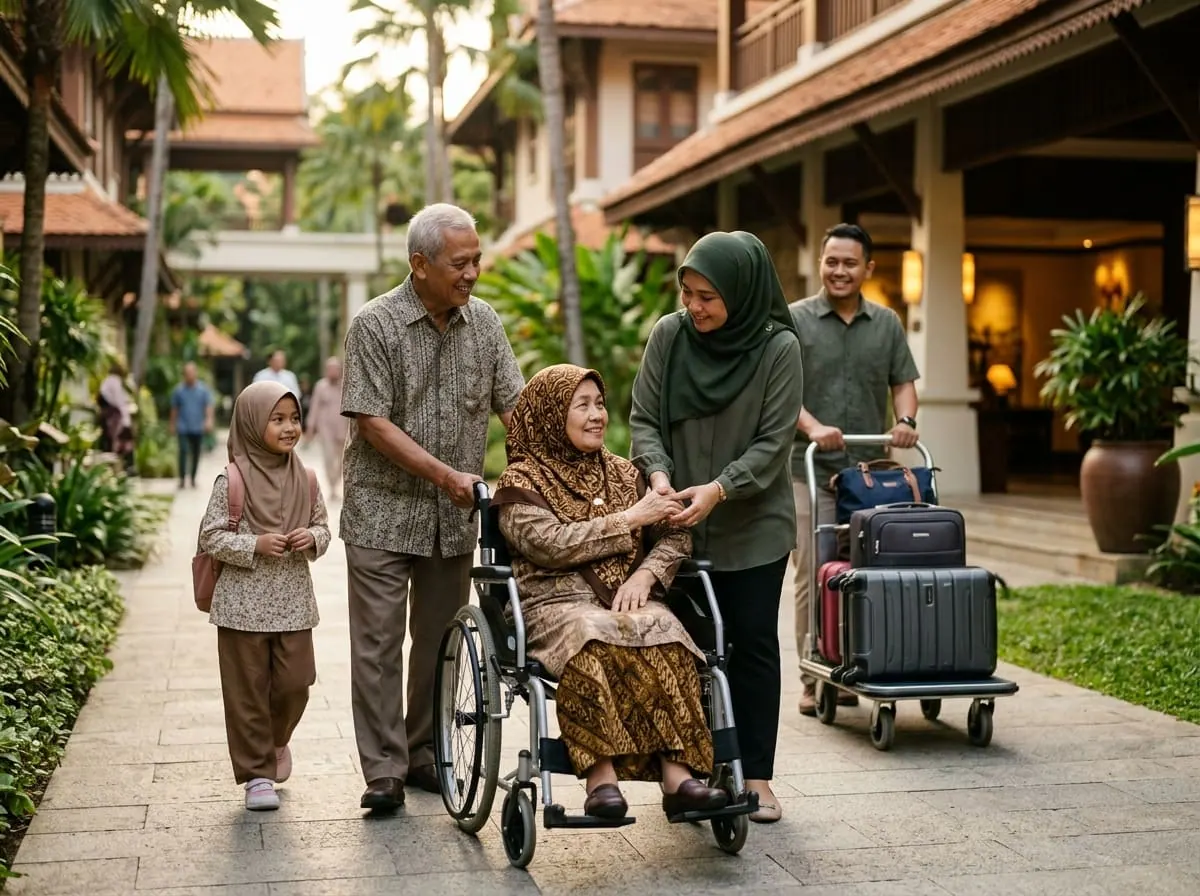
Support for families who are not only planning a trip, but accompanying someone they care about.
Care-related travel often involves companions who carry many practical responsibilities: documents, luggage, meals, transport, waiting time, children, elderly parents, and changing schedules.
This support helps the companion side of the journey feel more organized, especially when several family members travel together.
The focus is simple and practical: where to stay, how to move, when to rest, how to handle waiting time, and how to keep the family rhythm manageable.
Suggested companion support flow
Understand the family situation
Clarify who is traveling, who needs support, who is the main companion, and what practical concerns the family already has.
Plan stay and movement around the companion
Choose a stay area and daily flow that works not only for the traveler, but also for the people accompanying them.
Prepare waiting-time and meal flow
Plan simple food stops, rest points, errands, and movement options so companions are not left confused during long waiting periods.
Keep the schedule flexible
Allow buffer time for schedule changes, fatigue, family needs, or additional errands.
Best for
- Families accompanying elderly parents
- Spouses traveling together for appointment-related visits
- Families with children joining the trip
- Companions who need practical movement and rest planning
Planning support
- Family travel flow planning
- Companion comfort and waiting-time planning
- Food, errands, and practical daily movement
- Flexible transport timing
- Simple rest and buffer day planning
Important notes
- This is companion and travel support, not nursing or medical assistance.
- Any physical care, medical supervision, or treatment support must be handled by qualified professionals.
- Family roles, mobility needs, and appointment schedules should be shared clearly before the travel plan is finalized.
