Begin with the travel side, not the medical side
A care-related visit to Melaka is often planned with a different feeling from a normal holiday. The family may be thinking about appointments, documents, elderly parents, children, luggage, waiting time, and what happens after the visit. That changes the rhythm of the trip.
The first thing to make clear is the boundary. Travel planning is not medical planning. The doctor, clinic, hospital, or licensed health professional must handle medical advice, diagnosis, appointment instructions, treatment decisions, medical documents, and emergency medical guidance.
The travel side is still important. A family can have the right appointment but still feel exhausted because the arrival day is too tight, the hotel is inconvenient, the companion is unprepared, or the route leaves no buffer. This article focuses only on that travel side.
Confirm the appointment directly with the provider
Before arranging the route, confirm the appointment directly with the hospital, clinic, doctor, or official patient service channel. Do not rely only on forwarded messages, old screenshots, or advice from someone who travelled months ago.
Ask what time you should arrive, what documents are needed, whether fasting or special preparation is required, and whether the first visit may take longer than expected. Some visits involve registration, waiting, payment steps, tests, consultation, or follow-up scheduling. The travel plan should leave room for that.
If the traveler is elderly, has limited mobility, or needs a wheelchair, confirm the practical details before departure. Small things matter here: distance from drop-off point, waiting area, elevator access, and whether one companion can stay close during the process.
Check entry documents before buying the final ticket
Entry rules should be checked from official sources close to the travel date. Malaysia has official immigration pages for arrival requirements, visa information, and the Malaysia Digital Arrival Card. Rules can change, and different nationalities may have different requirements.
For Indonesian families, the trip may feel familiar because Malaysia is close and Melaka is a common care-related destination. Familiar does not mean automatic. Passport validity, arrival card rules, visa conditions for longer stays, return tickets, and supporting travel details still need to be reviewed.
Do not leave document checks until the night before travel. A care-related trip already carries enough pressure. Document issues at the port, airport, or immigration counter can turn a manageable trip into a very stressful one.
Choose the arrival route with buffer time
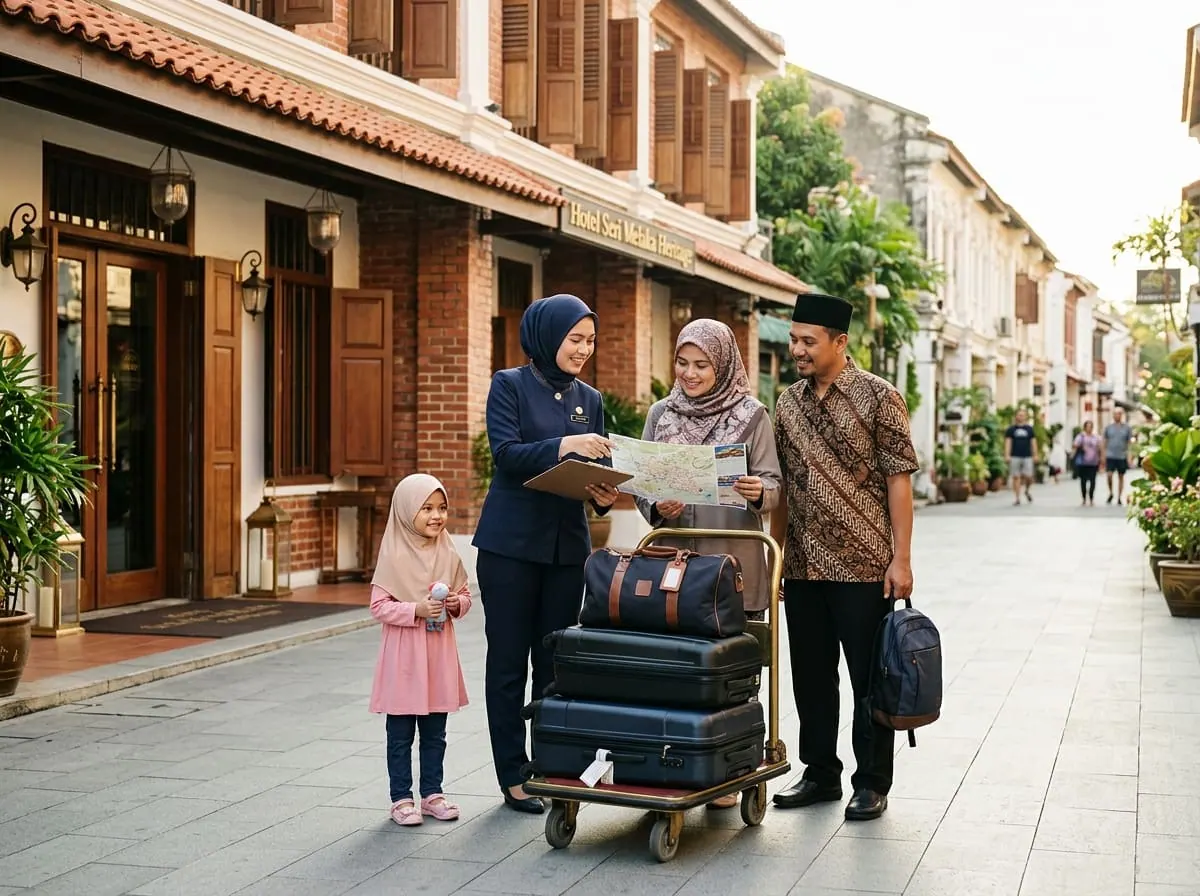
Some travelers reach Melaka through Kuala Lumpur by flight and road transfer. Others may travel through a ferry route, depending on their starting point and available services. Each route has its own risk: traffic, ferry timing, immigration queues, luggage, weather, or late arrival.
For care-related travel, it is usually better to arrive earlier than to arrive with no margin. If the appointment is in the morning, arriving in Melaka late the night before may be too tight, especially for elderly travelers or families with children.
A calmer plan often gives the first day to arrival, check-in, food, rest, and simple orientation. Appointment-related movement can begin the next day when everyone is less tired. It may feel slower, but it is often safer for the group.
Pick the stay area carefully
The best hotel for this kind of trip is not always the most stylish one. It is the place that makes daily movement easier. Distance to the appointment area, vehicle access, lift access, food options, pharmacy access, and room comfort can matter more than a long list of facilities.
Families should think about who is travelling. A young couple can handle movement differently from a family accompanying an elderly parent. A group with children may need more room space, easier meals, and a calmer evening plan.
If follow-up visits are possible, avoid moving hotels too quickly. Changing hotels may look simple, but it adds packing, waiting, check-in time, transport coordination, and fatigue. For care-related travel, one practical base can be better than a route that keeps changing.
Prepare the companion role
The companion is not just another passenger. The companion may need to hold documents, manage communication, help with meals, watch luggage, arrange transport, remember instructions, and keep the traveler calm.
Before departure, decide who handles what. One person can manage documents and appointment timing. Another can handle children, food, or luggage. If only one companion is travelling, the route should be even lighter.
Keep important documents in a simple folder or pouch. Passport, appointment notes, travel booking, insurance information, medical documents provided by the healthcare provider, and emergency contacts should be easy to reach. Do not pack them deep inside a large suitcase.
Leave space after the appointment
Many families plan carefully before the appointment but forget the hours after it. The traveler may feel tired. The companion may need to buy medicine, arrange another visit, ask for documents, find food, or simply sit quietly for a while.
Avoid putting a long sightseeing plan after an appointment-related day. A short meal, rest at the hotel, or a gentle nearby stop may be enough. If the visit goes faster than expected, the family can decide later. If it takes longer, the plan will not collapse.
This is where buffer time becomes valuable. It protects the day from becoming too fragile.
Know what to do in urgent situations
For urgent or emergency situations in Malaysia, families should contact local emergency services or the relevant medical facility directly. Malaysia uses 999 as an emergency number. Keep that number visible in the travel notes, together with the hospital or clinic contact.
A travel planner, driver, hotel, or tour contact cannot replace emergency services. This should be understood before travel. In a serious situation, the priority is direct medical and emergency response, not itinerary management.
For non-emergency concerns, communicate through the official channel of the healthcare provider. Keep messages clear, save appointment details, and avoid relying only on verbal instructions.
What Calvoya can help with
Calvoya can help shape the travel side: arrival flow, hotel area thinking, private movement, companion comfort, buffer days, Kuala Lumpur extension, and a route that does not overload the family.
Calvoya cannot give medical advice, choose treatment, guarantee medical outcomes, replace doctor communication, or handle emergency decisions. That boundary keeps the service honest.
A good care-related travel plan should feel calm, practical, and respectful. It should help the family arrive with fewer loose ends, not make promises beyond travel support.