Overview
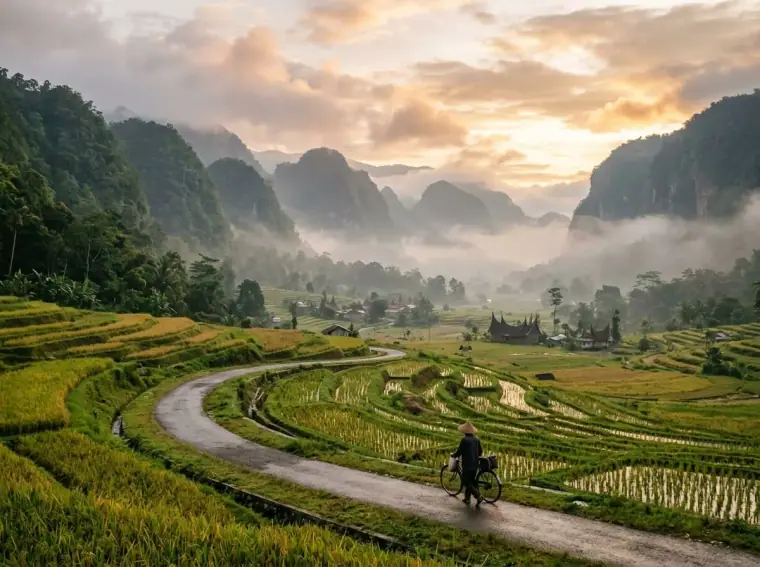
Bukittinggi is the highland heart of West Sumatra. It has cooler air, canyon views, rice fields, markets, Minangkabau food, and a compact town centre that works well as a base for first-time visitors.
Many travelers land in Padang, spend a night by the coast, then continue inland to Bukittinggi. That route makes sense. Bukittinggi gives you easier access to Sianok Canyon, Harau Valley, Lake Maninjau, Koto Gadang, and Minangkabau cultural areas without changing hotels every night.
This guide is written for travelers who want a clear, practical picture of Bukittinggi. It is not trying to turn the town into a polished resort destination. Bukittinggi is a real highland town: busy around the clock tower, quieter near canyon edges, lively in the markets, and scenic once you drive out toward villages and rice fields.
If you are planning a private West Sumatra journey, Bukittinggi is usually one of the most useful places to stay.
Why Bukittinggi belongs on your West Sumatra trip
Bukittinggi sits in the Minangkabau highlands, a few hours inland from Padang. The town is cooler than the coast and easier to explore on foot than many larger Indonesian cities.
It belongs on your West Sumatra trip for several reasons.
First, the main sights are close together. Jam Gadang, the main square, Panorama Park, Sianok Canyon viewpoints, the Japanese tunnel, Fort de Kock, markets, and central food streets can fit into a relaxed town day.
Second, the surrounding landscapes are beautiful. You can reach canyon roads, rice fields, villages, Lake Maninjau viewpoints, and Koto Gadang without moving your luggage each day.
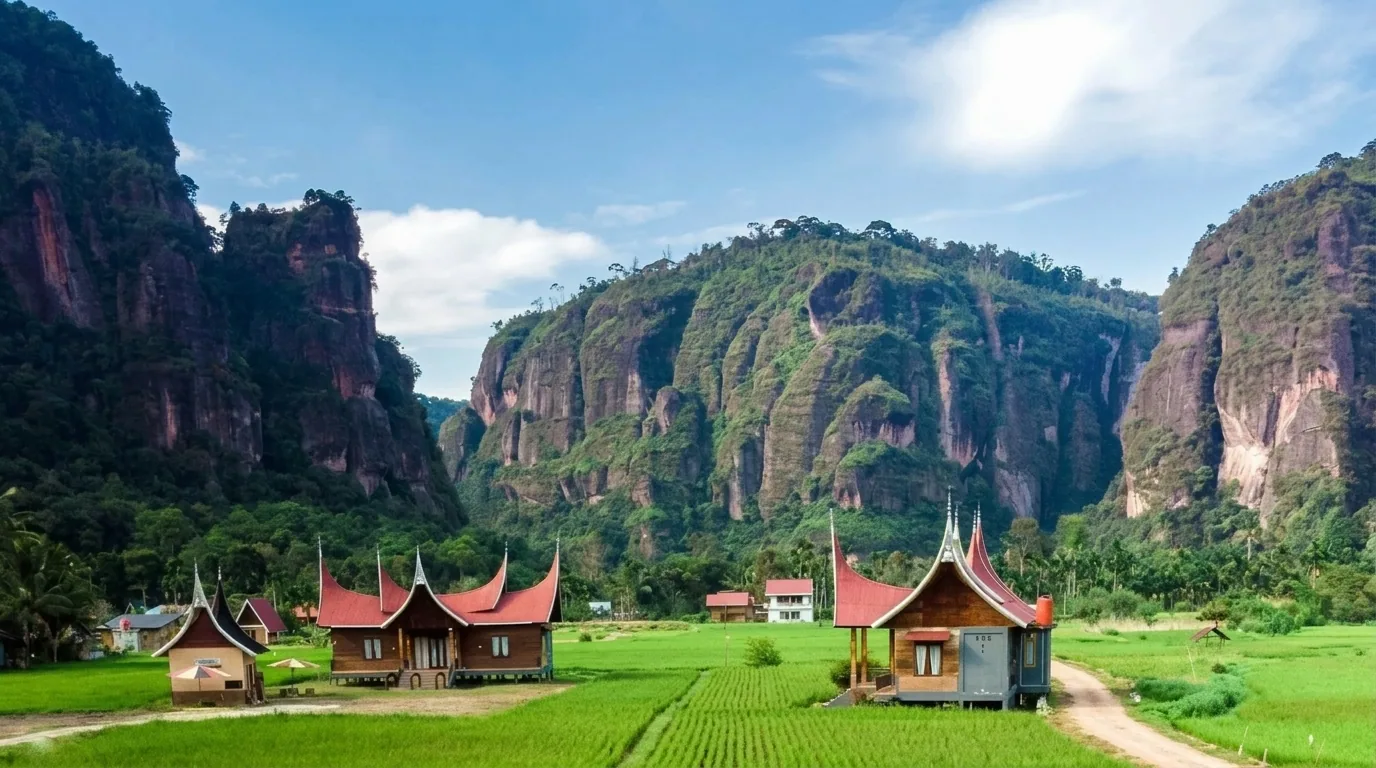
Third, Bukittinggi gives useful cultural context. The town sits inside the Minangkabau highland world, so it connects naturally with Rumah Gadang architecture, local markets, nasi kapau, village roads, and day trips toward Pagaruyung Palace or other cultural sites.
Bukittinggi is not only a place to sleep between Padang and other attractions. It is one of the best bases for understanding West Sumatra at a comfortable pace.
Getting oriented in Bukittinggi
Bukittinggi is compact, but it has hills, stairs, market lanes, and different levels of town. You can walk between many central sights, but a short ride or private driver helps when the weather changes or when you want to go beyond the centre.
Jam Gadang and the town centre
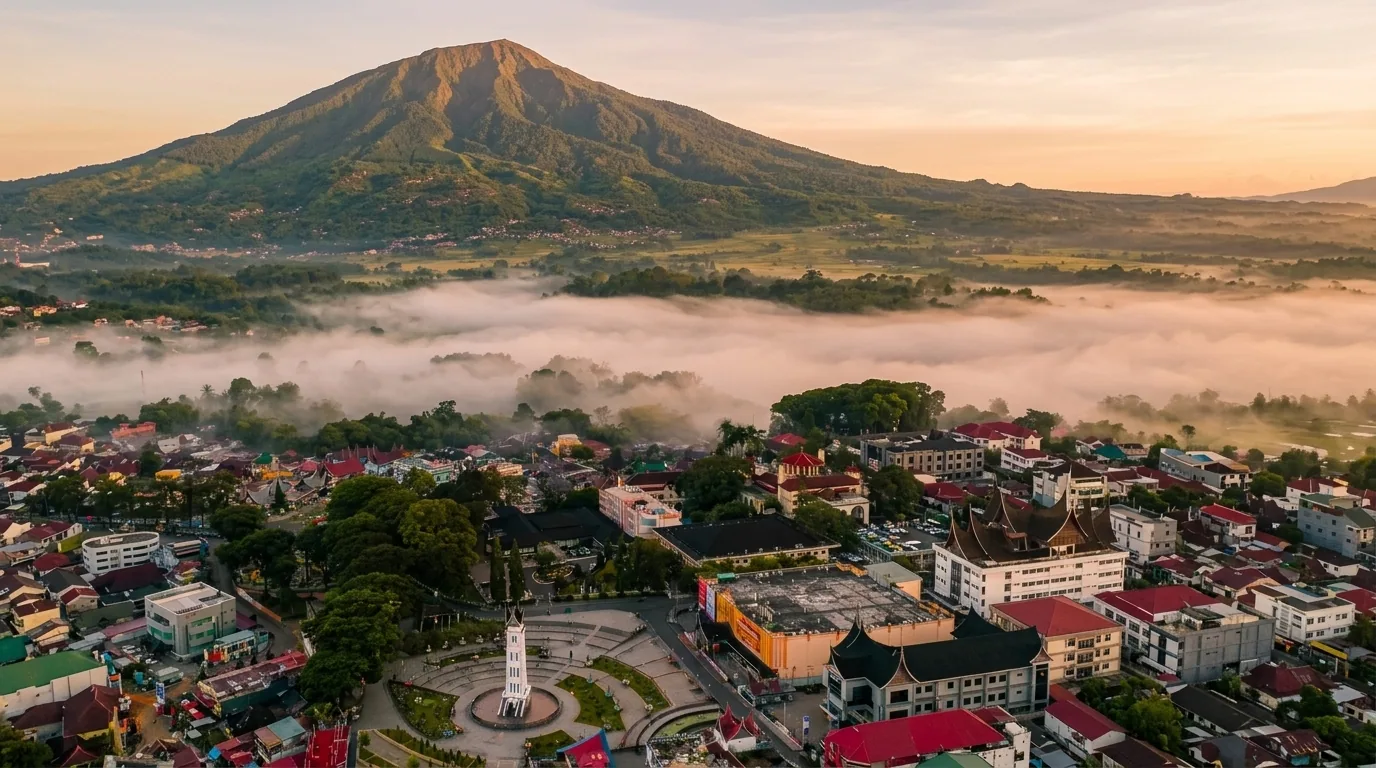
Jam Gadang is the visual and social centre of Bukittinggi. The clock tower and surrounding square are easy landmarks for meeting a driver, beginning a walk, or finding evening food.
During the day, the area works as a reference point. In the evening, it becomes more active with families, students, vendors, and visitors.
Many hotels and guesthouses are near this area, which makes it practical for first-time travelers. If you stay nearby, you can walk to markets, food stalls, Panorama Park, and several central sights without planning too much transport.
Panorama Park and Sianok Canyon
Panorama Park sits on the edge of Sianok Canyon. This is the easiest place to see the canyon without arranging a longer hike.
From the viewpoints, you can see steep cliffs, green valley sections, rice fields, and the Sianok River below. The view can shift quickly with mist, rain, sun, and cloud. Morning is often a good time to visit, but late afternoon can also be beautiful if the weather is clear.
The Japanese tunnel is usually visited from this same area, so Panorama Park can become a half-day stop if you include the tunnel and take your time.
Fort de Kock and Limpapeh Bridge
Fort de Kock sits on another hill and gives a different perspective on the town. The fort area is not a huge site, but it pairs well with Limpapeh Bridge and a walk through nearby streets.
Limpapeh Bridge uses Minangkabau-inspired rooflines and crosses above a main road. It is a simple stop, but it adds variety to a city walking route.
Together, Fort de Kock and Limpapeh Bridge fit well after Jam Gadang or before a market visit.
Markets and everyday streets
Bukittinggi’s markets are one of the best ways to see the town beyond its viewpoints. Pasar Atas and Pasar Bawah are busy with fruit, vegetables, spices, textiles, snacks, household items, and local movement.
The market areas can feel crowded and uneven, but that is part of the experience. This is where Bukittinggi feels less like a scenic stop and more like a working highland town.
Take your time, keep valuables secure, and ask before photographing people closely. A guide can help explain ingredients, snacks, and local food habits.
Best time to visit Bukittinggi
Bukittinggi’s highland climate is one of its main strengths. The air is generally cooler than Padang, especially in the evening. This makes walking and sightseeing more comfortable.
Rain can happen in many months, so the best way to plan is to keep outdoor activities flexible. Prioritize canyon views, countryside walks, and viewpoints when the weather is clearer. Shift toward markets, food, cafés, museums, or shorter town walks when rain comes.
For photography, early morning and late afternoon are usually better than midday. The light is softer, the town feels more alive, and the canyon may look more atmospheric.
A private itinerary works well here because you can adjust the day around weather, visibility, and energy level.
Essential sights in Bukittinggi
Bukittinggi does not need to be rushed. The main sights are close enough to see in one full day, but they feel better when you leave space for snacks, markets, and short pauses.
Jam Gadang and the main square
Jam Gadang is the most recognizable landmark in Bukittinggi. It is not only a photo stop. The square around it gives you a feel for local life, especially in the evening.
Visit once during the day to get your bearings, then return after dinner or before sunset if you are staying nearby. The mood changes as vendors appear and people gather.
Panorama Park and Sianok Canyon viewpoints
Panorama Park offers the classic view over Sianok Canyon. It is easy to access and does not require serious hiking.
This stop is useful for travelers with limited time, families, and older visitors because it gives strong scenery without a demanding route. If the view is cloudy, wait a little if your schedule allows. The canyon can open and close with weather.
Japanese tunnel
The Japanese tunnel, or Lobang Jepang, is a World War II tunnel complex near Panorama Park. It adds historical weight to the canyon visit.
The site includes stairs and enclosed spaces, so it may not suit everyone. If you are uncomfortable underground, you can skip it and spend more time at the canyon viewpoints or markets.
A guide helps here because the tunnel is more meaningful with explanation.
Fort de Kock and Limpapeh Bridge
Fort de Kock and Limpapeh Bridge add another compact walking route in town. They are useful if you want a lighter sightseeing stop after the market or before dinner.
This area is not usually the emotional highlight of Bukittinggi, but it rounds out the town story: colonial history, public space, Minangkabau roof forms, and hilltop views.
Pasar Atas and Pasar Bawah
Markets are where Bukittinggi becomes memorable in a quieter way. You can see spices, snacks, fabrics, produce, small shops, and everyday bargaining.
This is a good place to try local snacks or ask your guide about ingredients used in Minangkabau cooking.
Do not rush the market. Walk slowly, observe, and let the details build the experience.
Canyons, rice fields, and highland views
The landscapes around Bukittinggi are one of the main reasons to stay here for more than one night.
Experiencing Sianok Canyon from below
Seeing Sianok Canyon from Panorama Park is easy. Experiencing it from below is different.
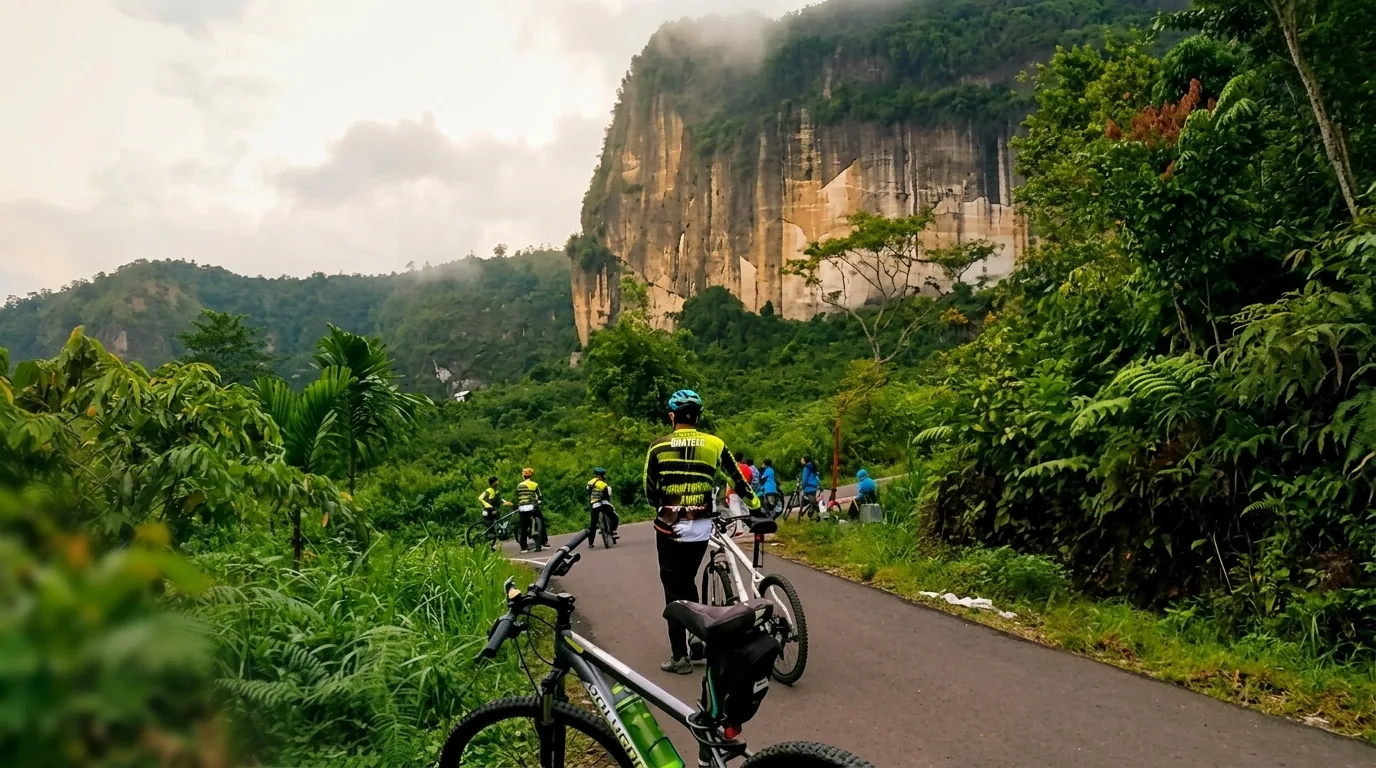
Roads and paths can take you closer to the valley floor, rice fields, and villages near the canyon. This is where the scale of the cliffs feels more physical. You hear the river, see farming areas, and move through a landscape that is not only a viewpoint.
Treat this as light to moderate walking, depending on the route. After rain, some paths can become muddy or slippery. A local guide is recommended if you want to walk beyond the simplest areas.
Short countryside walks near town
You do not need a full-day trek to enjoy Bukittinggi’s rural side. Short countryside walks can include rice fields, village lanes, coffee stops, small bridges, and open views toward the hills.
These walks suit travelers who want nature and local life without a difficult hike. They can also be adjusted for families or older travelers.
This is where a private guide can be valuable. The best route may depend on recent rain, road access, farming activity, and how far you want to walk.
Bukittinggi as a base for day trips
Bukittinggi works very well as a base. Instead of moving hotels every night, you can stay in town and make day trips into the surrounding region.
Lake Maninjau
Lake Maninjau is a crater lake west of Bukittinggi. Many travelers visit it as a day trip from town.
A typical visit focuses on hilltop viewpoints, the famous Kelok 44 road, village views, and sometimes the lakeshore. The road down toward the lake is scenic but twisty, so travelers prone to motion sickness may prefer a lighter version focused on viewpoints.
Lake Maninjau is best enjoyed without rushing. Cloud and rain can change the view, so keep the day flexible.
Koto Gadang and the Great Wall of Koto Gadang
Koto Gadang is a village across Sianok Canyon, known for silverwork and highland views. The Great Wall of Koto Gadang is a stepped walking route with canyon and valley scenery.
Parts of the walk can be steep or slippery, especially after rain. It is better to choose a section that matches your fitness rather than forcing the whole route.
A guided visit can combine village context, short walking, silverwork, and canyon views in one manageable outing.
Minangkabau cultural circuit
Bukittinggi is also a practical starting point for cultural routes toward Pagaruyung Palace, traditional villages, mosques, and Rumah Gadang architecture.
This type of day trip is useful if you want to understand Minangkabau identity beyond scenery. It can work well for families, culture-focused travelers, Muslim-friendly travel, and photographers.
A dedicated cultural circuit deserves its own full article, but as a day trip from Bukittinggi, it fits naturally into a three- or four-night stay.
Eating and evening atmosphere in Bukittinggi
Bukittinggi has a relaxed highland evening atmosphere. It is active but not overwhelming.
What to eat
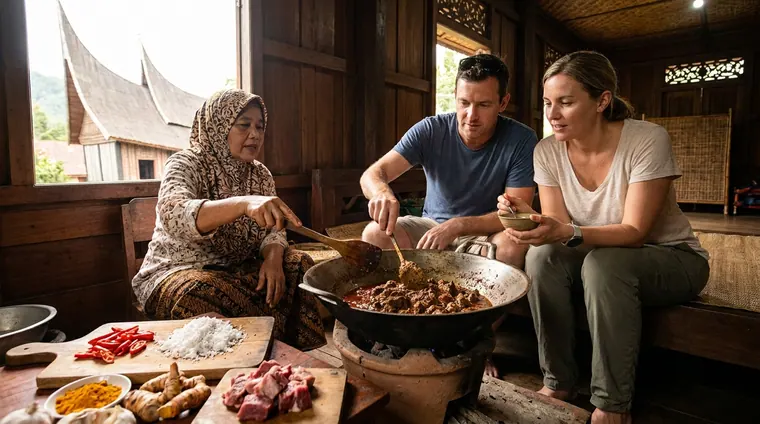
Nasi kapau is one of the main dishes to try around Bukittinggi. It is often associated with this part of West Sumatra and has rich side dishes, vegetables, curries, and bold flavours.
You will also find rendang, dendeng batokok, gulai, fried chicken, gorengan, market snacks, and sweets. The food overlaps with Padang, but the setting feels different. Eating in a smaller highland town, near the markets or around Jam Gadang, gives the meal another mood.
If you are sensitive to chili, ask your guide or restaurant staff for milder options. Minangkabau food is often spicy, but not every dish has the same level of heat.
Evening around Jam Gadang
The Jam Gadang area becomes lively at night. Food carts, families, visitors, and young people gather around the square and nearby streets.
It is a good place for a casual walk after dinner. If you prefer quiet, stay a little away from the central square and come in for evening activity when you want it.
Practical tips for using Bukittinggi as a base
How long to stay
Two to four nights works well for most first-time visitors.
Two nights gives you one full day for the town: Jam Gadang, Panorama Park, Sianok Canyon viewpoints, the Japanese tunnel, Fort de Kock, markets, and food.
Three nights lets you add one countryside or lake day trip without rushing.
Four nights gives you better pacing if you want Sianok Canyon from below, Koto Gadang, Lake Maninjau, and a cultural circuit.
If your West Sumatra trip is only five days, three nights in Bukittinggi is a strong choice. If your trip is seven to ten days, you can slow down and stay longer.
Getting around town
Many central sights are walkable, but Bukittinggi has hills, stairs, and uneven sidewalks. Comfortable shoes help.
For short distances, you can use local transport, ride-hailing where available, motorcycle taxis, or a private driver. If it rains, do not force long walks through busy streets.
Getting around the wider region
For Lake Maninjau, Harau Valley, Koto Gadang, Pagaruyung Palace, and countryside routes, a private car and driver is usually the most comfortable option.
A driver handles roads, timing, weather adjustments, and scenic stops. A local guide is useful for canyon walks, village routes, markets, and cultural explanation.
A driver is not always the same as a guide, so clarify what is included before booking.
Safety and comfort
Bukittinggi is generally manageable for travelers using normal caution.
Keep your phone and valuables secure in markets and crowded areas. Use busier streets after dark. Bring a light rain layer, because weather can change quickly. Use decent footwear if you plan to walk in canyon areas, markets, or village paths.
No special precautions are usually needed beyond common travel sense.
Where to stay in Bukittinggi
Choosing the right area affects how easy your stay feels.
Near Jam Gadang and the town centre
This is the most practical area for first-time visitors. You can walk to the square, food stalls, markets, and several central sights.
The downside is that it can be noisier, especially in the evening or on weekends. Choose this area if convenience matters most.
Edges of town with views
Staying slightly outside the centre can give you quieter surroundings and better views toward the hills or canyon areas.
This works well for couples, slower travelers, photographers, and visitors who prefer calm evenings. You may need a driver for meals or town walks, though.
Guesthouses, hotels, and homestays
Bukittinggi offers mid-range hotels, simple guesthouses, and smaller homestays. The best choice depends on comfort expectations, location, and how much time you plan to spend outside town.
For private tours, it is better to choose accommodation that supports your route rather than only picking the cheapest room.
Sample 24-hour Bukittinggi plan
If you have one full day in Bukittinggi, keep it focused.
Start at Jam Gadang and the main square. Continue to Panorama Park for Sianok Canyon views. Visit the Japanese tunnel if you are comfortable with enclosed spaces and stairs.
Have lunch in town, then visit Fort de Kock and Limpapeh Bridge. Later, spend time in Pasar Atas or Pasar Bawah for snacks, textiles, and local life.
End the day around Jam Gadang or a nearby food street.
Sample 48-hour Bukittinggi plan
With two full days, the experience becomes better.
On the first day, follow the town route: Jam Gadang, Panorama Park, Japanese tunnel, Fort de Kock, Limpapeh Bridge, markets, and evening food.
On the second day, choose a countryside route. You can walk part of Sianok Canyon with a guide, visit Koto Gadang and the Great Wall of Koto Gadang, or take a relaxed Lake Maninjau viewpoint trip.
This gives you both the town and the surrounding landscape without turning the stay into a rushed checklist.
What to avoid
Try to avoid these common mistakes:
- Treating Bukittinggi as only a quick overnight stop
- Visiting Sianok Canyon only from one viewpoint and leaving immediately
- Walking canyon routes without checking weather or trail condition
- Assuming all central sights are flat and easy
- Staying far from town without arranging transport
- Packing Lake Maninjau, Koto Gadang, Harau Valley, and a cultural circuit into one day
- Forgetting that rain can affect views and walking comfort
- Treating a driver as a full cultural guide without confirming
- Missing the markets and only visiting formal landmarks
Bukittinggi rewards travelers who give it time. A slower route often shows more than a crowded one.
Suggested private Bukittinggi experience
A private Bukittinggi experience can be built around this structure.
Bukittinggi city highlights
Jam Gadang, Panorama Park, Sianok Canyon viewpoints, Japanese tunnel, Fort de Kock, Limpapeh Bridge, market walk, and evening food.
Sianok Canyon and Koto Gadang
Guided light walk near the canyon, Koto Gadang village, selected Great Wall sections, silverwork, and countryside views.
Lake Maninjau day trip
Hilltop viewpoints, Kelok 44 photo stops, optional lakeside lunch, village roads, and return to Bukittinggi.
Minangkabau culture day
Pagaruyung Palace, traditional villages, Rumah Gadang architecture, local food, and cultural explanation.
How Calvoya can help
Calvoya can help turn Bukittinggi into a comfortable base for your West Sumatra journey.
We can help you:
- Arrange private transport from Padang to Bukittinggi
- Choose a hotel or guesthouse based on your travel style
- Plan Bukittinggi city highlights at a realistic pace
- Add local guides for Sianok Canyon, Koto Gadang, or market walks
- Build day trips to Lake Maninjau, Harau Valley, or cultural sites
- Adjust the route for families, couples, older travelers, or photographers
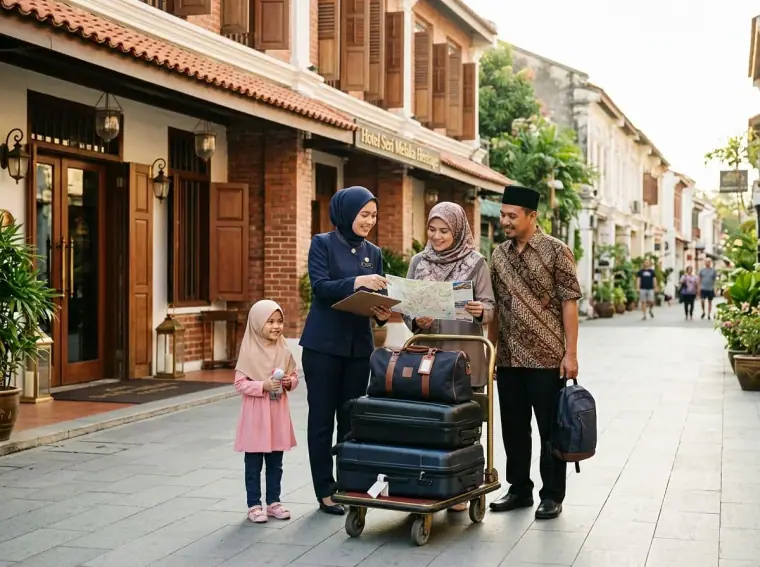
- Include halal meals and prayer stops for Muslim-friendly travel
- Keep the plan flexible around rain, road timing, and energy level
If you are planning a West Sumatra private journey, share your dates, group size, arrival point, departure point, and interests. We can shape Bukittinggi into the right highland base for your route.
FAQ
How many nights should I spend in Bukittinggi?
Two to four nights works well for most first-time visitors. Two nights gives you one full town day. Three or four nights allow day trips to Lake Maninjau, Koto Gadang, Harau Valley, or Minangkabau cultural sites.
Is Bukittinggi cooler than Padang?
Yes. Bukittinggi is in the highlands, so the air is usually cooler than coastal Padang, especially in the evening.
Can I walk between Jam Gadang, Panorama Park, and Fort de Kock?
Yes, many central sights are walkable, but expect hills, stairs, uneven paths, and possible rain. Short rides are useful if you are tired or travelling with older family members.
Do I need a guide for Sianok Canyon?
You can visit Panorama Park viewpoints on your own. For walks below the canyon, Koto Gadang routes, or the Great Wall of Koto Gadang, a local guide is recommended for safety and context.
Is Bukittinggi a good base for Lake Maninjau?
Yes. Lake Maninjau is commonly visited as a day trip from Bukittinggi, usually with hilltop viewpoints, parts of Kelok 44, and optional lakeside stops.
Is Bukittinggi suitable for families?
Yes, with realistic pacing. Keep walks short, avoid slippery canyon routes after rain, use a private vehicle for day trips, and choose accommodation close to the centre or with easy transport.
What food should I try in Bukittinggi?
Try nasi kapau, rendang, dendeng batokok, gulai, market snacks, and local sweets. The market areas and central food streets are good places to begin.
Should I stay in Bukittinggi or Padang?
Padang is better for arrival, departure, coast, food, and Mentawai logistics. Bukittinggi is better for highland scenery, canyons, rice fields, markets, and day trips into Minangkabau countryside. Many travelers use both.
Can Calvoya arrange a private Bukittinggi tour?
Yes. Calvoya can arrange transport, local guides, hotel suggestions, city touring, canyon walks, Lake Maninjau day trips, and cultural extensions based on your dates and travel style.