Sawahlunto offers a different side of West Sumatra. Travelers come here for former coal mines, museums, railway history, and a town shaped by the Ombilin mining industry.
This Sawahlunto travel guide is intended for visitors interested in industrial heritage and the people who lived and worked within it. The city becomes easier to understand once the mine, workforce, railway, and former company town are seen as connected parts of the same story.
Is Sawahlunto worth visiting?
Visit for the heritage story
Works well for
Travelers interested in mining history, museums, railways, and old industrial towns.
Keep in mind
The museums make more sense when you understand how the mine, workforce, town, and railway were connected.
Visit for one day
Works well for
Two main museums and a short look around Sawahlunto’s central heritage area.
Keep in mind
Confirm museum hours and tunnel access before making the journey.
Stay one night
Works well for
A slower visit with more time for the museums, railway area, and older parts of town.
Keep in mind
An overnight stay is most useful when Sawahlunto already fits the direction of the wider route.
Sawahlunto is best suited to travelers with a genuine interest in mining history, railways, museums, and the human story behind a former industrial town.
The city does not offer a long sequence of conventional attractions. Its strongest sites reward visitors who take time to understand how they relate to one another.
What the UNESCO listing actually covers
The UNESCO-listed property is called the Ombilin Coal Mining Heritage of Sawahlunto. It was added to the World Heritage List in 2019.
The property covers an interconnected industrial system. It includes mining and company-town components in Sawahlunto, the railway used to transport coal across West Sumatra, and storage and port facilities on the coast.
The listing extends beyond central Sawahlunto. A museum, old building, or visitor attraction is not automatically part of the UNESCO property simply because it relates to the mining story.
The people behind the mining system
Sawahlunto’s history reaches beyond machinery, tunnels, and railway engineering.
The Ombilin system relied on local Minangkabau workers, contract workers brought from Java and China, and prisoners subjected to forced labour. Convict labourers became associated with the term orang rantai, reflecting the coercive conditions under which they worked.
This difficult history should remain visible during the visit. The mines produced coal, but the wider system also shaped work, food, housing, transport, and daily life in the town.
The museums are more meaningful when the people behind the industrial system remain part of the story.
What to see in Sawahlunto
Museum Lubang Tambang Soero
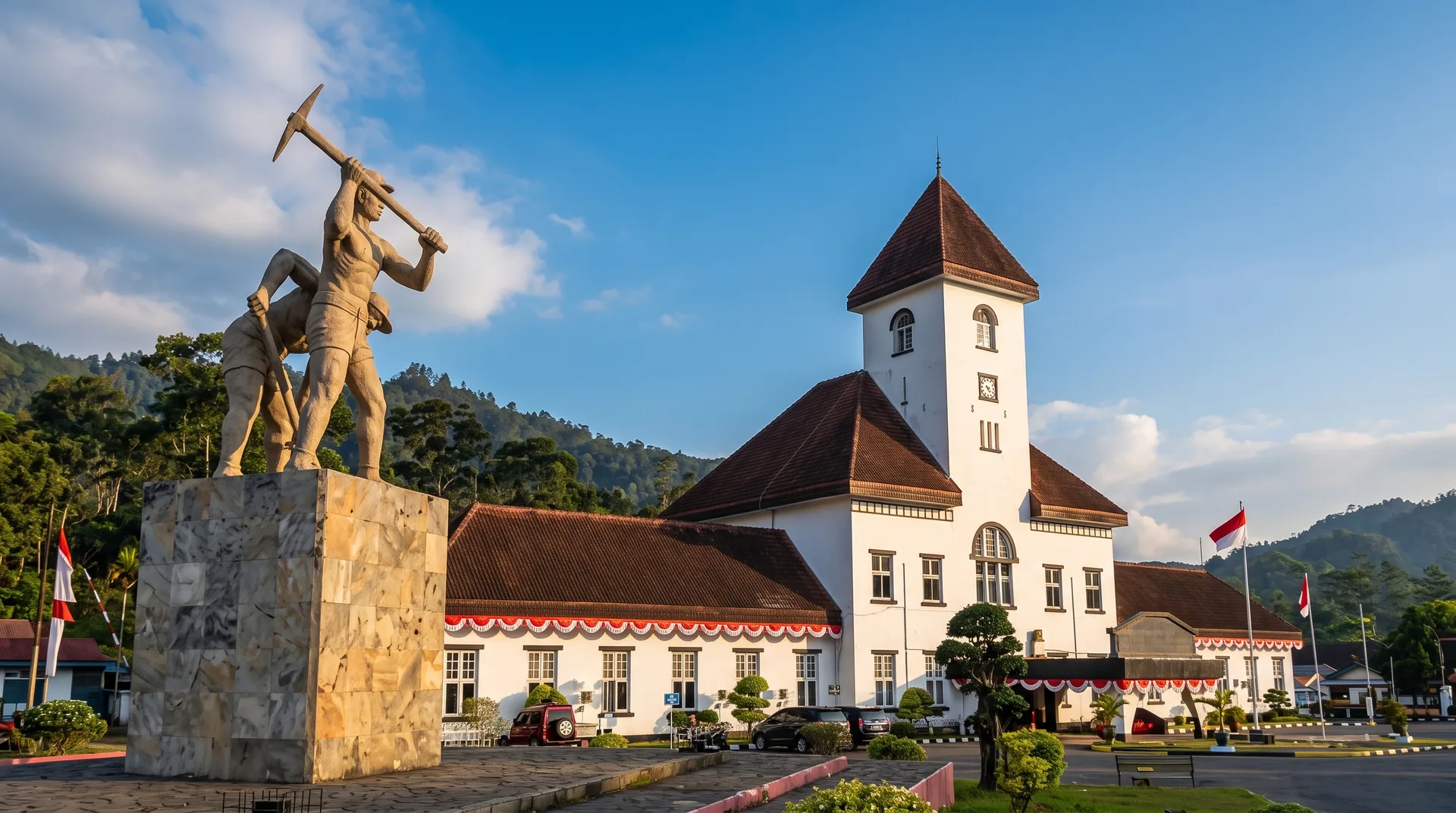
Museum Lubang Tambang Soero is one of the main mining heritage sites in Sawahlunto. The museum complex includes a historic underground coal mine and helps visitors understand the physical setting in which part of the mining work took place.
Tunnel access may depend on current museum operations and safety rules. Confirm underground entry before making it the main reason for your visit.
Visitors who are uncomfortable in enclosed underground spaces should assess the experience carefully before entering.
Museum Goedang Ransoem
Museum Goedang Ransoem explains a different part of Sawahlunto’s mining history.
The complex served as a communal kitchen connected with feeding people within the mining system. Its buildings and collections shift attention from coal extraction to food preparation, labour, and daily life.
It provides a useful contrast with Museum Lubang Tambang Soero. One introduces the underground mine, while the other explains part of the support system surrounding the workforce.
For many first-time visitors, these two museums provide the clearest starting point.
The former company town
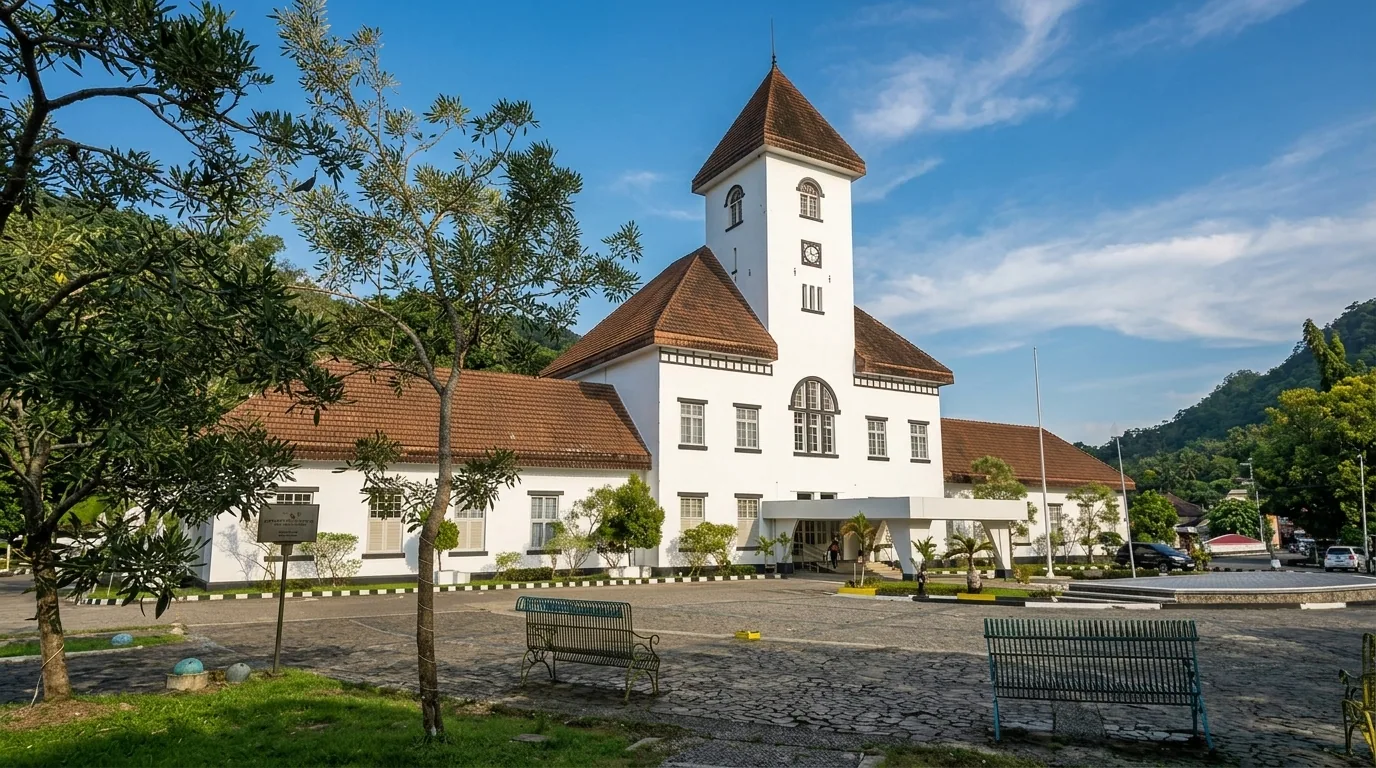
Sawahlunto developed as a company town, with housing, administration, services, and transport arranged around the mining operation.
The central area contains older buildings with different present-day uses and conditions. Many are best observed from public streets rather than approached as formal museum exhibits.
There is no need to search for every old façade. Together, the museums, railway buildings, and older civic structures show how the town supported the mining industry.
Explore the area in manageable sections. A vehicle can help when the places you plan to visit are inconvenient to connect on foot.
Railway Museum and railway history
The railway formed a key part of the Ombilin system because coal had to be moved from the inland mining area toward storage and port facilities on the coast.
Sawahlunto’s Railway Museum and station area help explain that part of the journey. The visit adds useful context after seeing the mine and the facilities that supported the workforce.
Check current museum access before visiting. A railway museum visit should not be treated as confirmation that a heritage train service is operating.
For a focused first visit, prioritise Museum Lubang Tambang Soero and Museum Goedang Ransoem. Add the former company town or Railway Museum according to the time available and confirmed access.
Before you visit
Museum hours and tunnel access can change. Confirm current information before departure, choose two priority sites, and keep one alternative in case part of the planned visit is unavailable.
Leave enough time between locations. A smaller selection of museums gives you more room to understand the relationship between the mine, workforce, town, and railway.
How Sawahlunto fits into a West Sumatra route
Sawahlunto usually works better as part of a wider road journey than as a long return trip built around one museum.
Placing Sawahlunto in the direction of the next hotel can reduce backtracking and unnecessary road time. The right sequence depends on the starting point, confirmed museum access, and the destination that follows.
The West Sumatra transport guide explains the differences between private drivers, rental vehicles, and public transport for regional travel.
Travelers who prefer Sawahlunto within a longer road route can explore Calvoya’s West Sumatra Scenic Loop.
Calvoya can place Sawahlunto within a custom West Sumatra journey based on museum access, hotel sequence, and the rest of the route.
FAQ
Is Sawahlunto worth visiting?
Sawahlunto is best suited to travelers interested in mining history, museums, railways, and old industrial towns. Its appeal comes from understanding the relationship between the sites rather than visiting a long list of separate attractions.
Is Sawahlunto a UNESCO World Heritage Site?
The listed property is the Ombilin Coal Mining Heritage of Sawahlunto. It includes mining and company-town components, the railway network, and coastal storage and port facilities, so the property extends beyond central Sawahlunto.
What are the main places to visit in Sawahlunto?
A focused first visit can include Museum Lubang Tambang Soero, Museum Goedang Ransoem, part of the former company town, and the Railway Museum.
Can Sawahlunto be visited in one day?
Yes. One day can cover two main museums and part of the central heritage area when opening times and access have been confirmed.
Can visitors enter the former coal mine tunnel?
Museum Lubang Tambang Soero includes a historic mine tunnel. Visitor access can depend on current museum operations and safety conditions, so confirm entry before the visit.