Pandai Sikek is a nagari in X Koto, Tanah Datar, known for its Minangkabau songket weaving tradition.
For travelers, it works best as a cultural stop rather than a destination built around a long list of attractions. The main reason to visit is the textile tradition itself: how songket is woven, how its motifs are incorporated into the cloth, and how the finished pieces are used.
Songket Pandai Sikek also has formal cultural recognition. It was recognized nationally as Warisan Budaya Takbenda Indonesia in 2014.
How is Pandai Sikek songket made and used?
The weaving process
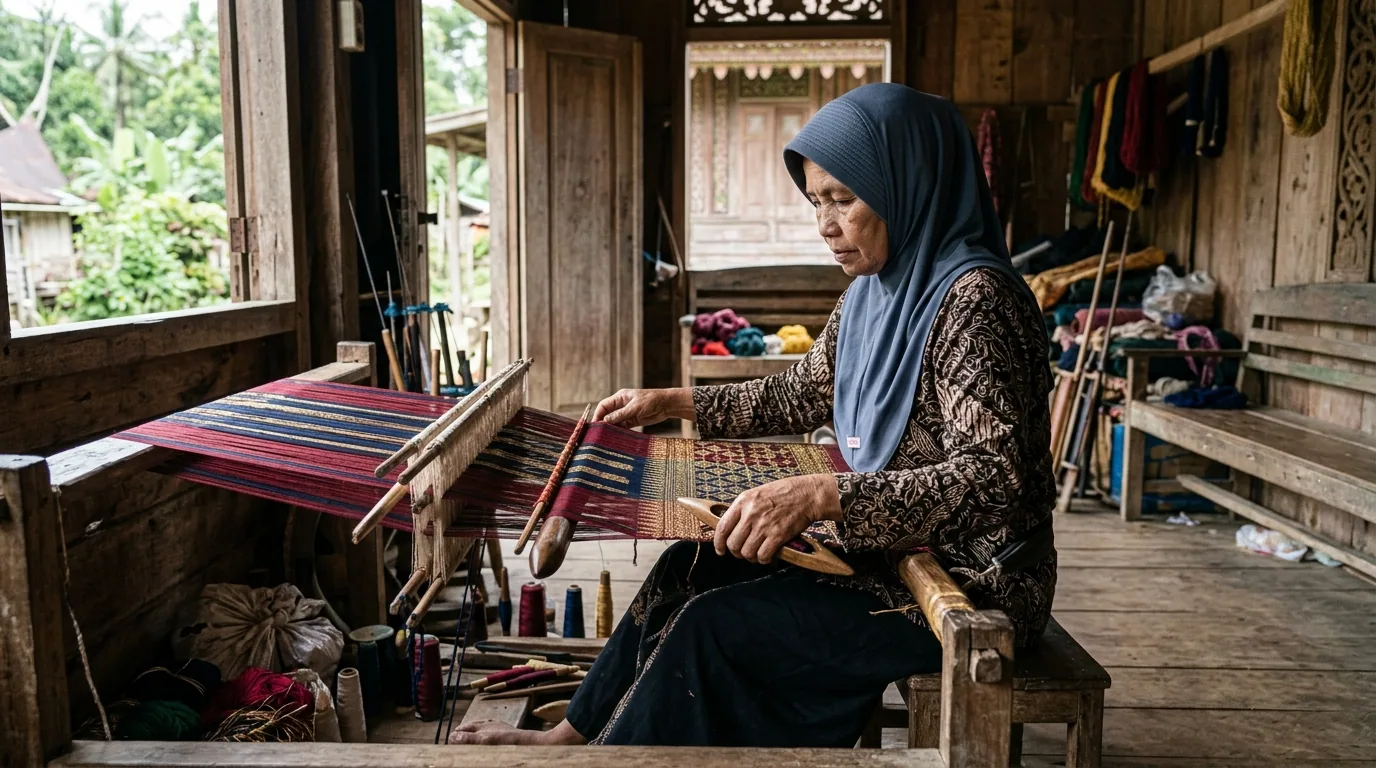
Songket is a woven textile in which decorative threads are added to the base weave to create patterns across the cloth.
The key distinction is simple: the motifs are formed during the weaving process rather than printed onto finished fabric.
This makes the production process an important part of understanding the textile. A finished piece shows the result, but seeing how the pattern develops on the loom gives a clearer sense of the work involved.
Pandai Sikek has tourism activities connected with its weaving tradition, including Rumah Tenun and songket-related visitor experiences. If seeing a weaver actively working is important to you, confirm what is included before visiting rather than assuming a live demonstration is available at any particular time.
Motifs and traditional use
Pandai Sikek songket uses a wide range of traditional motifs.
Museum collections document examples such as pucuak rabuang, saik galamai, and saluak laka on textiles made in Pandai Sikek.
The cloth is not limited to decorative display. Museum collections also document Pandai Sikek songket used as shawls and sarongs within Minangkabau traditional dress and adat occasions.
For broader context on traditional clothing, Rumah Gadang, adat, and cultural etiquette, see our Minangkabau Culture Guide.
What can travelers expect from a Pandai Sikek visit?
A visit is most useful when you are genuinely interested in weaving, textiles, or Minangkabau craft.
You can see finished songket, learn about how the cloth is made, and visit tourism activities connected with the weaving tradition. The exact experience depends on the arrangement for your visit.
See the weaving process
Pandai Sikek’s tourism offerings include experiences connected with weaving and Rumah Tenun.
If you want to watch the process rather than only see finished textiles, check beforehand what the visit includes. Weaving is ongoing craft work, not a performance that can be assumed to run on a fixed schedule throughout the day.
See or buy finished songket
Pandai Sikek is also a place to see and buy finished songket.
If you are considering purchasing a piece, ask about its material, dimensions, intended use, and how it was made. Songket can vary in construction and detail, so information from the maker or seller is more useful than assuming every piece follows the same specifications.
You do not need to understand every motif or weaving technique before visiting. Looking closely at the cloth and asking specific questions is enough to make the stop more meaningful.
Where does Pandai Sikek fit in a West Sumatra itinerary?
Pandai Sikek usually works better as part of a wider highland journey than as a separate full-day destination.
It can fit naturally into routes from Bukittinggi toward Tanah Datar or the Solok highlands, particularly when textiles and village culture are already part of your interests.
Calvoya’s Alahan Panjang Twin Lakes and Singkarak Day Experience includes Pandai Sikek as a village and craft stop within a wider route through the southern highlands.
Pandai Sikek can also fit some journeys between Padang and Bukittinggi, but it should not automatically be added to every transfer day. If the day already includes several stops, our Padang to Bukittinggi Route Guide explains why a simpler route often works better.
If songket is one of your main interests, allow enough time for the stop to feel like a visit rather than another quick item on an itinerary.
Visit respectfully
Weaving spaces are also workplaces.
Ask before taking close photographs, follow the host’s guidance around looms and work in progress, and ask before handling textiles. A little consideration matters more than trying to photograph every part of the process.
FAQ
Can you see songket being woven in Pandai Sikek?
Yes, weaving-related visitor activities are available in Pandai Sikek, including Rumah Tenun experiences.
If seeing active weaving is important to you, confirm what is included before visiting rather than assuming a demonstration is available at any time.
Can you buy songket in Pandai Sikek?
Yes. Songket is available as a local product in Pandai Sikek, and official tourism listings include souvenir facilities connected with the village’s craft tradition.
When buying, ask about the material, size, intended use, and how the piece was made.
Is Songket Pandai Sikek recognized as Indonesian cultural heritage?
Yes. Songket Pandai Sikek was recognized nationally as Warisan Budaya Takbenda Indonesia in 2014.
Calvoya can include Pandai Sikek in a custom West Sumatra journey when songket, village culture, and the surrounding highland route fit your travel plans.