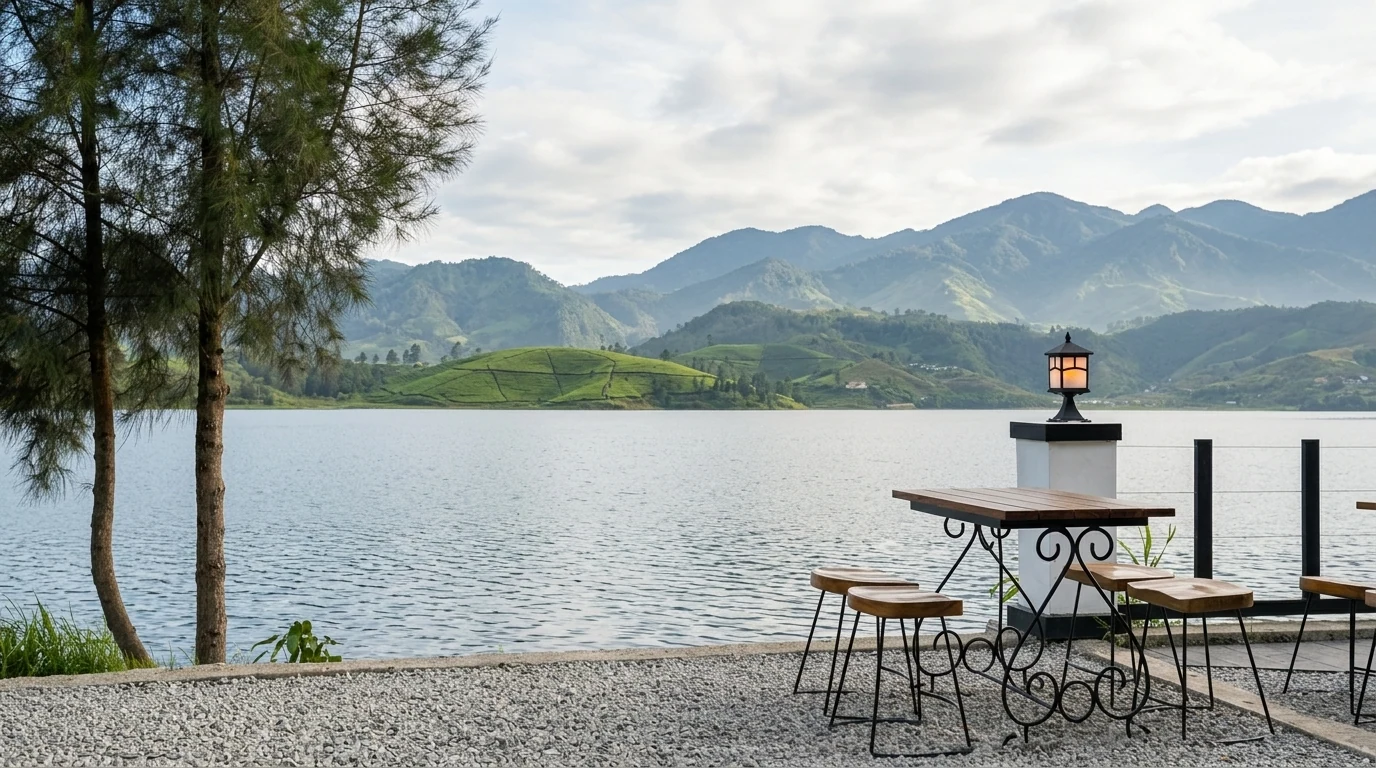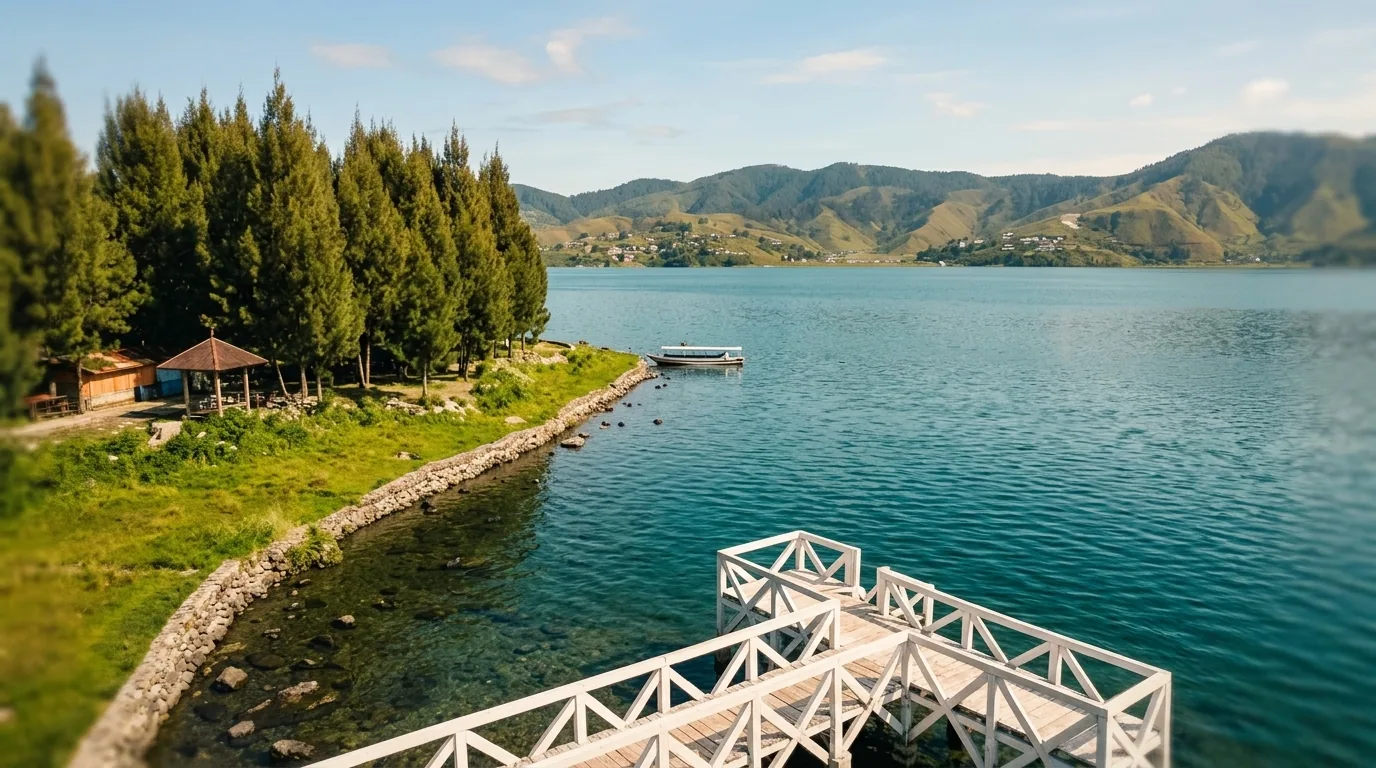
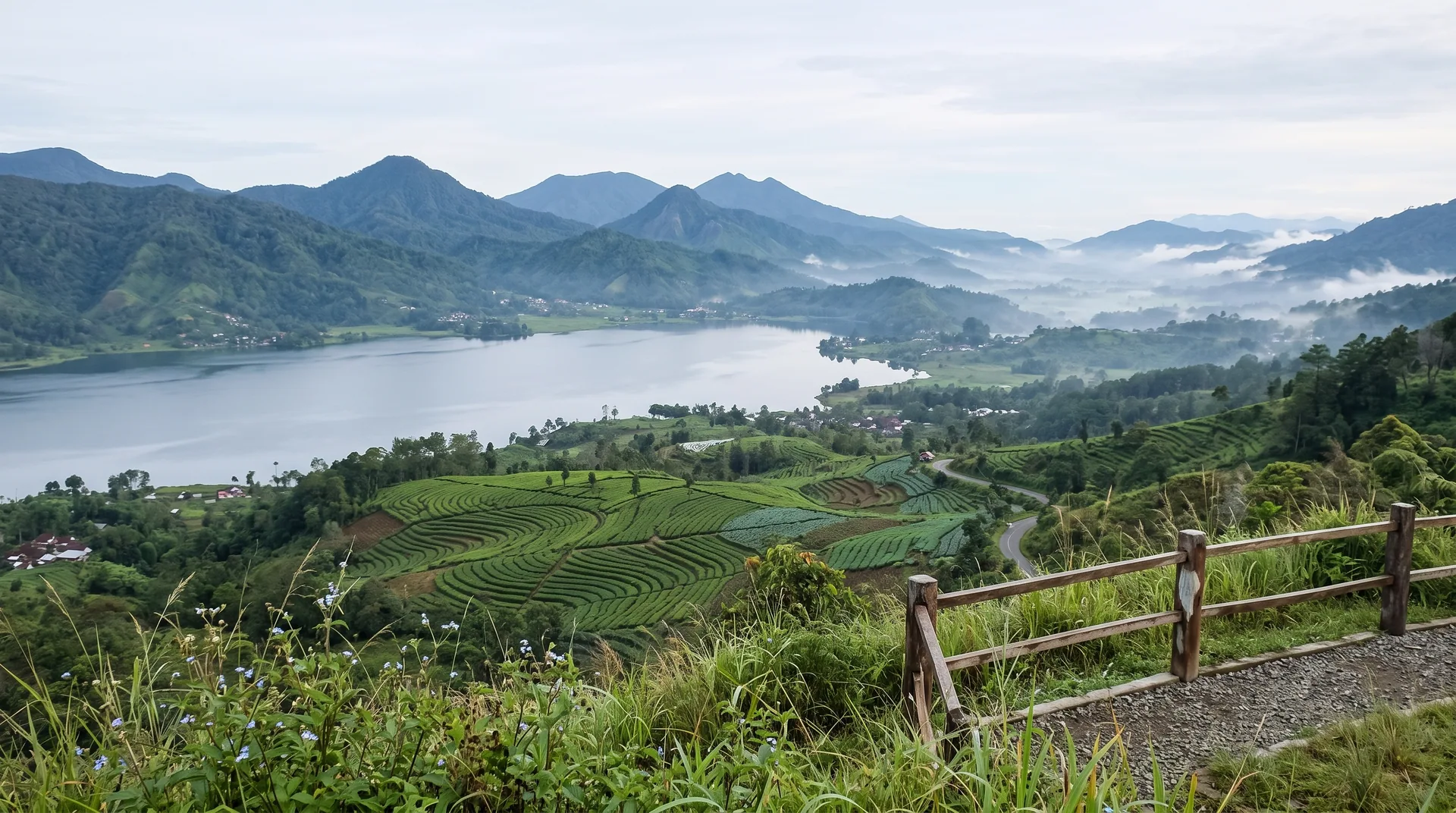
The Twin Lakes of West Sumatra lie around Alahan Panjang in Solok Regency. Known as Lake Diatas and Lake Dibawah, the two lakes form part of the same highland area.
Lake Diatas and Lake Dibawah are separate destinations, so visiting both usually involves more than one stop. The journey takes visitors through lake scenery, settlements, agricultural land, and the cooler surroundings of Alahan Panjang.
This guide explains what to expect at each lake, how to explore the area, and how the Twin Lakes can fit into a wider West Sumatra route.
Are the Twin Lakes worth visiting?
Visit during a road journey
Works well for
Travelers passing through the Solok area who want to include lake scenery in the journey.
Keep in mind
Lake Diatas and Lake Dibawah are separate places, so the visit usually involves several stops.
Spend most of a day
Works well for
Visitors who want to explore both lake areas and spend time around Alahan Panjang.
Keep in mind
Weather can affect how much of each lake is visible.
Stay overnight
Works well for
A slower visit or a journey continuing through the Solok area the following day.
Keep in mind
An overnight stay makes more sense when it supports the next stage of the route.
The Twin Lakes suit travelers who enjoy highland scenery and regional road journeys. They are less about completing a list of formal attractions and more about experiencing the lakes within the wider setting of Alahan Panjang.
What are Lake Diatas and Lake Dibawah?
The name Twin Lakes refers to Lake Diatas and Lake Dibawah, two separate lakes around Alahan Panjang in Solok Regency.
Lake Diatas is also commonly known as Danau Diateh. Together, the two lakes form the area widely known as Danau Kembar.
Their shared name does not mean that the two lakes offer identical views or access. Each occupies a different part of the highland area and should be treated as a separate stop.
Exploring the Twin Lakes
Lake Diatas
Lake Diatas, or Danau Diateh, lies around Alahan Panjang. Its surroundings include the lake, nearby hills, settlements, and agricultural land.
The view changes according to the chosen stopping point and current weather. Rather than searching for one defining viewpoint, plan a small number of stops that can be reached through public access.
Use suitable public areas and avoid entering cultivated or private land without permission. Facilities and access may differ from one part of the lakeside to another.
Lake Diatas can be included within a wider drive through Alahan Panjang, with time left for the second lake and the surrounding highland area.
Lake Dibawah
Lake Dibawah forms the other part of the Twin Lakes area.
It belongs to the same highland setting, where cloud and mist can affect visibility. The lake is best included as part of the wider route rather than treated as one isolated attraction.
Check suitable stopping points locally. A lake marker on a map does not always indicate a formal viewing area or visitor facility.
Visiting Lake Dibawah after Lake Diatas gives travelers a broader sense of the area without requiring a long list of activities at either lake.
Alahan Panjang and the agricultural setting
Alahan Panjang is a working highland settlement where agriculture remains part of daily life. It also provides accommodation, places to eat, and services for travelers visiting the Twin Lakes.
Farms, homes, shops, and local roads form part of the setting. The area feels lived in rather than arranged solely for tourism, which is part of its character.
Use public stopping areas and keep access clear for residents and local work. Enter cultivated land only when permission has been given.
Spending some time around Alahan Panjang also makes the visit feel less like a quick transfer between two lake names. The settlement provides context for the scenery surrounding them.
How to explore the Twin Lakes area
The Twin Lakes are easiest to explore through several vehicle-based stops.
Lake Diatas, Lake Dibawah, and Alahan Panjang should not be treated as one continuous walking route. A vehicle helps connect the different parts of the area and gives more control over how long to spend at each stop.
Choose stopping places where the vehicle can leave the road safely without blocking homes, farms, businesses, or local traffic.
The West Sumatra transport guide compares private drivers, rental vehicles, and public transport for regional journeys.
Travelers using local transport should check current routes and pickup arrangements before planning several stops around the lakes.
Before you visit
Weather in the highlands can change quickly. Cloud, rain, and mist may reduce lake views, so keep the day flexible.
Bring a light outer layer and rain protection. Conditions around Alahan Panjang can feel cooler than the coastal areas of West Sumatra.
Check current road and access information before departure. The most practical stopping points may depend on recent conditions and local guidance.
For wider seasonal planning, read the guide to the best time to visit West Sumatra.
How the Twin Lakes fit into a West Sumatra route
The Twin Lakes work best as part of a road journey through the Solok area.
Placing the lakes in the direction of the next hotel can reduce backtracking and unnecessary road time. The right sequence depends on the starting point, weather, available time, and destination that follows.
Travelers continuing toward Sawahlunto can use the Sawahlunto travel guide to choose the main heritage sites.
The Twin Lakes can also be included in a longer regional route without turning the day into a fixed itinerary. A focused visit to both lakes and Alahan Panjang is often enough before continuing to the next destination.
Calvoya can place the Twin Lakes within a custom West Sumatra journey based on weather, hotel sequence, available time, and preferred pace.
FAQ
Are the Twin Lakes in West Sumatra worth visiting?
The Twin Lakes suit travelers who enjoy lake scenery, cooler highland surroundings, and regional road journeys. They are most rewarding when Alahan Panjang already fits the direction of the wider route.
What are Lake Diatas and Lake Dibawah?
They are two separate lakes around Alahan Panjang in Solok Regency. Lake Diatas is also commonly called Danau Diateh, while both lakes form the area known as Danau Kembar.
Can you visit both lakes in one day?
Yes. Both lake areas can be included in one day when the route is focused and suitable stopping points have been identified.
Do you need a car to visit the Twin Lakes?
A vehicle is the simplest way to connect several stops around Lake Diatas, Lake Dibawah, and Alahan Panjang. Travelers using local transport should confirm current routes and pickup options before departure.
What happens when the lakes are covered by fog?
Fog or low cloud can partly or fully obscure the lakes. Keep the schedule flexible, since clear views cannot be guaranteed.