
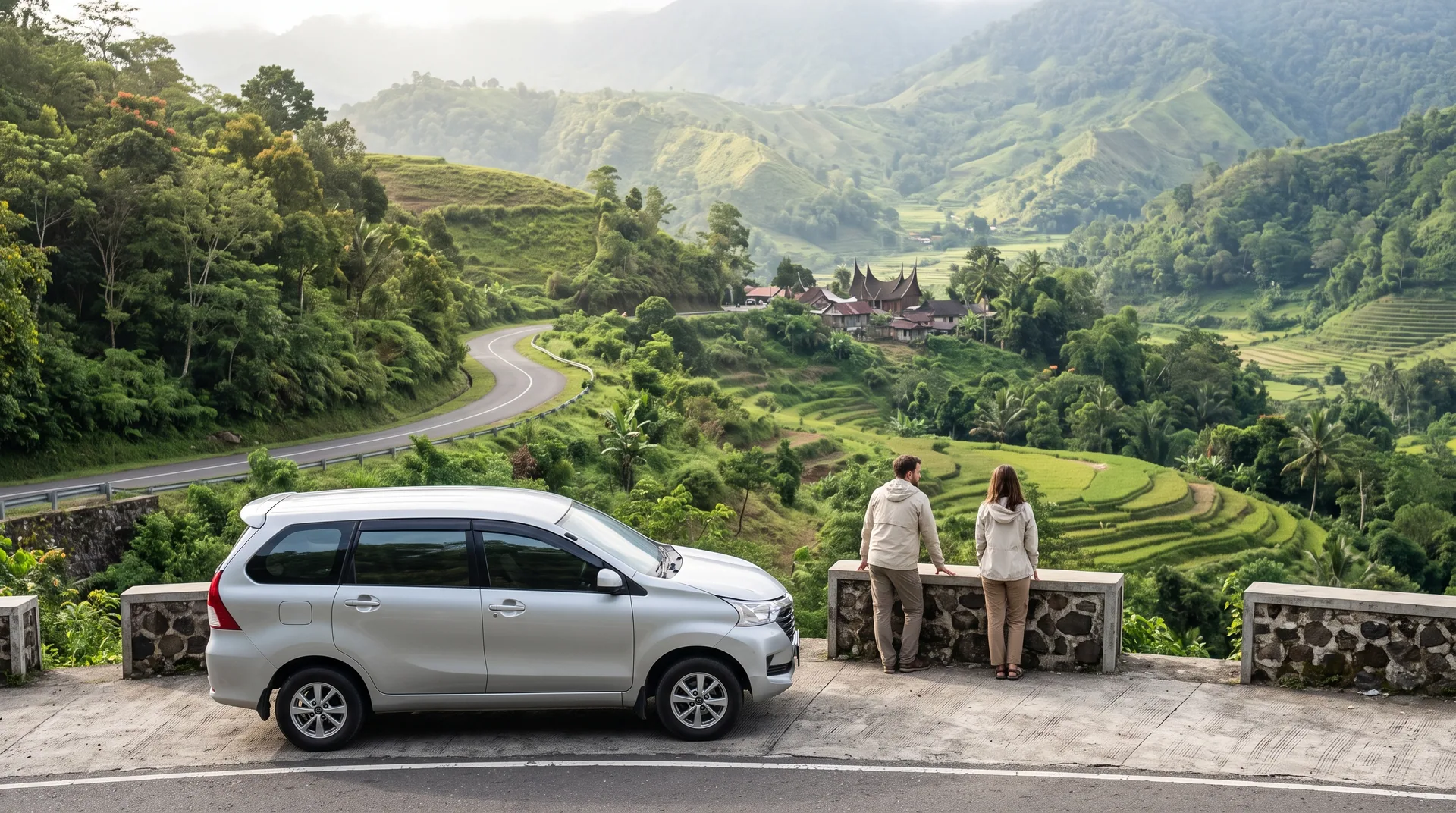
Driving is part of most West Sumatra itineraries. Padang, Bukittinggi, Harau Valley, and the surrounding highlands are spread across different routes, and the time shown between two places does not represent the entire travel day.
The main journey may be followed by local transfers, a return drive, meals, walks, and hotel procedures. A route that appears manageable on a map can become tiring when too many activities are added around it.
There is no single daily driving limit that works for every traveler or route. A practical plan begins by identifying the purpose of the day: local sightseeing, a regional day trip, or a transfer between overnight bases.
Count total road time, not only the main journey
Total road time includes the main journey, local driving between planned stops, and the return leg when the day ends at the same hotel.
Meals, sightseeing, walking, waiting, parking, and hotel procedures are separate from road time, but they still occupy part of the schedule. The total elapsed time will therefore be longer than the driving estimate.
A destination described as two hours away may require four hours in the vehicle when the itinerary returns to the same base. Short transfers within the destination can add more time.
A return day trip may avoid another hotel change, but it also repeats part of the road. Count both directions before deciding how many activities can fit. The West Sumatra itinerary with fewer hotel changes explains when one stable base is practical and when another overnight stop may reduce repeated driving.
For route-specific estimates involving Harau, Bukittinggi, Padang, Padang Panjang, and Kelok 9, use the Harau Valley travel-times guide.
Three types of West Sumatra travel days
A useful itinerary separates days by purpose rather than applying one driving limit to the entire trip.
Local sightseeing day
Main purpose: Explore one city or a compact nearby area.
Keep most of the day within the same area. This leaves more time for walking, meals, cultural visits, and several nearby stops without adding substantial road time.
Regional day trip
Main purpose: Visit one main destination and return to the same overnight base.
Count both the outward and return journeys before adding activities. Short stops work best when they follow the same route and do not reduce the time available at the main destination.
A regional day trip becomes less practical when the route repeatedly changes direction. Places that appear close on a map may still require separate access roads and additional local transfers.
Transfer day
Main purpose: Move from one overnight base to another.
Keep stops limited and aligned with the direction of travel. Meals, luggage handling, and hotel arrival also need space in the schedule.
Padang Airport to Bukittinggi is best treated as a transfer day, even when meal or scenic stops are included. The Padang to Bukittinggi route guide covers that journey and its possible stops in more detail.
The same amount of road time can produce very different travel days. A direct one-way transfer is different from several short driving segments followed by a return journey. Congestion, repeated pickups, and starting immediately after a flight can also reduce the time available for activities.
When a long road day makes sense
A long road day can be reasonable when:
- it connects two overnight bases in one direction;
- stops follow the main route rather than creating detours;
- it replaces repeated return journeys;
- the itinerary treats the day primarily as a transfer.
A longer one-way journey may improve the wider itinerary when it places travelers near the following day’s destination. It may be more practical than returning to the same hotel and driving along the same road again.
The value of a long road day depends on what it accomplishes. Driving that moves the journey forward serves a different purpose from repeated driving caused by a poorly placed base.
Signs that the itinerary contains too much driving
The itinerary may need to be reduced when:
- every transfer is followed by a full activity program;
- the route repeatedly returns along the same road;
- meals and hotel arrival depend on traffic behaving perfectly;
- removing one stop causes the remaining schedule to fail.
A realistic plan needs some margin. Rain, a delayed pickup, a longer meal, or extra time at one destination should not cause the rest of the day to collapse.
When repeated driving and a demanding activity program appear on the same day, remove something before adding another stop.
For broader decisions about trip length, destination order, and travel pace, read the West Sumatra itinerary guide.
FAQ
How much driving per day is realistic in West Sumatra?
There is no single number that fits every route. Count the main journey, local transfers, and any return leg. Reduce the activity program when driving becomes the main part of the day.
How should I plan a long driving day?
Treat it as a transfer between overnight bases. Keep stops aligned with the route and leave enough time for meals, luggage, and hotel arrival.
Is a day trip better than changing hotels?
Not always. A day trip avoids moving luggage but may repeat the same road. Compare the return driving with the time and inconvenience of another hotel change.
Calvoya can plan a custom West Sumatra journey around the flight times, destination order, daily driving, hotel sequence, and preferred pace.