Overview
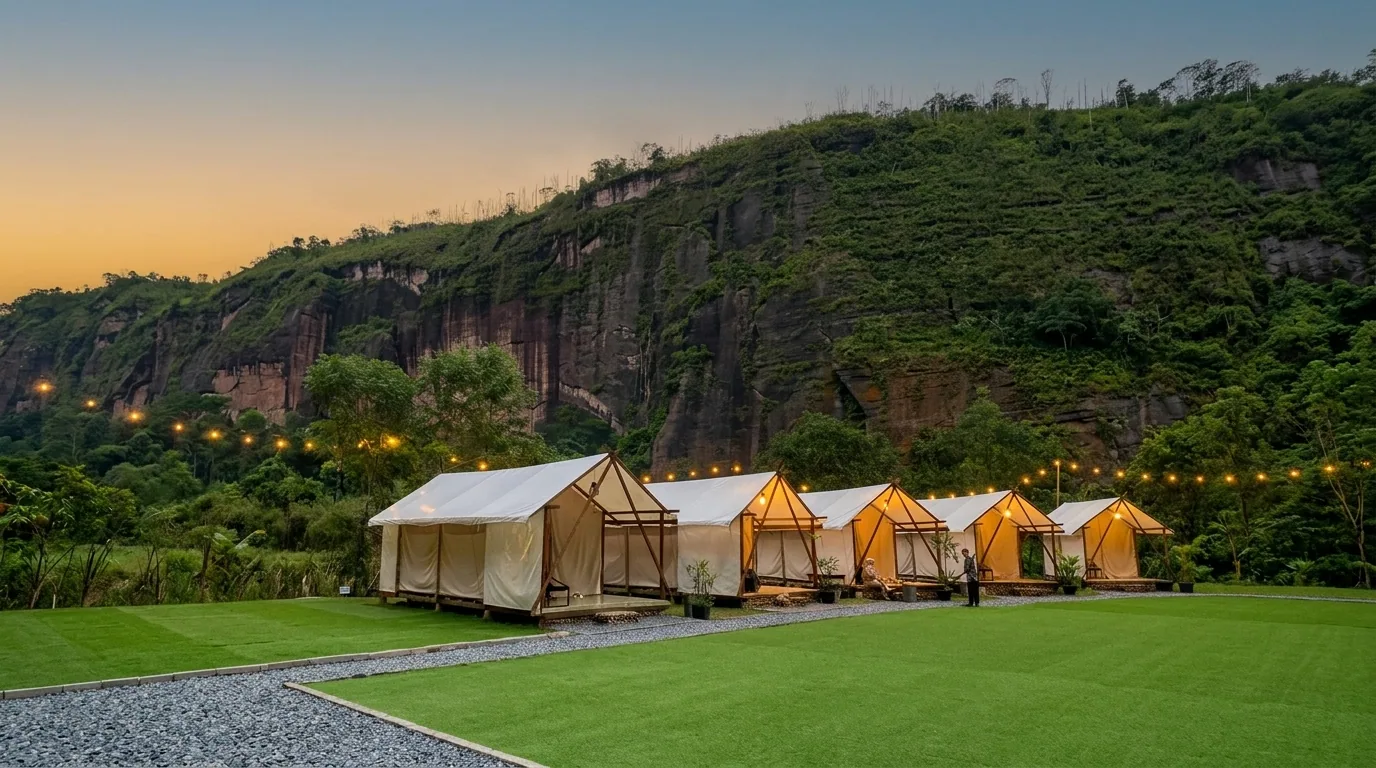
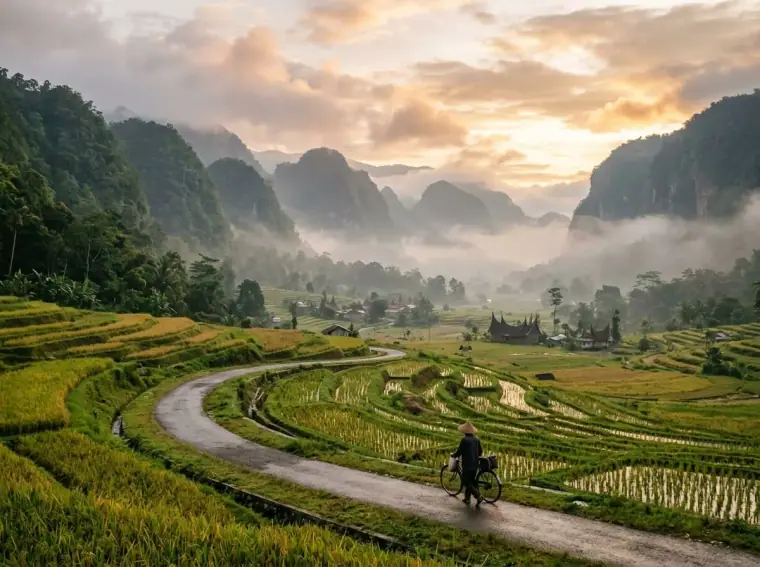
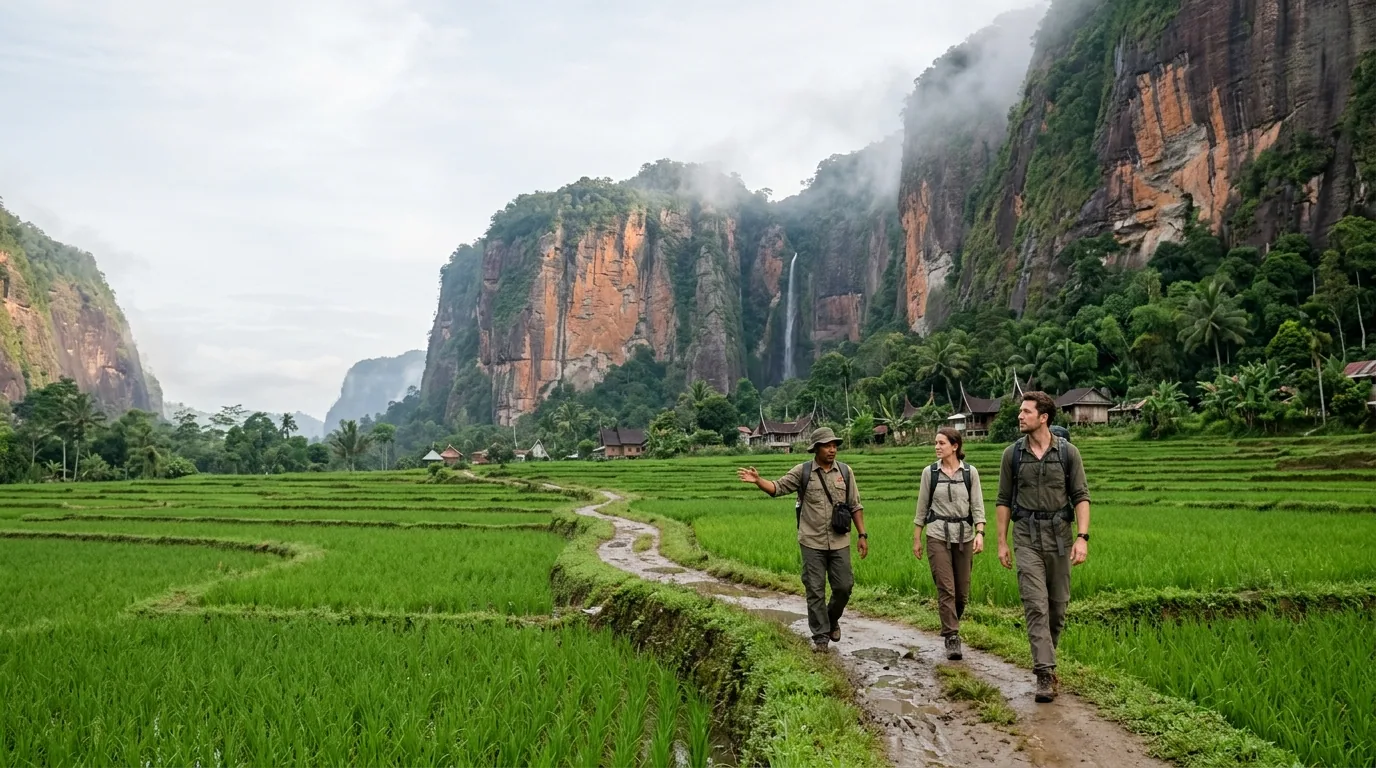
In Harau Valley, a walk can begin quietly beside rice fields, with cliffs rising on both sides and water running somewhere behind the trees. You may pass small gardens, ducks near the fields, a mosque tucked under the cliffs, or a narrow lane where motorbikes move slowly between village houses.
Harau Valley sits near Payakumbuh in West Sumatra and is usually visited from Bukittinggi, either as a day trip or an overnight nature stay. For the wider destination picture, read our Harau Valley Travel Guide. This hiking guide has a narrower job: helping you choose the right walk or guided trek.
Harau is not a place where every route has a clear trailhead, fixed signboard, or neat map. Some walks stay easy and flat. Some waterfall paths become slippery after rain. Some countryside routes make more sense with a local guide who knows the current access and ground condition.
The best Harau hike is not always the longest one. It is the one that fits your shoes, your group, the weather, and the time you actually have.
What hiking in Harau Valley really looks like
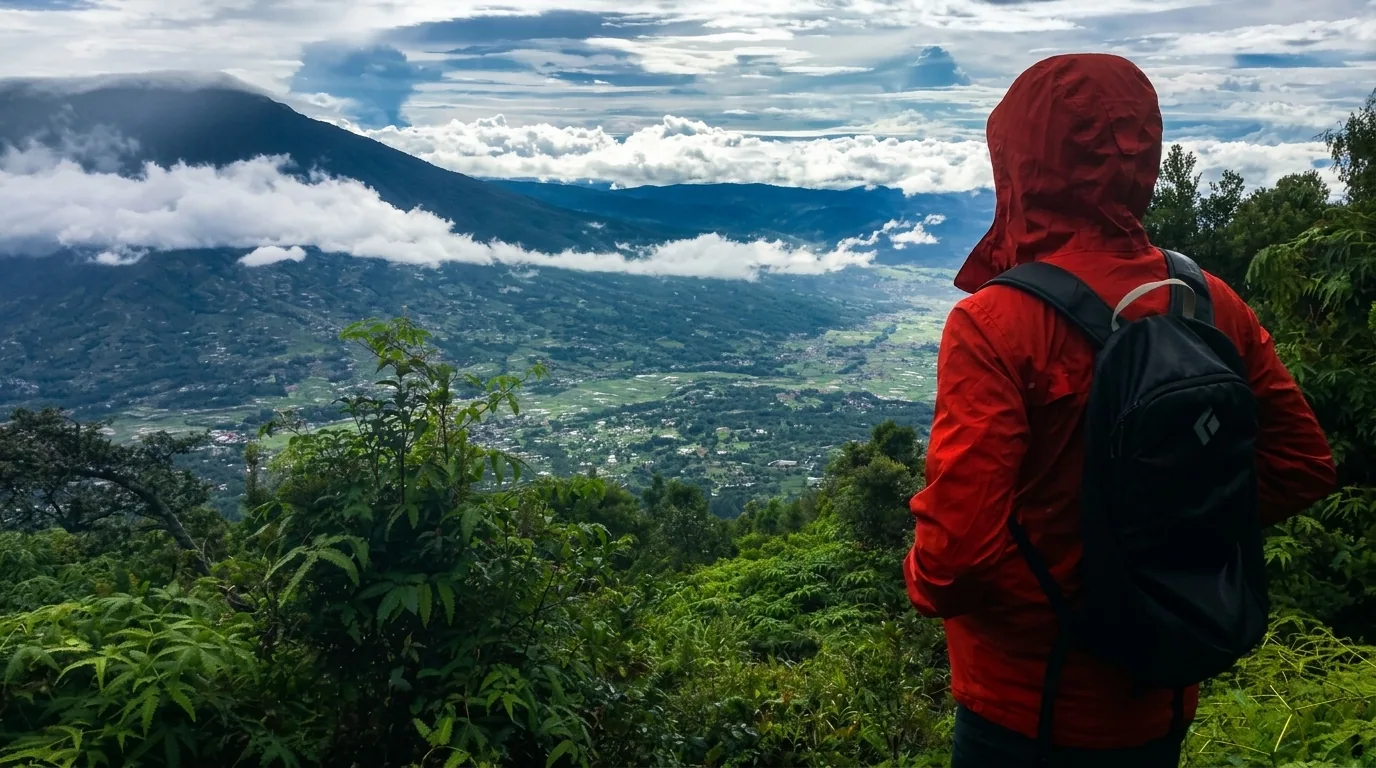
Hiking in Harau is better understood as a range of walking experiences. At the easy end, you have village roads, rice field edges, and short waterfall access paths. At the more active end, you have guided countryside walks that may pass through dirt tracks, paddy edges, small climbs, and quieter local routes.
This matters because many travelers arrive expecting marked trails like they might find in a national park. Harau feels more informal. Some routes are obvious. Others are local paths, farm access, or roads that change after rain.
For most visitors, Harau walking falls into four useful levels. Think of them as choices, not a ladder you need to climb.
Level 1: Valley floor walks
These are the easiest walks: village roads, rice field edges, small bridges, and short loops near homestays. They work well for families, slow travelers, photographers, and first-time visitors. You usually do not need a guide for short, obvious walks, but it is still wise to ask your host which direction is best that day.
Level 2: Waterfall walks
These are short and scenic, but often wetter underfoot. They suit most visitors as long as the path is not too slippery and the group has decent footwear. A guide may help if you want to reach a quieter waterfall area or if rain has changed the access.
Level 3: Guided countryside hikes
These are better for active travelers who want more than the main visitor areas. The route may include dirt tracks, paddy edges, village lanes, and small climbs. A local guide is recommended because paths can be informal and conditions can change.
Level 4: Longer guided walks
These are for fit travelers with enough time and similar stamina within the group. The route should be chosen by a local guide based on current access, weather, and daylight. This level is better for overnight stays than rushed day trips.
You do not need to push into the harder levels to enjoy Harau. For many first-time visitors, an easy valley walk and one good waterfall stop are enough.
Easy valley walks for most travelers
Easy valley walks are the gentlest way to enjoy Harau. They usually follow village roads, small bridges, paddy edges, homestay lanes, and open views toward the cliffs.
This version works well for families, older travelers who can walk slowly, photographers, and anyone visiting Harau for the first time. It also suits people staying overnight, because you can walk in the softer light of morning or late afternoon.
The point is not to reach a summit. The walk itself is the experience. You move through fields, homes, water channels, small shops, and quiet stretches where the cliffs sit close behind the village.
A short walk can be done near your homestay. A longer easy walk can become a slow loop with photo stops, a drink break, or a simple lunch. Ask your host which direction feels best that day.
Tips for easy valley walks
Stay on existing roads and paths. Rice fields and gardens are often privately used, so avoid stepping into them for photos without asking.
Dress modestly around villages and mosques. Harau is a rural part of West Sumatra, and respectful clothing helps the interaction feel easier.
Carry water, small cash, and your phone. Easy does not mean careless, especially in humid weather.
Waterfall walks: short, scenic, and often slippery
Waterfalls are part of the classic Harau experience. Some can be reached by short access paths. Others may involve steps, wet stones, uneven ground, or muddy patches near the pools.
The main challenge is usually not the distance. It is grip.
A waterfall path that feels simple in dry weather can become awkward after rain. Smooth sandals are a poor choice. Shoes or sandals with proper traction matter more than a nice outfit.
Waterfall walks work best when the plan is simple:
- choose one or two accessible waterfalls
- walk slowly near wet rocks
- keep children close around pools
- avoid climbing rocks for photos
- bring a small towel or dry bag
- ask local advice after heavy rain
For a day trip from Bukittinggi, pair a waterfall stop with a gentle valley walk and lunch. Trying to rush through too many waterfalls can make Harau feel like a checklist, which is not the best way to see it.
When to skip a waterfall walk
Skip or shorten the waterfall section when rain is heavy, the rocks look slick, water flow is too strong, or your group does not have suitable footwear.
There is no shame in changing the plan. Harau still has good scenery from the valley roads, fields, and homestay areas.
Guided countryside hikes for active travelers
A guided countryside hike is the next level after an easy walk. It gives you more movement and a better chance to see quieter parts of Harau without turning the day into a hard trek.
These walks may include paddy paths, dirt tracks, small climbs, village-to-village routes, low viewpoints, and quiet lanes away from the busiest waterfall areas. The route should be chosen locally, based on access and the group’s ability.
For active couples, photographers, and soft adventure travelers, this is often the most satisfying option. It gives enough effort to feel like a hike, but still leaves room for photography, conversation, and rest.
A guided countryside walk can be planned as a short morning outing or a longer half-day route. The exact shape should come from local advice, not from a fixed idea found online.
What makes a Harau hike feel moderate?
A Harau hike may feel moderate because of mud, uneven stones, short climbs, narrow paddy edges, humid air, or path junctions that are not obvious to visitors.
That does not mean the hike is extreme. It simply means the group should choose carefully. A local guide can adjust the route before the walk becomes tiring or awkward.
Who should choose a guided countryside hike?
Choose this level when your group is comfortable walking for a few hours, does not mind getting a little muddy, and wants more than the main visitor areas.
Older travelers may still enjoy this kind of walk, but the route needs more care. If someone has knee issues, poor balance, or low tolerance for slippery ground, an easy valley walk is usually wiser.
Longer guided walks: choose them carefully
Some local guides may offer longer countryside routes, depending on current access, weather, and group fitness. These can be rewarding, but they should not be treated as casual add-ons.
Expect a slower, sweatier day rather than a technical mountain climb. You may spend more time on local paths, open ground, damp sections, and quiet rural lanes. The value is not only the view, but also the feeling of moving through Harau at a slower pace.
A longer guided walk makes more sense when:
- hiking is one of your main reasons for visiting
- you stay at least one night in or near Harau
- your group has similar fitness
- the guide confirms the route is suitable that day
- everyone has proper footwear
- you have enough daylight and time buffer
Skip it when the ground is too wet, your schedule is tight, your group has mixed fitness, or you need to leave Harau the same afternoon.
Harau does not need to be difficult to be memorable. A shorter walk done well is better than a longer route that leaves the group drained.
Do you need a local guide in Harau?
You do not need a guide for every short walk. A simple route near your homestay, an obvious village road, or a busy waterfall area can usually be done with advice from your host.
A guide becomes more useful when you leave the main road and enter countryside paths, farm edges, quieter waterfall approaches, or longer local routes.
You can usually walk without a guide for:
- short walks near your homestay
- simple valley floor loops
- main village roads
- busy waterfall areas with clear access
- short photo walks based on host advice
Use a guide for:
- countryside hikes
- routes after heavy rain
- longer walking days
- less obvious waterfall paths
- groups with children or older travelers
- travelers who want local context, not only navigation
A good guide does more than show the way. They read the day, choose a route that fits the group, help avoid private land, explain village life, and adjust the walk before it becomes too much.
Driver vs guide: what is the difference?
Many travelers book a private driver and assume that covers every part of the day. For transport, yes. For hiking, not always.
A driver helps with pickup, drop-off, road timing, luggage, parking, transfers, and food stops. A local walking guide helps with route choice, path condition, village etiquette, pacing, and local context.
If your plan includes leaving the main road, crossing field edges, or finding quieter paths, a guide adds more value than another hour with the car.
For a simple day trip, a driver with basic local advice may be enough. For anything beyond the main valley road or clear waterfall access, use a local guide.
What to wear and pack for Harau walks
Packing for Harau should be simple. Focus on comfort, grip, and protection from rain.
Wear
- light, breathable clothing
- modest clothing for village areas
- shoes or sandals with good grip
- quick-dry clothing if visiting waterfalls
- a hat or cap for open fields
Bring
- drinking water
- light rain jacket or poncho
- insect repellent
- small cash
- dry pouch for phone and camera
- small towel
- simple first-aid items
- offline map
- power bank for longer days
Useful extras
- change of socks
- trekking pole for muddy paths
- headlamp for overnight stays
- small snack
- bag for wet items
Avoid
- smooth sandals
- heavy jeans for wet walks
- oversized bags
- white clothing if you dislike mud
- expensive gear without rain protection
Good footwear matters more than almost anything else. Harau is the kind of place where a simple shoe with grip can save the day.
Rain, mud, and trail conditions
Rain is part of travel in West Sumatra. In Harau, rain can make the valley beautiful, but it can also change walking conditions quickly.
After rain, waterfall flow can look stronger, stones become slick, dirt paths turn soft, and paddy edges can be harder to walk along.
Morning walks are often more comfortable for longer routes. Afternoon plans should stay flexible because rain can arrive quickly.
Rain does not always mean canceling a walk. It may mean choosing a shorter route, staying on village roads, visiting easier waterfalls, or waiting until conditions improve.
When to skip or shorten a Harau hike
Sometimes the smartest decision is to choose a shorter walk.
Skip or shorten a hike when:
- heavy rain is already falling
- waterfall rocks look too slippery
- your group has poor footwear
- children are tired or struggling with mud
- someone has knee, ankle, or balance concerns
- daylight is running out
- your guide or host recommends changing the route
- you need to leave Harau soon and have no time buffer
This is not fear. It is good planning. Harau should feel calm, not forced.
Safety notes for waterfalls, cliffs, and village paths
Harau is not an extreme destination for most visitors, but basic caution matters.
Waterfall safety
Move slowly around wet rocks. Avoid climbing for photos. Keep children close near pools. Do not stand under heavy water flow after strong rain.
Cliff safety
The cliffs are part of Harau’s beauty, but they should be respected. Avoid lingering right at the base of rock walls after heavy rain. Do not enter restricted or unstable-looking areas.
Village path safety
Stay on paths that are already used. Do not cut through fields or private gardens without permission. Watch for motorbikes on narrow roads.
Rural comfort
Use insect repellent and check your legs or shoes after walking through damp grass or muddy areas. Stay on suggested paths and avoid reaching into thick grass, holes, or hidden spaces.
Shortcuts and getting lost
Do not follow unclear shortcuts based only on a map pin. Some paths branch into farmland or private areas. Tell your host or guide when you plan a longer walk.
Sample Harau walking plans
These sample plans help you choose a realistic level without overloading your day.
Easy half-day walk
This is the safest choice for first-time visitors who want Harau scenery without committing to a longer hike.
- arrive mid-morning
- walk a simple valley floor loop
- visit one accessible waterfall
- have a local lunch
- take a short photo stop near fields or cliffs
- return before dark or check into your homestay
This works well for families, older travelers, and guests on a day trip from Bukittinggi.
Active full-day visit
This is a better fit for travelers who want more movement while keeping the day comfortable.
- start with a guided countryside walk in the morning
- visit a waterfall before or after lunch
- rest during the warmest part of the day
- take a second short village route or low viewpoint walk
- enjoy late afternoon light on the cliffs
- stay overnight or return to Bukittinggi
Use a local guide for this version, especially if the route leaves the main road.
Overnight walking stay
This gives Harau more space and usually creates a better experience for photographers and slow travelers.
Day 1: Arrive from Bukittinggi or Payakumbuh, check in, take an easy walk, visit a nearby waterfall, have dinner at the homestay.
Day 2: Join a guided countryside hike, return for rest, take a short evening photo walk if conditions are good.
Day 3: Enjoy a slow morning, then leave Harau or continue into another West Sumatra route.
This version keeps the valley from becoming a rushed stop.
Which Harau walk should you choose?
Choose an easy valley walk when this is your first visit, you have limited time, you travel with children, or rain has made paths slippery.
Choose a waterfall walk when you want a classic Harau experience, your footwear has good grip, and the access path looks manageable.
Choose a guided countryside hike when you want to go beyond the main road, you are comfortable walking for a longer morning, and you want local context along the way.
Choose a longer guided walk when you stay overnight, hiking is a main purpose of the visit, everyone in the group has similar fitness, and a local guide confirms the route is suitable.
Avoid choosing a route only because it looks good on social media. In Harau, the best walk is the one that fits the weather, your shoes, your group, and the time you actually have.
Related Calvoya guides
Use these articles to plan the wider route around Harau:
- Harau Valley Travel Guide: Waterfalls, Villages, and What to Expect
- Bukittinggi Travel Guide: Highlands, Canyons, and Rice Fields in West Sumatra
- West Sumatra Itinerary: 5 Days for First-Time Visitors
- West Sumatra Itinerary: 7 Days from Padang to Bukittinggi and Harau Valley
How Calvoya can plan a private Harau walking or hiking experience
Calvoya can help you turn Harau into a private walking or soft hiking experience that fits your pace.
We can help with:
- private transport from Bukittinggi or Payakumbuh
- Padang connections as part of a longer West Sumatra route
- local guide arrangements for countryside walks or longer routes
- route choices matched to age, fitness, weather, and footwear
- simple day trip plans from Bukittinggi
- overnight homestay arrangements in Harau
- halal meals and prayer stops
- photography-friendly pacing
- family-friendly walking plans
- backup plans for rain or muddy trails
Share your group size, travel dates, walking comfort, and preferred pace. Calvoya can suggest a private Harau Valley walking plan that feels realistic, not forced.
FAQ
Is Harau Valley good for hiking?
Yes. Harau is good for easy walks, waterfall access paths, guided countryside hikes, and some longer guided walking routes. It is better for soft adventure than for travelers seeking formal mountain trails with clear signs everywhere.
Are Harau Valley hikes difficult?
Many Harau walks are easy, especially on the valley floor. The difficulty rises when paths become muddy, slippery, uneven, or less clear. Shoes and weather make a big difference.
Can children hike in Harau Valley?
Children can enjoy easy valley walks and accessible waterfall areas with close supervision. Longer hikes should be chosen carefully based on age, stamina, weather, and footwear.
Do I need a guide for hiking in Harau?
You can do simple walks near homestays or main waterfall areas with local advice. A guide is recommended for countryside hikes, longer routes, and less obvious paths.
Are Harau Valley trails clearly marked?
Some visitor areas are easy to follow, but many countryside routes are informal. Do not expect every path to have signs, maps, or fixed trail names.
Can I rely on Google Maps for Harau Valley hikes?
Google Maps can help with general orientation, but it should not be treated as a full hiking guide in Harau. Some paths are informal or pass near private land. For anything beyond simple valley roads and main waterfall access, ask your host or use a local guide.
Can I hike in Harau during the rainy season?
You can still walk in Harau during wetter months, but route choice matters more. Stay on easier paths after heavy rain, avoid slippery rocks, and ask local hosts or guides about current conditions.
What shoes should I wear in Harau Valley?
Wear shoes or sandals with good grip. Smooth sandals are a poor choice around waterfalls, muddy paths, and paddy edges. Quick-dry footwear is useful if you expect wet ground.
Is a day trip enough for hiking in Harau?
A day trip is enough for an easy valley walk and one or two waterfall stops. Travelers who want a guided countryside hike or slower photography experience should consider staying overnight.
How can I arrange a guided walk in Harau Valley?
You can ask your homestay, a local guide, or a West Sumatra travel planner to arrange one. Calvoya can include a guided Harau walk inside a private West Sumatra route, with transport and pacing adjusted to your group.