For a first Melaka heritage walk, use Dutch Square as your meeting point, then choose how much of the historic center you want to connect. You can add the climb to St. Paul’s Hill before crossing the river, or go straight to Jonker Street and the neighboring heritage lanes. Set aside half a day for both sides with a proper break; with less time, choose one side and enjoy it without rushing.
The route below is a self-guided planning suggestion, not a booked tour or a promise that every building will be open. It gives you named waypoints, an optional hill section, and a way to shorten the outing when the group has had enough.
Your Melaka heritage walk at a glance
Think of the walk as two parts joined by a river crossing:
- Dutch Square: start with the Stadthuys and Christ Church exteriors.
- Optional hill section: add St. Paul’s Hill and the Porta de Santiago gateway, then return toward the square.
- Cross the Melaka River: use Tan Kim Seng Bridge to reach the old residential and commercial quarter.
- Choose your streets: explore Jonker Street, then the worship streets around Jalan Tokong and Jalan Tukang Emas, or the townhouses along Jalan Tun Tan Cheng Lock.
- Finish near the river: stop for a meal or drink rather than adding another district by default.
Save these names in your map before setting out. Tourism Malaysia’s Melaka map and guide helps with the layout, but its November 2023 edition is not evidence of today’s opening hours, traffic arrangements, or accessible paths.
This two-part approach reflects the historic city’s geography. The ICOMOS evaluation describes a civic zone around St. Paul’s Hill and a residential and commercial zone across the river. Linking them lets you compare public monuments with the streets where people traded, lived, and worshipped.
Start at Dutch Square, without booking the whole morning indoors
Dutch Square gives you a clear place to get oriented. Identify the red Stadthuys and neighboring Christ Church before moving on; Tourism Malaysia’s square guide describes their relationship to the fountain and clock tower.
Look at the buildings as separate pieces of history rather than one matching red backdrop. Then decide whether you want to go inside anywhere. An exterior walk and a museum visit are different commitments: if a collection is your main interest, give it its own time and trim the street section later.
The wider story begins before these colonial buildings. UNESCO’s account of Melaka and George Town connects Melaka’s heritage to the Malay sultanate, Asian trading communities, and successive European influences. The World Heritage recognition concerns the historic urban area and its cultural exchange, not just a handful of monuments.
Add St. Paul’s Hill only if the climb suits your group
The hill is the part to discuss before everyone sets off. Tourism Malaysia describes a stair climb from near Dutch Square to the church ruins. This is not a step-free extension.
At the top, the roofless Church of St. Paul and the old tombstones offer a different setting from the square below. Tourism Malaysia dates the original chapel to 1521. If you are interested in how buildings changed use over time, this is a worthwhile addition; if stairs are already a concern, leave it out rather than splitting the group unexpectedly.
For a fuller civic-area circuit, add Porta de Santiago on Jalan Kota before returning toward Dutch Square. The gateway is a surviving entrance associated with the A’Famosa fortress, not an intact fort to explore. Both the gateway and the hill appear in the official map linked above. Check the route between them locally rather than assuming every staircase or entrance is available.
Skipping the hill does not make the rest of the walk a verified accessible route. If you need step-free movement, confirm curb access, crossings, surfaces, and the entrances of any intended indoor stops separately.
Across the river: Jonker Street, worship streets, and Heeren Street
Use Tan Kim Seng Bridge as the connection between the civic area and the old residential and commercial streets. The Melaka conservation management plan describes this link and the contrasting character of the streets beyond it. Treat the plan as historical context, not a current business directory.
Jonker Street: begin with the buildings, not a shopping list
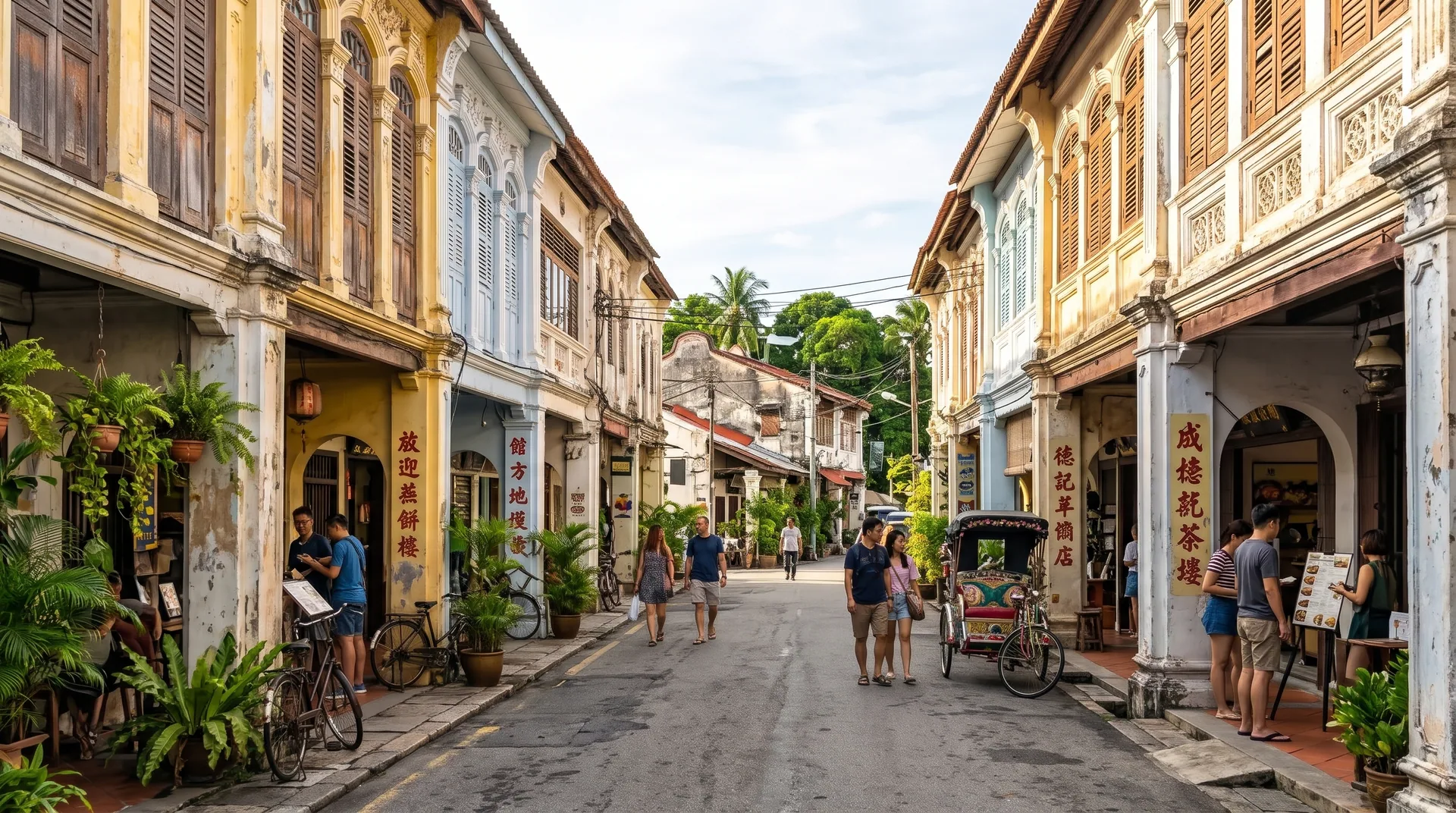
Jonker Street is Jalan Hang Jebat on maps. As you walk, look above the shop displays at the upper windows and compare the widths and details of neighboring façades. A street can make more sense when you notice the repeated building forms before concentrating on individual shops.
A daylight heritage walk and an evening market visit serve different purposes. Do not make your only chance to see the architecture depend on a market operating. If an evening event matters to your trip, check its current dates and arrangements separately; the older tourism brochure is not a live event calendar.
The worship streets: choose respectful observation over collecting interiors
For religious heritage, add the streets around Jalan Tokong, Jalan Tukang Emas, and Jalan Tukang Besi. Tourism Malaysia’s account of the Harmony Street area identifies Cheng Hoon Teng Temple, Kampung Kling Mosque, and Sri Poyyatha Moorthi Temple in this part of town. Cheng Hoon Teng’s own contact page places it on Jalan Tokong.
Use the individual street and building names when navigating, rather than expecting one road sign to explain the whole area. These are places of worship: check visitor permission at each entrance, follow local dress and shoe guidance, and ask before photographing people. If worship or another activity makes a visit inappropriate, observing from a public street is enough.
Jalan Tun Tan Cheng Lock: allow time for one house museum
Also known as Heeren Street, Jalan Tun Tan Cheng Lock offers another way to look at the historic quarter’s townhouses. It is an alternative focus if your group prefers domestic architecture to browsing shops.
For an indoor stop, the Baba & Nyonya Heritage Museum is at 48 and 50 Jalan Tun Tan Cheng Lock. Its operator describes a family-managed house museum exploring Peranakan identity and culture. It can add context that an exterior-only walk cannot provide.
Check the museum’s official visiting and ticket page before building your day around it. When checked on November 16, 2026, the site listed Tuesday closure. Reconfirm your intended date, admission arrangements, and any access needs; a house museum should not be assumed to have the same access as the street outside.
How much time and money should you allow?
For a short outing, choose Dutch Square with the optional hill, or concentrate on the streets across the river. Half a day is a sensible planning allowance for connecting both sides, pausing to look, and sitting down for a break. This is an editorial time budget, not a measured walking duration. A museum visit or a long meal needs extra room.
Separate the cost of walking between exterior viewpoints from anything you choose to enter or buy. Museum admission, refreshments, transport, and a guide are separate budget items. This article does not quote a combined ticket or claim that every religious building offers free visitor entry.
Plan the exposed walking for earlier or later in the day where practical, carry water, and leave yourself a rain option. Do not depend on an unconfirmed museum as your only shelter. With children or anyone who tires easily, agree on a stopping point before adding the hill or another street.
Fit the walk into your wider Melaka stay
If you are still deciding whether Melaka belongs in your trip, start with our Melaka destination guide. For the separate question of road transfers and nights between cities, see planning Kuala Lumpur and Melaka without rushing.
For this Melaka heritage walk, choose one thing you do not want to miss and keep the rest adjustable. That might be the church ruins, time along the worship streets, or a house museum. Once you have enjoyed that part, let the group decide whether to cross the river again or settle down for lunch.