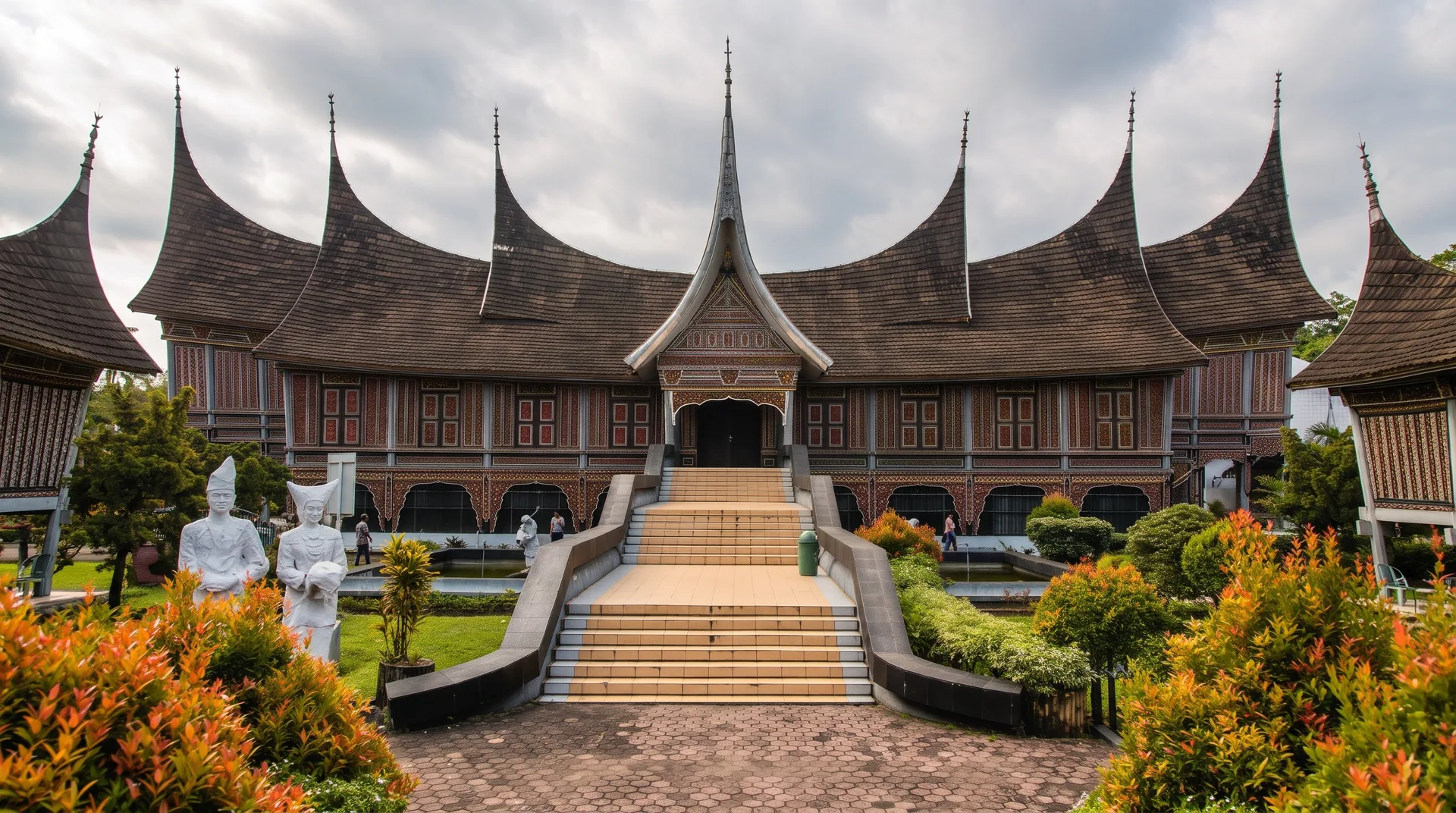
Adityawarman Museum is a provincial museum in Padang, West Sumatra, with a building inspired by Minangkabau Rumah Gadang architecture. It introduces traditional clothing, musical instruments and historical objects before travelers explore heritage sites elsewhere in West Sumatra.
Despite its name, this is not a museum devoted exclusively to the ruler Adityawarman. It is a general museum with a broader West Sumatran remit, including material associated with Minangkabau and Mentawai heritage. What is visible on a particular visit may be more limited than the museum’s documented holdings.
Is it worth visiting? Yes, if you want cultural context during a Padang city stay. It is less essential if your visit is brief and you would rather prioritize the coast, food or the old town.
What Is Adityawarman Museum?
The Ministry of Culture’s national museum registry identifies it as a general museum owned by the West Sumatra Provincial Government and managed by the provincial Department of Culture. The registry gives its national registration number as 13.71.U.03.0008.
Construction began during the 1974/1975 budget period, and the museum was officially inaugurated on 16 March 1977. Its purpose extends beyond preserving individual objects: it provides a setting for learning about the province’s history and cultural heritage.
The museum is an introduction, not a complete account of the province. Displays may change.
Is Adityawarman Museum Worth Visiting?
For a first-time visitor heading toward Bukittinggi or Tanah Datar, a museum visit can give names and context to things encountered later: the shape of traditional houses, textiles worn at customary occasions, and objects used in music or everyday life.
Families with children may prefer focusing on a few objects. Interactive exhibits, English-language interpretation and guided sessions are not confirmed for every visit; check if needed.
If you have only a brief stop in Padang, do not treat the museum as mandatory. Calvoya’s Padang Travel Guide can help you decide whether the museum, waterfront or historic streets best match your interests.
Why Is It Named After Adityawarman?
Adityawarman was a fourteenth-century ruler associated with the history of central Sumatra. The museum’s official profile explains that his historical significance inspired its name.
That name does not establish that all its objects are connected to his reign. Nor does it mean a visitor should expect a single permanent exhibition tracing his entire life. The museum’s scope includes cultural material from other periods and communities.
Published institutional histories differ in how they describe the formal naming decisions, so this guide does not assign a definitive year to the adoption of the name.
A Museum Building Inspired by Rumah Gadang
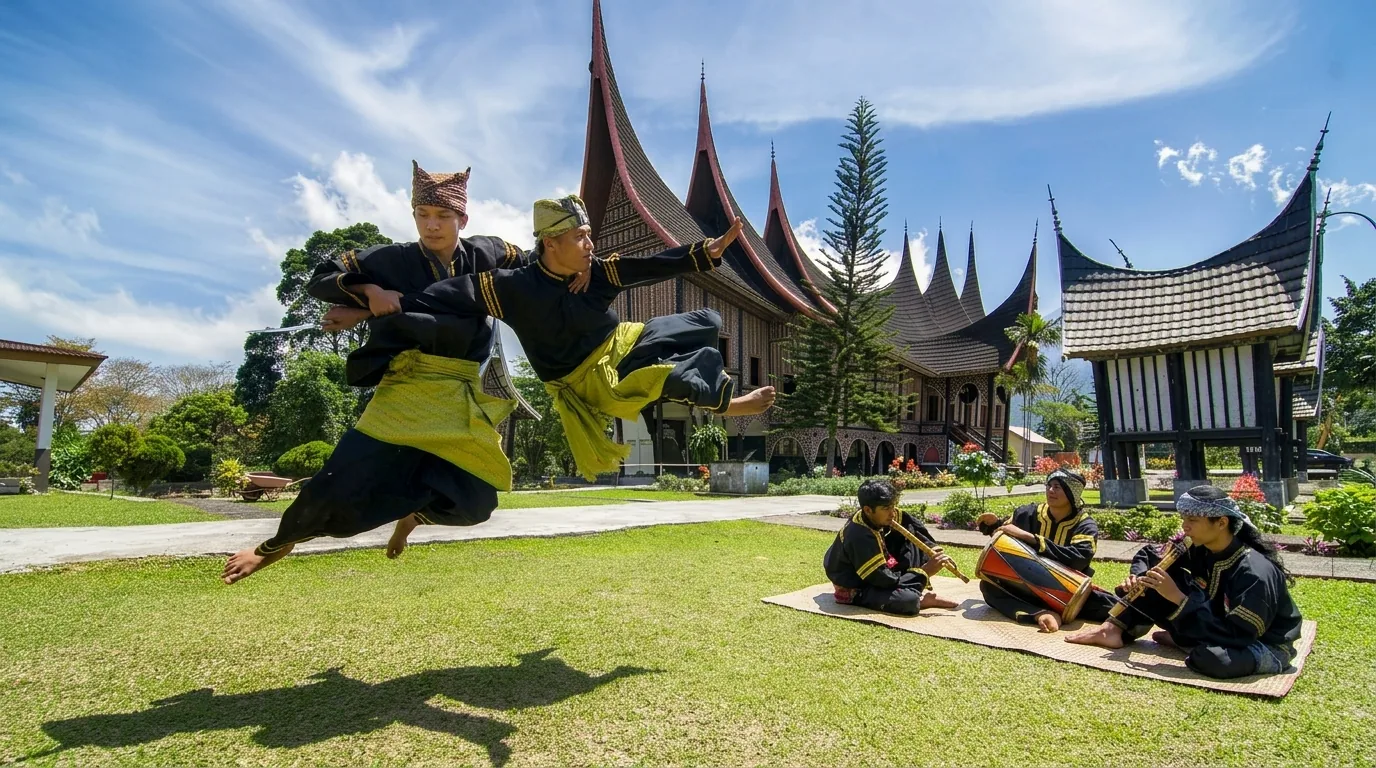
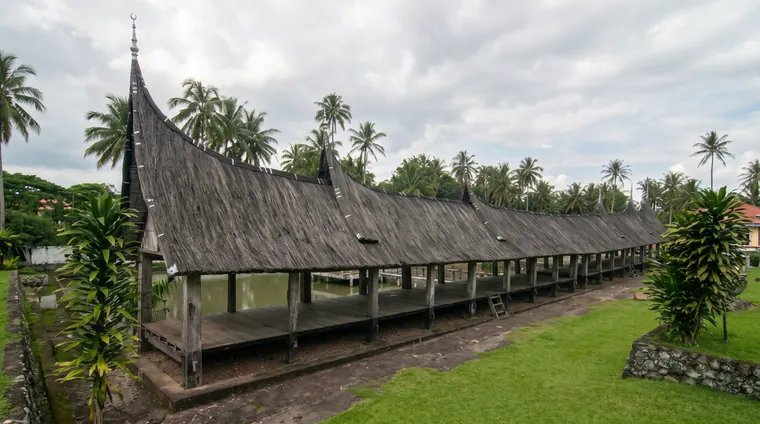
The exterior is worth noticing before entering. Its upward-curving gonjong rooflines and decorative elements use an architectural language strongly associated with Minangkabau traditional houses.
But a purpose-built museum is not an inhabited ancestral Rumah Gadang. Traditional houses have kinship and household roles that a public exhibition building does not.
Treat the museum architecture as an introduction to the form, not as a substitute for seeing how a Rumah Gadang functions in a community. Calvoya’s Rumah Gadang Architecture Guide explains those distinctions more fully.
What Can You See Inside Adityawarman Museum?
The museum’s official online catalogue lists objects such as baju kurung, salempang and rabab darek. Official tourism information also describes broader ethnographic, historical, archaeological and other types of holdings.
A catalogue entry is not a promise that the object is on display. Some items may be in storage, undergoing conservation or absent from the galleries open to visitors. The themes below describe documented collection areas, not a guaranteed room-by-room exhibition list.
Traditional Dress and Textiles
Items such as baju kurung and salempang provide a way to begin thinking about dress, materials and customary occasions. If clothing is exhibited, check its label for provenance and use rather than assuming every garment represents the same ceremony or region.
This introduction can make a later visit to a textile producer or traditional village more meaningful. The museum’s objects provide context; an artisan or local host can explain how a tradition is practiced today.
Musical Instruments and Cultural Objects
The national catalogue includes rabab darek, an instrument associated with regional music. Objects linked to performance or daily life can be especially useful for connecting material craftsmanship with the activities for which an item was made.
Do not assume the museum offers a live musical performance or that the instrument you saw online will necessarily be on display during your visit.
Historical and Archaeological Material
The museum’s documented remit also covers history and archaeology. Indonesia’s tourism information mentions reproductions connected with older political and religious history in Sumatra.
If you encounter such an object, distinguish an original artifact from a replica and read its museum label before assigning a date or historical origin. A reproduction can be educational, but it should never be presented as the original item.
Minangkabau and Mentawai Cultural Heritage
Although Minangkabau culture is prominent in the museum’s identity, the national tourism portal also identifies collections associated with Mentawai heritage.
This matters because West Sumatra’s cultural history is not exhausted by one tradition. It would nevertheless be misleading to promise a specific, permanently open Mentawai gallery without confirming the current exhibition layout.
What Can the Museum Teach You Before a West Sumatra Journey?
The strongest reason to visit is not the number of items in the catalogue. It is the chance to ask better questions when traveling afterward.
Who used this object? A textile may relate to a customary occasion, while a musical instrument or household tool belongs to another kind of activity.
Where is it from? Look for place names in the labels. The province contains distinct communities, and an object’s location and maker may be as important as its appearance.
How does it relate to a living place? A museum can introduce terms and materials. A visit to an inhabited nagari, an artisan’s workspace or a Rumah Gadang can show how people use, interpret or adapt traditions today.
For the wider cultural background, read Calvoya’s Minangkabau Culture Guide.
How Much Time Should You Allow?
As an editorial estimate, around 45–60 minutes may be enough for a general orientation, including a look at the exterior. Around 90 minutes to two hours may be more comfortable if you like reading labels and examining objects in greater detail.
These are planning suggestions, not durations prescribed by the museum. Your time will depend on which galleries are accessible, how much interpretation is available, and your group’s interests. With children or travelers who tire easily, a focused visit to fewer exhibits may work better.
Where Is the Museum and How Do You Get There?
Adityawarman Museum is at Jalan Diponegoro No. 10, Belakang Tangsi, Padang Barat, Kota Padang. Its central-city location makes it a potential part of a Padang sightseeing day without traveling into the highlands.
A car or local taxi may be convenient depending on your hotel. If you intend to walk between city stops, check the actual route and conditions rather than relying on a map’s straight-line distance. Heat, rain, busy crossings and uneven pavements can affect the experience.
Opening Hours, Tickets and Practical Information
Treat published visitor information as a reference, not a reservation or an assurance of entry. When checked in October 2026, the national museum registry listed Tuesday–Sunday, 08:00–16:00 WIB, with closure on Mondays and public holidays. Its listed admission was Rp5,000 on operating days. The Indonesia Travel museum page separately listed Rp3,000 for children and Rp5,000 for adults.
These are published prices, not confirmed live ticket quotations for a future date. Other third-party listings differ, so verify the current charge and operating arrangements with the museum if the timing matters.
Gallery access may also differ from what older photographs show. The museum has undergone works affecting visitor facilities and presentation in recent years, but that is not proof of what is open today. Ask about accessible routes, photography restrictions and available interpretation if your group has specific needs.
How to Combine the Museum With Other Padang Stops
Museum and Padang Old Town
A museum visit pairs well with Padang Old Town around Batang Arau, where older commercial buildings, the working riverfront and views toward Siti Nurbaya Bridge reveal a different part of the city’s history. The museum offers collected cultural objects; the old town presents an urban environment still in use.
These are distinct places, not necessarily one continuous pedestrian route. See Calvoya’s Padang Old Town Guide for a more realistic approach to walking and transport.
Museum and Padang Beach
Another option is to visit the museum during its published daytime hours and make Padang Beach (Taplau) a separate city stop later. This combines indoor cultural context with the coastal atmosphere of Padang without requiring a long list of attractions.
Choose based on your hotel, weather and available time.
Who Will Enjoy the Museum Most?
The museum will appeal to first-time travelers curious about West Sumatran culture, families who enjoy historical objects, and visitors preparing for traditional villages or weaving destinations. Its central location can make it an easier cultural introduction than a separate highland excursion.
It may be less rewarding when your available time is very short, when a particular gallery cannot be confirmed open, or when your interests lie mainly in outdoor scenery and food.
Is Adityawarman Museum Worth Adding to Your Trip?
Yes, if you value understanding what you will see later in West Sumatra. The museum offers a practical introduction to regional material culture and a building whose architecture makes Minangkabau design recognizable from the outset.
It does not need to fill an entire day, and it cannot replace experiencing heritage in the communities where it remains part of daily life. A museum visit combined with one well-chosen Padang stop is often sufficient.
If you are planning a wider cultural journey through Padang and the highlands, Calvoya’s Journey Designer can help place the museum within a realistic route. Opening arrangements, ticket prices and access to particular displays should still be confirmed before travel.