Fort Van der Capellen is a Dutch colonial-era military site in Batusangkar, Tanah Datar Regency, West Sumatra. Its history is tied to the Padri War and the extension of Dutch military power into the Minangkabau highlands in the nineteenth century.
The surviving complex has changed use and undergone conservation work. It should not be mistaken for a fort preserved exactly as it stood in the 1820s—or for a fully operating visitor museum. As of the latest reports reviewed in October 2026, plans to develop a larger history museum were still being prepared, and tourist access to the buildings was not confirmed.
For travelers interested in history, it is a meaningful place to understand. Whether it is worth adding to a specific day’s itinerary depends on access and the rest of your Tanah Datar route.
What Is Fort Van der Capellen?
Also called Benteng Van der Capellen, the site developed as a Dutch military position during the Padri War. The Tanah Datar tourism inventory associates its establishment with the arrival of Dutch troops in the Batusangkar area in the early 1820s.
Its name refers to Godert van der Capellen, governor-general of the Dutch East Indies during that period. The fort is part of the region’s colonial military history, rather than a Minangkabau royal residence.
Where Is Fort Van der Capellen?
The fort is on a small rise in central Batusangkar, the administrative centre of Tanah Datar. The Tanah Datar regional profile published in 2025 places it close to Indo Jolito, a building connected with the former Dutch administrative presence.
Use the full search term Benteng Van der Capellen, Batusangkar, Tanah Datar when navigating. Indonesia’s heritage registry also contains a different site with the Van der Capellen name in Maluku; they are not interchangeable destinations.
The central Batusangkar location makes the fort relevant to a history-focused stop in town, but its location alone does not establish permission to enter the grounds or buildings.
Fort Van der Capellen and the Padri War
A conflict more complicated than two sides
The Padri War took place amid disputes involving religious reform, customary authority and political power in the Minangkabau region. Historical summaries often refer to Padri reformers and leaders associated with adat, the region’s customary institutions.
That distinction needs care. Neither category represents every person in Minangkabau society, and it would be inaccurate to portray the conflict simply as ‘Islam against tradition’. Local interests, alliances and the relationship between religious and customary authority were more complicated than that shorthand suggests.
How Dutch involvement changed the conflict
According to the Tanah Datar government’s historical description, customary leaders sought Dutch assistance amid fighting, and Dutch troops then moved into the Tanah Datar area. The source places the Batusangkar military position within that intervention.
The arrival of Dutch troops marked a new military intervention in the region. The fort should therefore be understood in the wider context of warfare and colonial expansion, not as a neutral building or proof that Dutch and local interests were identical.
When and Why Was the Fort Built?
The available accounts agree on the 1820s, but not on one exact building period. The Tanah Datar regional profile associates construction with 1822–1824; reporting on the October 2026 revitalization proposal cites 1822–1826.
Neither range proves the construction date of every room, roof or wall visible now. For a visitor guide, the defensible description is an early-nineteenth-century Dutch military complex developed during the Padri War.
The local tourism inventory explains that troops established a defensive position on raised ground near the centre of Batusangkar. The choice reflected the need for a military base during operations in the surrounding region. It is not necessary to invent a detailed plan of defensive firing lines or a particular battle fought inside the surviving buildings to explain that role.
What Can You Still Recognize at the Site?
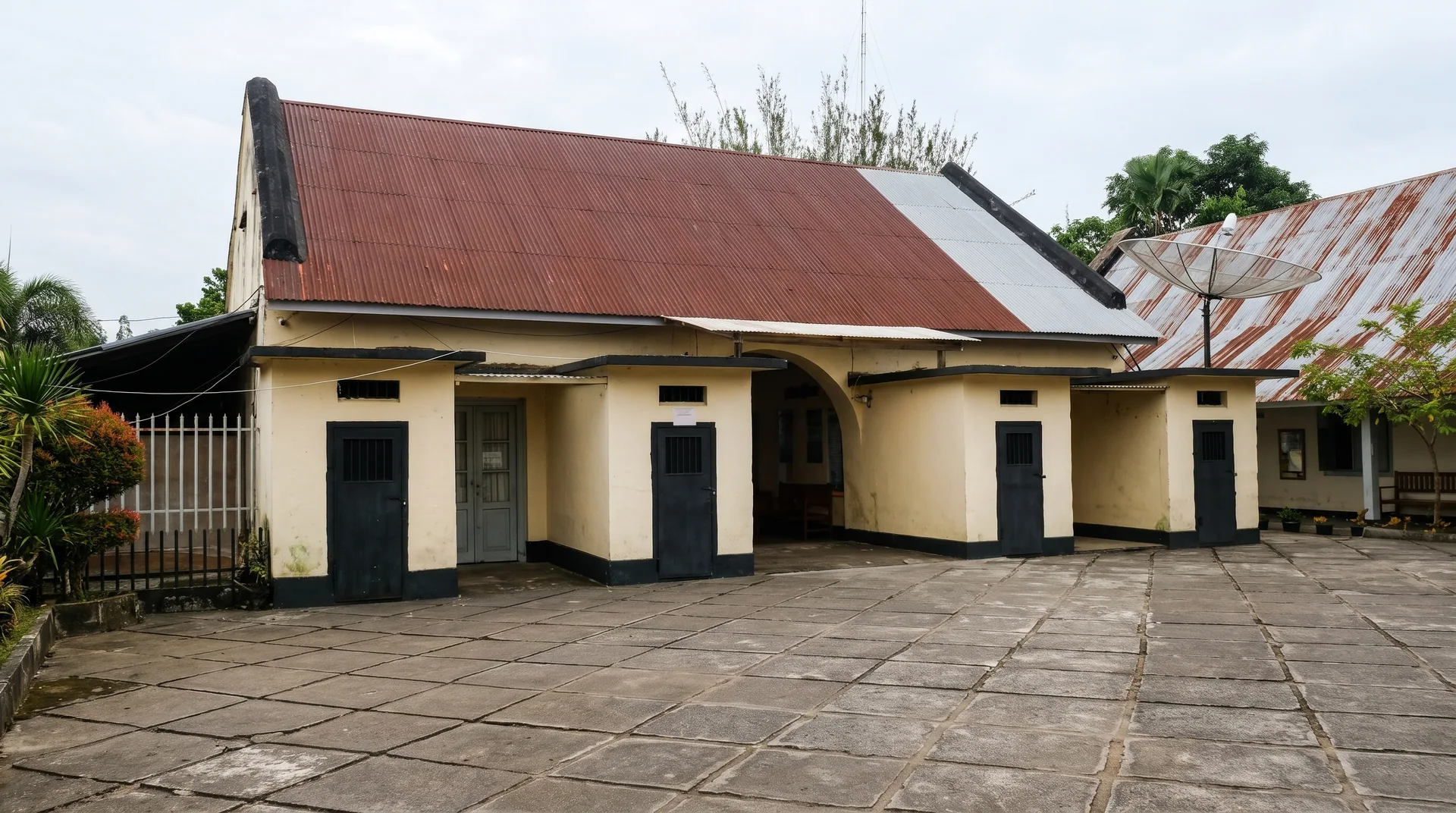
The 2025 Tanah Datar regional profile describes long rooms on either side of the complex, smaller rooms toward the front, former detention cells and two old cannons. Photographs in the national heritage registry and published documentation show low, pitched-roof buildings, an arched passage and courtyard spaces.
One particularly interesting detail is the cannons’ age. The Tanah Datar tourism inventory identifies two cannons with 1790 markings, predating the fort’s documented nineteenth-century development. The date reported for a movable historical object should not be mistaken for the fort’s founding year. Their present placement and visitor visibility should be confirmed locally.
These descriptions establish recognisable features of the documented site, but they do not verify that every visible element survives from the initial construction period. Avoid treating the current pitched roofs, paving, door fittings or room finishes as unquestionably original.
A historic building shaped by conservation
A 2025 study in Jurnal Kronologi documents preservation activity from 2007 to 2010, including cleaning, restoration, technical studies and subsequent reuse.
This matters when reading the architecture. A protected complex may retain significant historic fabric while also incorporating repairs and later changes. In particular, official descriptions disagree on wall thickness, so this guide does not assign one measurement to every wall or use it to make claims about an unaltered defensive design.
How Has the Fort Been Used Since Its Military Period?
The fort’s story did not end with Dutch rule. The preservation study records later uses associated with the Japanese occupation, educational functions and policing, followed by conservation and administrative reuse.
The 2025 Tanah Datar profile describes the complex as accommodating local government offices, cultural activity, tourism information and a small historical museum. That is evidence of how the site was reported to be used, not confirmation that each service or display is currently accessible.
A separate, larger proposal to create a museum of historical struggle was being discussed in 2026. The existence of a small museum mentioned in an earlier government profile should not be confused with completion of that new project.
Is Fort Van der Capellen a Protected Heritage Site?
Yes. Indonesia’s official cultural-heritage registry lists Benteng Van Der Capellen, Tanah Datar, as a Bangunan Cagar Budaya Peringkat Nasional—a nationally ranked protected heritage building.
The registry records Decision No. PM.05/PW.007/MKP/2010, dated 8 January 2010. This is a specific Indonesian legal designation. It is not a UNESCO World Heritage inscription, and heritage protection should not be confused with public access or the existence of a fully interpreted museum.
Is Fort Van der Capellen Open to Visitors?
Access to the full complex and its interiors was not verified for October 2026. The most recent confirmed development is a proposal, not a visitor timetable.
A July 2026 local-government report published by RRI said that part of the site was still being used as government offices, with relocation proposed to enable more extensive work. Reports dated 13–14 October 2026 then described a site visit involving Tanah Datar officials and the Ministry of Culture to prepare a future museum.
These reports do not establish that the renovation has begun or finished, that all offices have moved, or that an exhibition is currently open to travelers. No dependable current public opening schedule, entry charge or standard guided-tour arrangement was confirmed from an operator notice.
If the fort is an important stop for you, confirm access through the Tanah Datar tourism authorities or a local contact before traveling there. Ask specifically whether exterior viewing, the courtyard or any indoor areas are permitted; these are different levels of access.
Fort Van der Capellen vs Pagaruyung Palace
The two places help tell different parts of Tanah Datar’s history.
Fort Van der Capellen is associated with nineteenth-century conflict, Dutch military intervention, colonial-era buildings and later preservation. It encourages questions about power, memory and the reuse of historical structures.
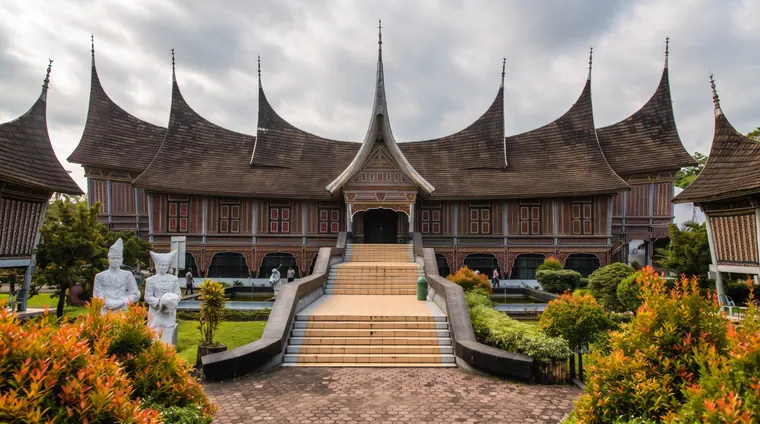
Istano Basa Pagaruyung presents Minangkabau royal and customary heritage through a reconstructed palace and its visitor interpretation. The building seen today is not an untouched original royal residence. Calvoya’s Pagaruyung Palace Guide covers that experience separately.
To understand the wider relationship between customary institutions and daily life, see the Minangkabau Culture Guide. Neither article is a substitute for a detailed history of the Padri War.
Should You Add the Fort to a Tanah Datar Day Trip?
Consider it as an optional Batusangkar history stop, subject to confirmed access. It makes sense for travelers interested in colonial history or conservation, especially when the route already passes through the town.
It is a weaker choice if entry is uncertain and your main priorities are Pagaruyung Palace or Nagari Tuo Pariangan. Those places offer different heritage experiences, and the fort should not displace a confirmed visit merely because it appears nearby on a map.
Calvoya’s Tanah Datar Day Trip from Bukittinggi is a better starting point for deciding how much ground to cover. Confirm the route and any site access before adding a time-sensitive stop.
Practical Notes for a Respectful Visit
- Navigate carefully: use the complete name and Batusangkar location rather than another Van der Capellen site.
- Verify access: ask about permitted exterior and courtyard viewing separately from interior access.
- Respect current users: parts of the property have served administrative functions; do not enter occupied rooms or photograph staff without permission.
- Protect historic fabric: do not climb on cannons, walls, gateways or fragile architectural features.
- Allow flexibility: avoid relying on unverified opening hours, admission prices or museum displays.
Is Fort Van der Capellen Worth Visiting?
Historically, yes; as a sightseeing stop, only when access makes sense. The fort has a documented connection to the Padri War, surviving buildings described in official sources and a confirmed national cultural-heritage designation.
For a visitor expecting a reliably open museum with curated indoor galleries, however, the information available in October 2026 is not sufficient to make that promise. If you can arrange appropriate viewing, the site can add an important colonial-history perspective to a Tanah Datar journey. Otherwise, keep it as a subject to learn about rather than an obligatory detour.