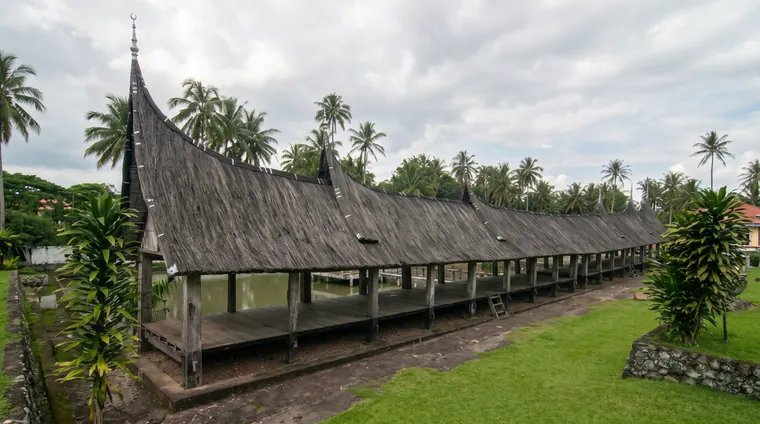
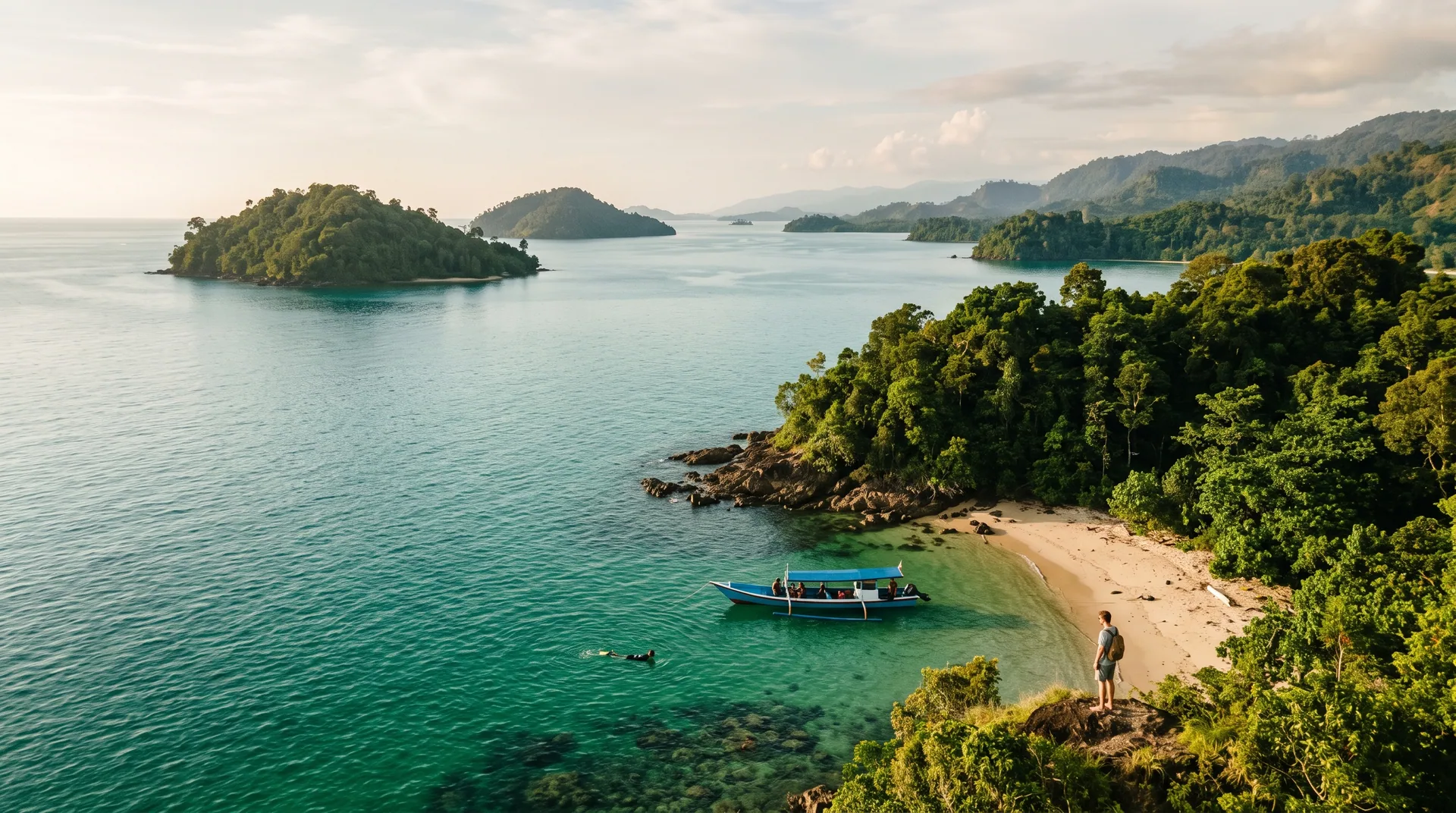
If you have one free day in Padang and want to spend it on the water, two routes often appear in trip plans: Mandeh and an island day through Bungus to Pulau Pagang and Pulau Pamutusan.
They sound like two completely separate island destinations. The geography is more complicated than that.
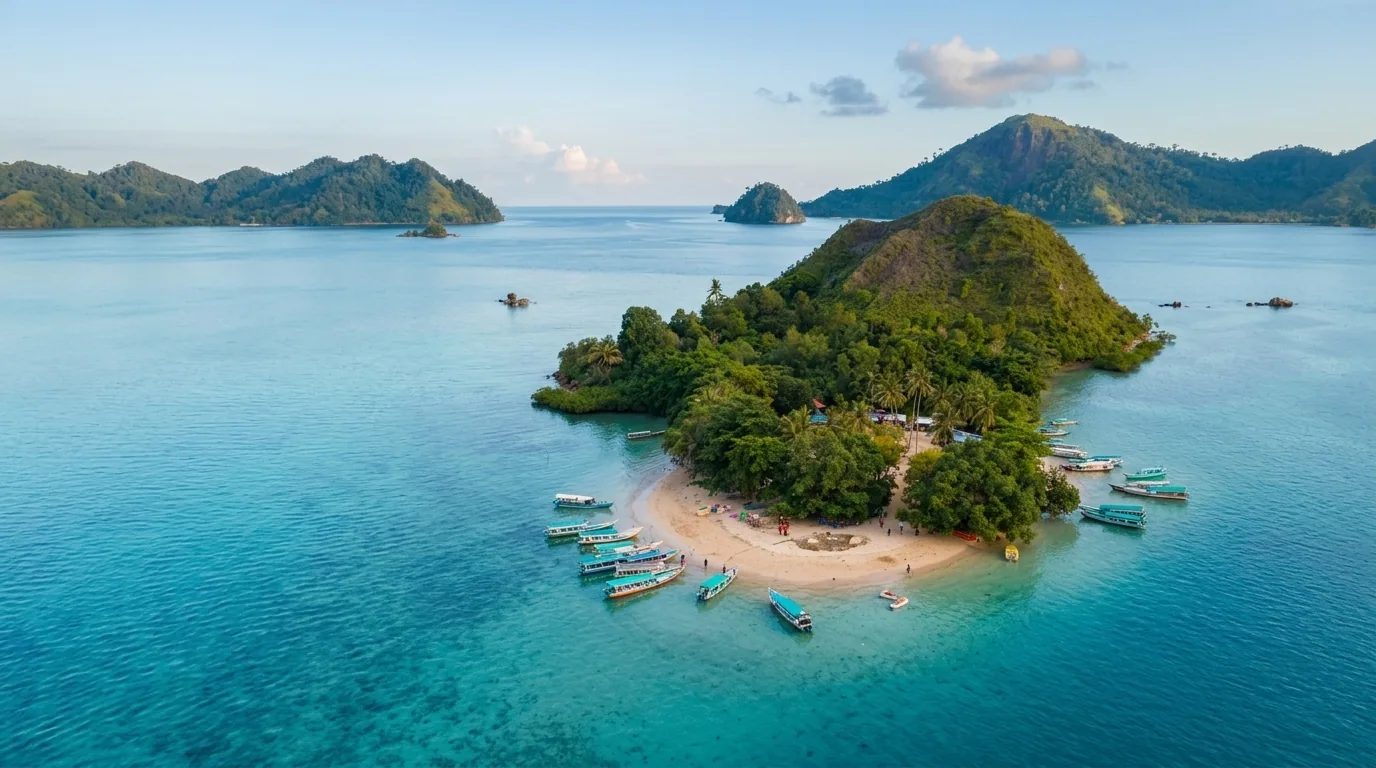
Mandeh is a wider coastal tourism area in Koto XI Tarusan, Pesisir Selatan, with mainland viewpoints, islands, mangroves, waterfalls, and boat routes. Pulau Pagang and Pulau Pamutusan are also officially associated with tourism in Pesisir Selatan and the wider Mandeh area, even though many travelers reach them from the Padang side through Bungus or Sungai Pisang.
So the useful comparison is not really one archipelago versus another.
It is a choice between two different styles of island day from Padang.
Choose Mandeh when you want a broader island-hopping route with several types of scenery and activities. Choose the Bungus–Pagang–Pamutusan route when you prefer a more focused day built around beach time, snorkeling, and a viewpoint trek.
If you need a broader introduction to the city before deciding how to use your coastal day, start with Calvoya’s Padang travel guide.
First, Understand What You Are Actually Comparing
This distinction prevents a lot of confusion when reading local tour descriptions.
Mandeh is a wider tourism area
Mandeh is not one island.
The coastal area includes mainland viewpoints and a network of marine attractions around Koto XI Tarusan. Government tourism information identifies boat tours from the Carocok Tarusan area, viewpoints, islands, mangrove environments, snorkeling and other marine activities.
A Mandeh day can therefore be designed in several ways:
- a mostly land-based trip focused on coastal viewpoints;
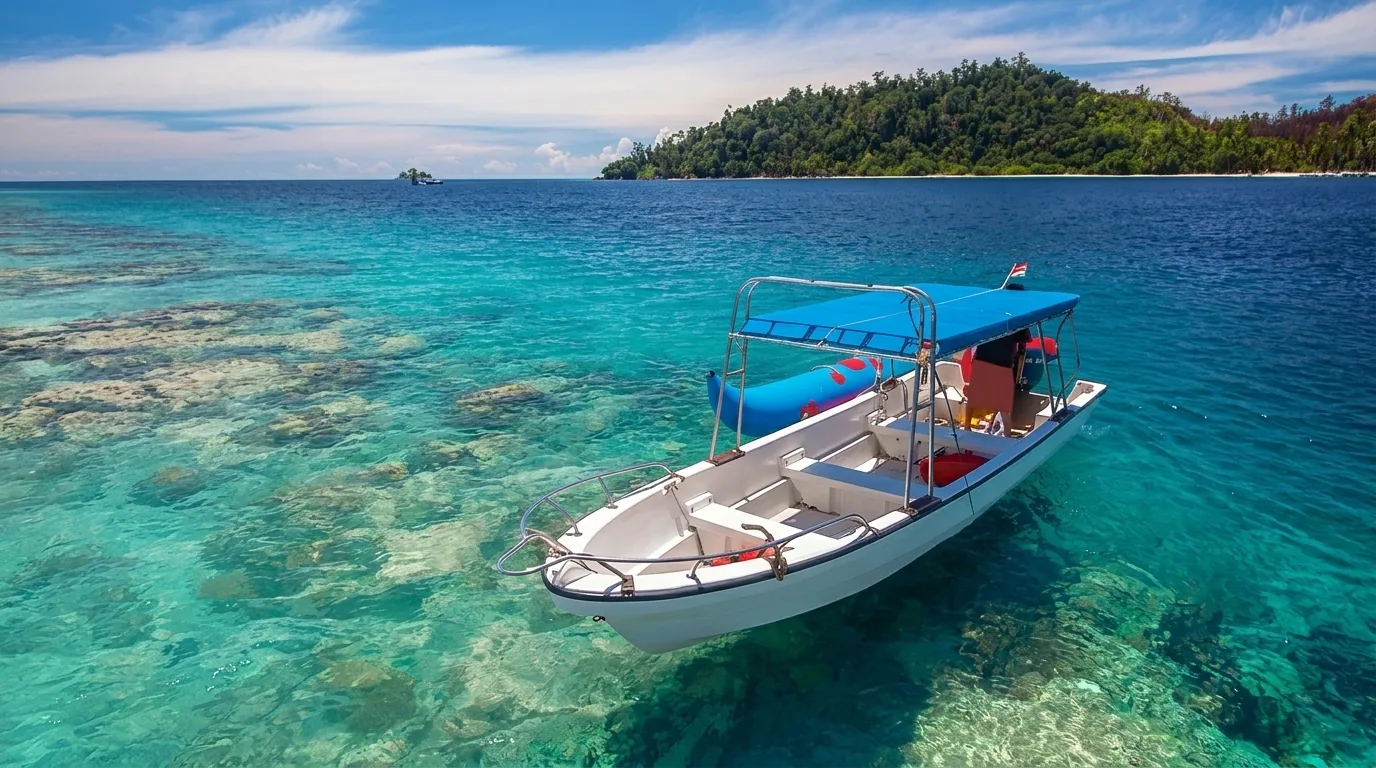
- a boat-focused island-hopping day;
- a combination of road viewpoints and selected marine stops;
- an active route involving snorkeling, island stops, mangroves, or a waterfall.
Calvoya’s Mandeh day-trip guide explains the wider area and the difference between visiting Mandeh from land and exploring it by boat.
Bungus is useful as a departure route
Bungus Teluk Kabung is part of Padang and provides practical access toward the southern coast and nearby islands.
For a traveler, a route described as a Bungus Islands day trip normally means starting from Padang, traveling toward the Bungus or Sungai Pisang side, and then continuing by boat toward selected island stops.
Calvoya’s current version focuses on:
- Pulau Pagang;
- snorkeling;
- underwater photography when conditions allow;
- beach and water activities;
- Pulau Pamutusan;
- a light trek toward the Pamutusan viewpoint.
The important detail is that Pagang and Pamutusan should not be treated as geographically unrelated competitors to Mandeh. They sit within the same broader southern coastal tourism context and are administered by Pesisir Selatan, while the Bungus route describes a practical way to approach them from Padang.
What Is a Mandeh Island Day Like?
A full Mandeh boat trip is about variety.
Calvoya’s current Mandeh route starts from Padang and continues toward the Tarusan Mandeh departure area before moving through a sequence of marine and nature stops.
Depending on conditions and the final route, these can include:
- Pulau Sironjong Gadang;
- Pulau Sironjong Ketek;
- snorkeling around the Cubadak area;
- Pulau Soetan;
- mangrove scenery;
- Air Terjun Gemuruh;
- optional cliff-jump activity when conditions and guest comfort allow.
That creates a day in which the scenery keeps changing.
You may move from open-water views to a small island, from snorkeling to mangrove scenery, and then toward a coastal waterfall. It feels more like a marine sightseeing circuit than a day centered on one beach.
The trade-off is that a multi-stop route involves more movement.
There is road travel from Padang before boarding the boat, then repeated boat transfers between stops. Trying to complete every possible attraction can make the day feel rushed, so the better approach is to prioritize the stops that matter most and leave the sequence flexible.
Travelers who want this style can see Calvoya’s current Mandeh Islands snorkeling, mangrove and waterfall route.
What Is the Pagang and Pamutusan Day Like?
The Bungus-side route is more concentrated.
Instead of trying to cover a large number of island and coastal environments, the day can focus on two main experiences: time around Pulau Pagang and the Pamutusan viewpoint.
At Pagang, the emphasis can be on:
- snorkeling when visibility and sea conditions are suitable;
- swimming and beach time;
- underwater photographs;
- relaxed island time;
- optional water activities when available.
Pamutusan adds a different element.
Rather than another snorkeling stop, the island gives the day a land-based activity through a light climb toward an elevated viewpoint. That creates a useful contrast after time in the water.
The resulting day is easier to understand:
boat → island → snorkeling and beach time → Pamutusan trek → return to Padang.
This can suit travelers who want an island experience but do not need a long checklist of stops.
Calvoya’s current Pagang snorkeling and Pamutusan trek route follows this simpler structure.
Choose Mandeh If You Want More Variety
Mandeh is the stronger fit when the attraction is the whole coastal landscape, not only snorkeling.
Consider the Mandeh route if:
- You enjoy island hopping. The day is built around moving through several marine environments rather than staying at one main island.
- You want more landscape variety. Islands, mangroves, marine views, and a waterfall can sit within the same route.
- Photography matters as much as swimming. There are more changes in scenery during the day.
- You like active itineraries. Repeated boat movement and several stops create a more exploratory rhythm.
- You want Mandeh itself to be a major part of the West Sumatra trip. The wider tourism area deserves more attention than simply passing through it.
- You may want a mainland alternative. Mandeh also has panoramic viewpoints, so the area still has a reason to visit even if a full boat day is not appropriate.
The last point is particularly useful when planning around uncertain marine conditions.
A traveler can experience part of Mandeh from land. A Pagang–Pamutusan island day, by contrast, depends much more heavily on actually taking the boat.
Choose the Bungus–Pagang–Pamutusan Route If You Want a Simpler Island Day
The Bungus-side route works particularly well when you want to spend more of the day around a smaller number of activities.
Consider it if:
- Snorkeling is your main priority. Pagang can become the main water-activity stop rather than one of many short stops.
- You want more beach time. A less complicated sequence makes it easier to avoid spending the entire day getting on and off the boat.
- You like the idea of a viewpoint trek. Pamutusan adds a light physical activity without turning the day into a serious hike.
- You are staying in Padang. The Bungus side is geographically part of Padang, making it a natural direction for a city-based island day before continuing offshore.
- You prefer a clear itinerary. Pagang plus Pamutusan is easier to understand than a long list of islands that you may not remember afterward.
- You would rather go deeper on two stops than collect many stops quickly. This can produce a calmer day when the route is paced well.
Simple does not mean inferior. It means the trip is optimized around a different travel preference.
Which Is Better for Snorkeling?
Do not choose either trip based on a promise that one always has clearer water than the other.
Snorkeling conditions can change with:
- recent rain;
- wind;
- waves;
- tides;
- sediment;
- boat traffic;
- the exact snorkeling location;
- time of day.
Mandeh provides several potential marine environments, which gives the boat team more route context to work with. The Pagang route gives you the option of making snorkeling a larger part of the day instead of fitting it between many stops.
For most travelers, the better question is therefore not:
Which destination has better snorkeling?
It is:
Do I want snorkeling to dominate the day, or do I want snorkeling as one part of a wider island-hopping route?
If snorkeling is the main goal, the Pagang-focused day can be the cleaner choice.
If you want snorkeling combined with several types of coastal scenery, Mandeh is the more varied option.
Which Is Better for Photography?
Again, the answer depends on the image you want.
Choose Mandeh if you want:
- wider coastal landscapes;
- multiple islands during one day;
- mangrove scenery;
- boat and marine photographs;
- a mixture of land and sea environments;
- the possibility of combining mainland viewpoints with marine scenery.
Choose Pagang and Pamutusan if you want:
- beach photographs;
- snorkeling and underwater images when visibility allows;
- a simpler tropical-island composition;
- an elevated island view from Pamutusan.
Pamutusan is particularly useful because it breaks up an otherwise water-focused day with a higher viewpoint.
Which Is Better for Families?
Neither trip should automatically be labelled family-friendly without considering the individual family.
Both involve boat travel and exposure to marine conditions.
For families with older children who are comfortable around boats and water, either route can work when conditions are appropriate.
Before booking, consider:
- whether each child is comfortable on small boats;
- whether they can wear a life jacket for the required periods;
- whether snorkeling is appropriate for their confidence level;
- sensitivity to motion sickness;
- tolerance for sun and heat;
- whether they enjoy repeated boat transfers;
- whether the Pamutusan climb suits them;
- how much downtime they need during the day.
A family that prefers fewer transitions may find the Pagang–Pamutusan route easier.
A family with active older children who enjoy moving between different experiences may prefer Mandeh.
The route should be adjusted around the family rather than forcing children through every advertised stop.
What If You Do Not Want to Snorkel?
This is where the difference becomes clearer.
Mandeh can still make sense without snorkeling because the wider area offers:
- coastal viewpoints;
- island scenery;
- boat sightseeing;
- mangrove environments;
- beaches;
- waterfall stops on selected routes.
You can even experience the mainland side of Mandeh without taking a boat at all.
The Pagang and Pamutusan route is more strongly built around the island experience. You can skip snorkeling and enjoy the beach and viewpoint, but if you also do not enjoy boat travel or beach time, much of the reason for choosing this route disappears.
For non-swimmers who still enjoy boats and islands, either route may work with a properly fitted life jacket and an itinerary that does not pressure them into water activities.
Which Trip Takes More Energy?
A full Mandeh circuit can feel busier because there are more transitions.
You may have:
- a longer road section before the marine route;
- several boat legs;
- multiple island or nature stops;
- snorkeling;
- optional active experiences;
- a return journey to Padang at the end of the day.
The Pagang–Pamutusan route can be simpler, but it still combines boat travel, snorkeling, sun exposure, and a short climb.
Neither should be treated as a passive resort day.
If your West Sumatra itinerary has already included several long road days, it may be worth choosing the simpler island route rather than turning the coastal day into another endurance exercise.
Sea Conditions Matter More Than the Published Itinerary
Both routes depend on the sea.
Wind, rain, tide, wave conditions, visibility, and local boat advice can affect:
- departure timing;
- snorkeling conditions;
- which island is comfortable to approach;
- how long you spend at each stop;
- waterfall access;
- optional water activities;
- the final return time.
Pesisir Selatan tourism authorities have specifically advised visitors to check conditions, use life jackets, use appropriate boat and guide services, and follow local safety instructions during marine trips.
That means a responsible island itinerary should be treated as a route framework, not a promise that every stop must be completed.
Skipping an optional stop because conditions deteriorate is better travel planning than forcing the schedule simply because the destination appeared on a booking page.
Pulau Pagang and Pamutusan: Why the Names Can Be Confusing
If you research these islands online, you may find Pagang or Pamutusan described under Bungus, Sungai Pisang, Mandeh, or Pesisir Selatan.
That is one reason travelers struggle to understand the geography.
The practical explanation is:
- Bungus Teluk Kabung is within Padang and works as a southern coastal access area.
- Sungai Pisang is also on the Padang side and is associated with access toward nearby islands.
- Pulau Pagang and Pulau Pamutusan are administered within Pesisir Selatan tourism and are included in the wider Mandeh tourism context.
- Carocok Tarusan provides another important departure point for exploring the Mandeh marine area.
In September 2026, the Pesisir Selatan government introduced electronic tourism-ticketing arrangements for both Pagang and Pamutusan, reinforcing that these islands are managed as Pesisir Selatan destinations.
So do not spend too much time trying to force every online tour name into a separate geographic category.
Ask instead:
Where does my boat depart, which islands will I actually visit, and how long will I spend at each one?
Those questions matter far more than the marketing label on the tour.
If You Only Have One Island Day from Padang
Use your priorities to decide.
Choose Mandeh when:
- you want the most varied coastal day;
- island hopping itself appeals to you;
- you want scenery beyond beaches and snorkeling;
- mangroves, waterfalls, and changing landscapes interest you;
- you do not mind a longer and more active day;
- Mandeh is one of the destinations you specifically came to West Sumatra to see.
Choose Pagang and Pamutusan via Bungus when:
- you want a simpler island-focused day;
- snorkeling and beach time are the priorities;
- you want fewer major stops;
- you like the combination of water activity and a short viewpoint trek;
- you are staying in Padang and want the island experience to remain closely connected to your city base;
- you prefer spending longer at selected stops rather than moving through a large circuit.
Consider Mandeh without a boat when:
- you mainly want coastal panoramas;
- someone in the group is uncomfortable with boats;
- you want a shorter coastal extension rather than a full marine day;
- conditions make a boat route inappropriate.
There is no reason to force both island routes into a short West Sumatra itinerary unless marine travel is one of your main interests.
For most first-time visitors, one well-paced island day is more useful than two similar coastal days that remove time from Bukittinggi, Harau Valley, Minangkabau culture, or other parts of the region.
How These Trips Fit Into a West Sumatra Itinerary
Both options work most naturally around a Padang stay.
A simple route might be:
- arrive in Padang and stay overnight;
- take the selected island day;
- return to Padang;
- continue toward Bukittinggi or another inland destination the following day.
They can also work near the end of a highland trip, giving the journey a coastal finish before departure.
Avoid combining a full island day with a long inland transfer on the same schedule unless there is a strong logistical reason. Marine trips are already sensitive to weather, boat timing, and return conditions.
Giving the coastal day enough room makes the experience better and protects the rest of the itinerary from delays.
Two Calvoya Routes for Two Different Travel Styles
Calvoya currently offers both route concepts because they solve different travel needs.
The Padang to Mandeh Islands route is built around broader island hopping, snorkeling, marine scenery, mangroves, and a waterfall stop.
The Padang to Bungus Islands route focuses more tightly on Pulau Pagang, snorkeling, beach and water activity, and the light Pamutusan viewpoint trek.
Neither route needs to be treated as fixed. Sea conditions, group comfort, preferred pace, and the activities you value most should shape the final day.
If you are unsure which one fits the rest of your West Sumatra itinerary, Calvoya’s Journey Designer can connect the island day with your Padang stay, inland route, arrival time, and overall travel pace.
The useful distinction is simple:
Choose Mandeh for a broader coastal journey. Choose Pagang and Pamutusan for a more focused island day.