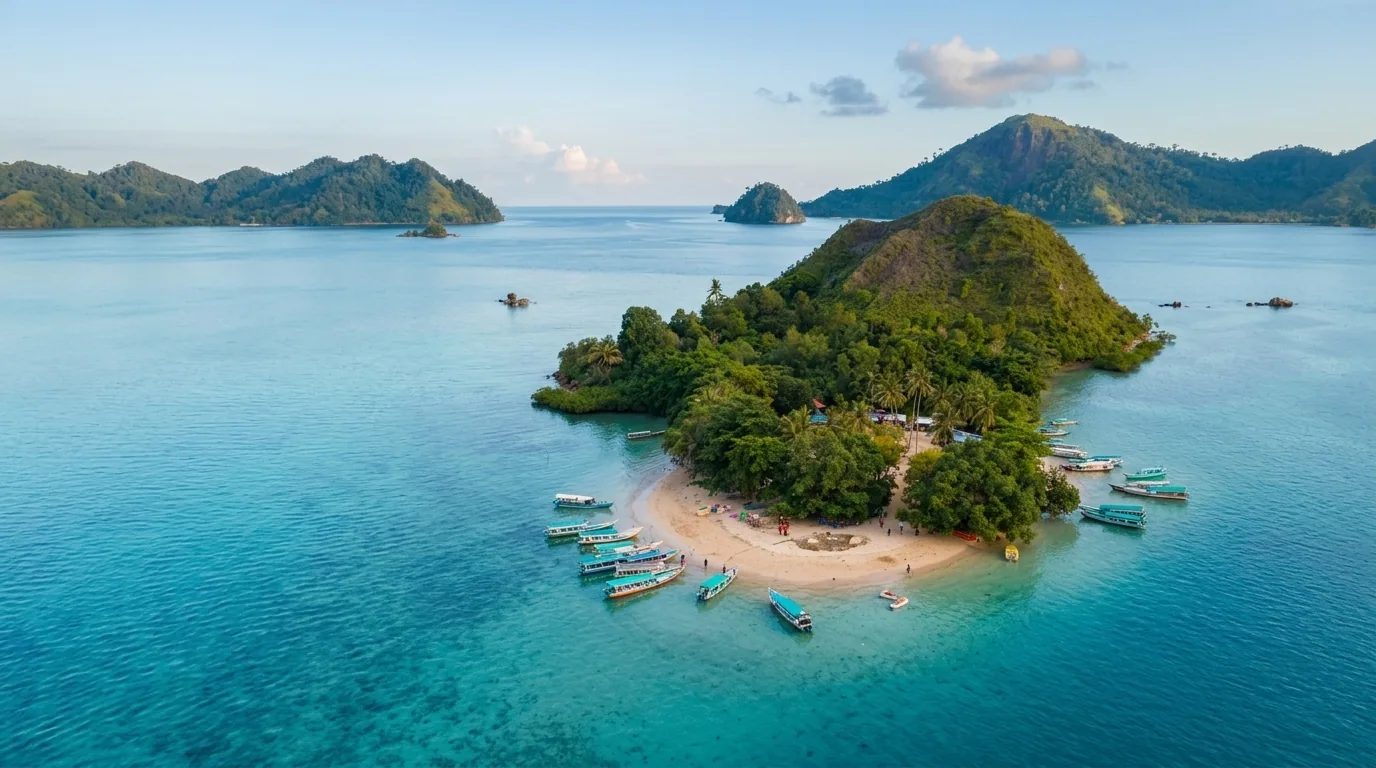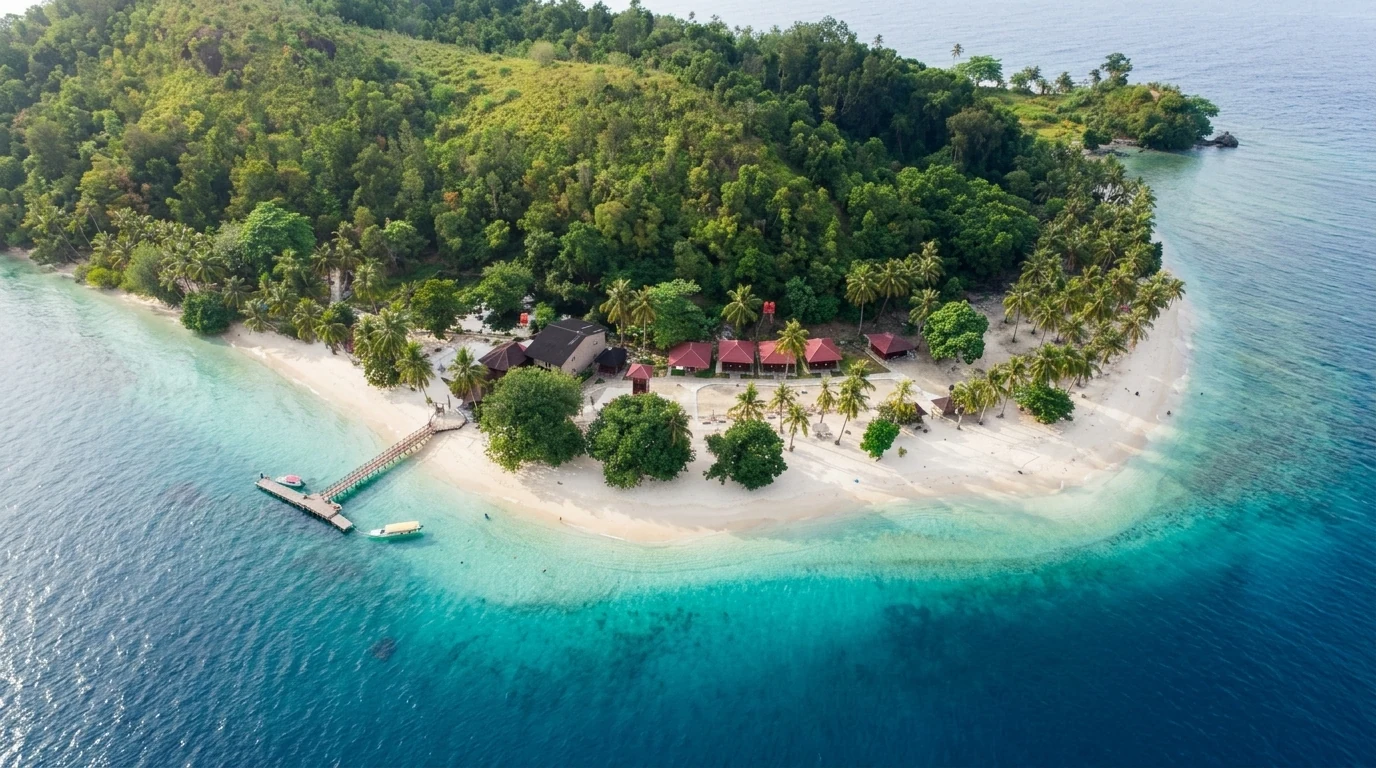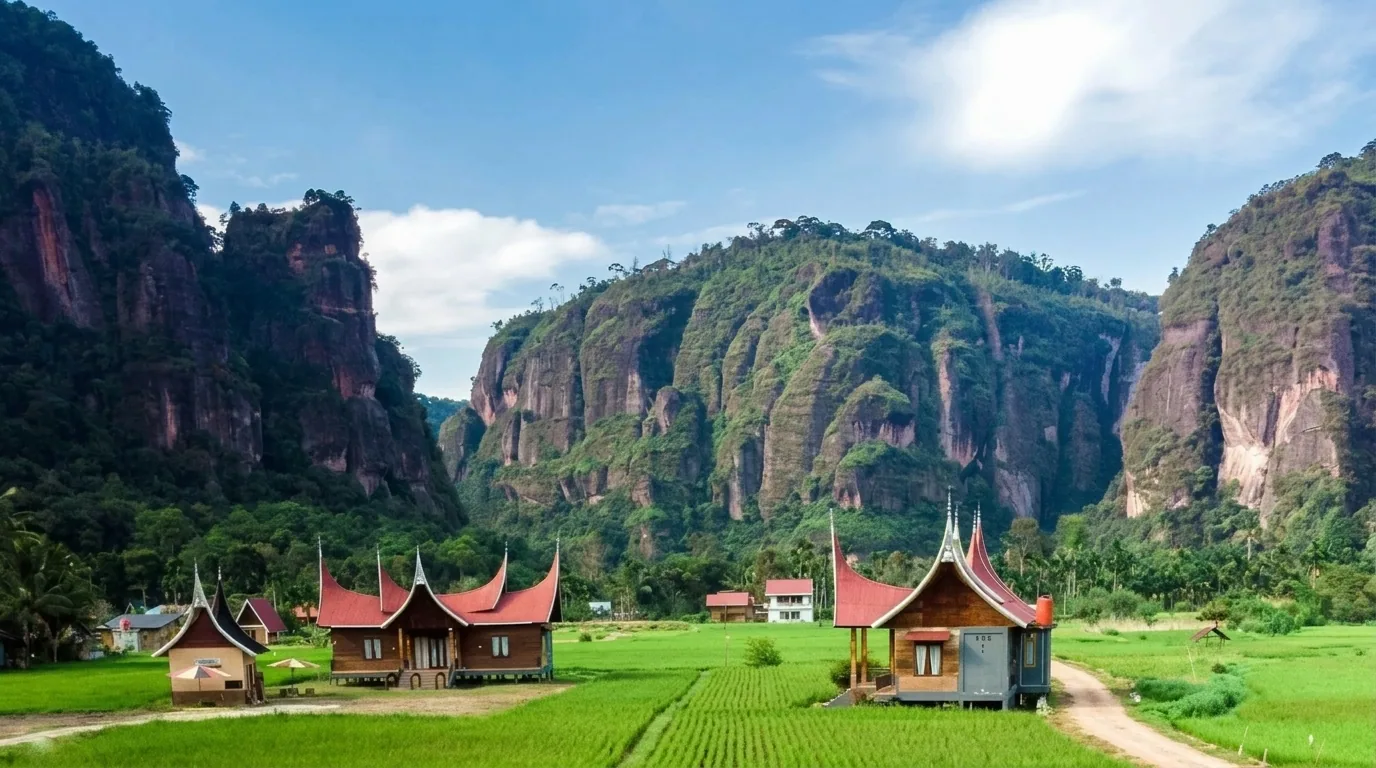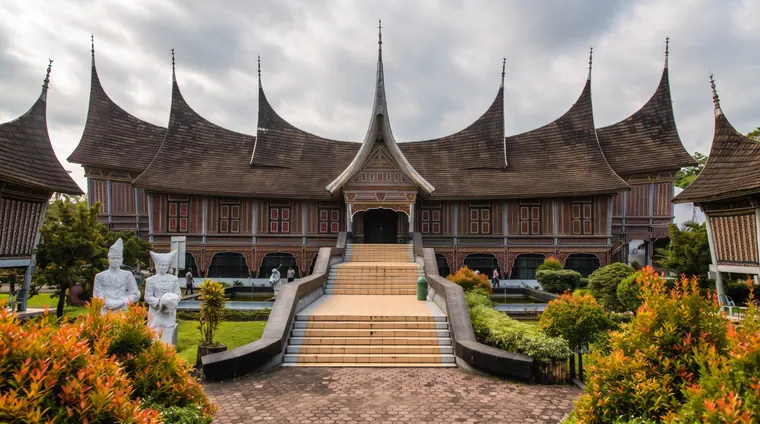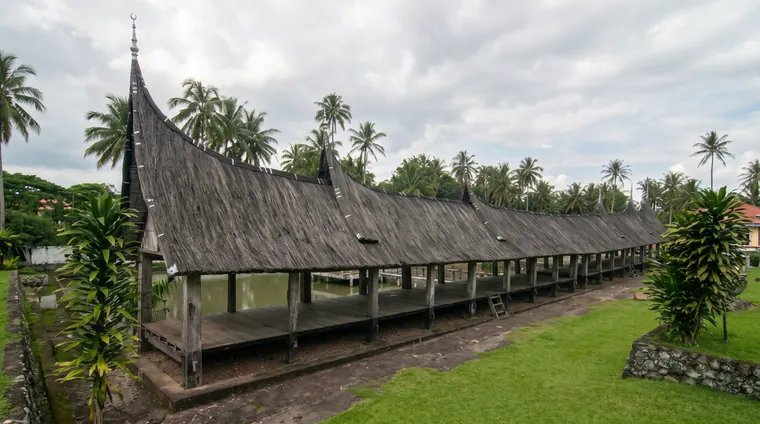
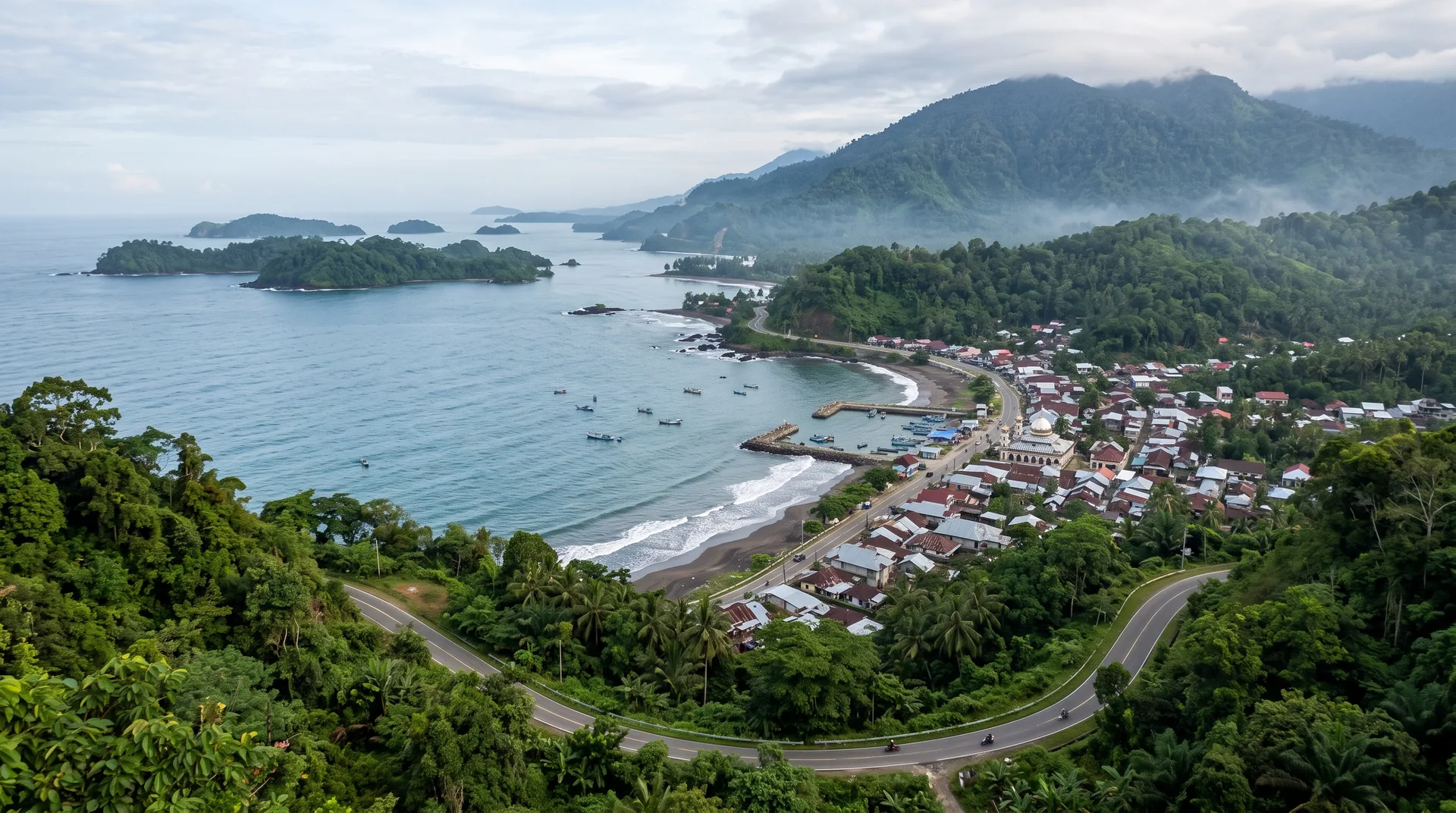
Many first-time visitors encounter Pesisir Selatan through one name: Mandeh.
Mandeh deserves the attention, but it is only the northern part of a much larger coastal regency stretching south from the border of Padang toward Bengkulu.
Continue beyond the Mandeh area and the journey changes. Painan becomes the main town, Carocok opens toward Pulau Cingkuak, Bukit Langkisau rises above the coast, roads turn inland toward waterfalls and the unusual Jembatan Akar in Bayang, and farther south the coastline continues through fishing communities, beaches and conservation areas.
For travelers, the useful question is therefore not simply:
Should I visit Mandeh?
It is:
How much of Pesisir Selatan fits my trip, and should I treat it as a day trip from Padang or as a coastal journey with an overnight stop?
This guide explains how the region fits together without turning every beach and waterfall into a compulsory attraction.
For broader planning before heading south, see Calvoya’s Padang travel guide.
What Is Pesisir Selatan?
Pesisir Selatan is a regency occupying a long section of West Sumatra’s western coast.
It borders Padang to the north and continues south toward the Bengkulu provincial boundary, with the Indian Ocean along its western side and the Bukit Barisan landscape rising inland.
Painan is the regency capital, located roughly 78 kilometres by road from Padang according to current regional planning documents.
This geography explains why Pesisir Selatan should not be thought of as one beach destination.
The region includes:
- coastal towns and villages;
- islands and marine areas;
- elevated sea viewpoints;
- fishing communities;
- waterfalls and river landscapes inland from the coast;
- agricultural areas;
- cultural traditions associated with the southern Minangkabau coast;
- conservation initiatives farther south.
Mandeh is one important part of this landscape, not a synonym for the entire regency.
How the Coastal Route Unfolds South of Padang
For first-time travelers, it helps to imagine Pesisir Selatan as a route rather than a list of attractions.
Moving south from Padang, the broad sequence is:
- Padang — the main city and common travel base;
- Koto XI Tarusan and Mandeh — viewpoints, islands and boat routes;
- Painan — the regency capital and a useful base for the central section;
- Carocok Painan, Pulau Cingkuak and Bukit Langkisau — the most obvious visitor cluster around Painan;
- Bayang and Bayang Utara — where waterfalls and Jembatan Akar add an inland contrast to the coastal route;
- Sutera and areas farther south — where the journey becomes less like a Padang day trip and more like a longer coastal road trip.
You do not need to cover this entire sequence.
The value of understanding it is knowing that Mandeh, Painan and the farther southern coast solve different travel needs.
Mandeh: The Northern Gateway to Pesisir Selatan
Mandeh is usually the first major Pesisir Selatan destination encountered when traveling south from Padang.
It is better understood as a coastal tourism area than as one island. The wider landscape includes mainland viewpoints, bays, islands, boat routes, mangrove environments and marine activities.
Travelers can experience it in two fundamentally different ways:
- remain on land and focus on elevated views over the coastline and islands;
- take a boat and spend most of the day moving between marine stops.
That distinction matters when building a wider Pesisir Selatan itinerary.
A full Mandeh boat day should normally be treated as the main activity of the day. Trying to combine several hours on the water with a complete Painan and Bayang sightseeing program creates unnecessary pressure.
If Mandeh is your main interest, use Calvoya’s dedicated Mandeh day-trip guide for the detailed planning rather than repeating the island route here.
Should You Stop at Mandeh on the Way to Painan?
Yes, but only if you understand what kind of Mandeh stop you are making.
A viewpoint-oriented stop can fit naturally into a road journey toward Painan because you remain on land and continue south afterward.
A full boat trip is different. It consumes much more of the day and is better treated as a dedicated marine experience.
A sensible rule is:
- choose Mandeh viewpoints + Painan when the road journey itself is the focus;
- choose Mandeh boat day when islands and snorkeling are the focus;
- do not try to turn both into full experiences on the same day.
Calvoya’s current Mandeh Islands route is deliberately structured as a full coastal day from Padang rather than as a quick stop on the way somewhere else.
Painan: More Than a Place You Drive Through
Travelers heading south often pass through Painan without realizing that it is the administrative centre of Pesisir Selatan and a useful geographic base for exploring the central part of the regency.
Painan works especially well when you want to combine several nearby experiences without repeatedly returning to Padang.
From the Painan area, you can think about:
- Pantai Carocok Painan;
- Pulau Cingkuak;
- Bukit Langkisau;
- coastal scenery around Salido;
- inland excursions toward Bayang;
- continuing farther south along the west-coast road.
This does not mean Painan needs several sightseeing days.
Its value is largely route-based: staying here can turn a long return journey from Padang into a more relaxed exploration of Pesisir Selatan.
Pantai Carocok Painan
Pantai Carocok is one of the best-known visitor areas around Painan and has long been identified by the local government as one of the regency’s main tourism sites.
The setting combines coastline, nearby small islands and access toward Pulau Cingkuak.
For an international traveler, Carocok is best understood as a local coastal recreation area, not as an isolated luxury beach destination.
It can work as:
- an easy coastal stop while staying in Painan;
- a starting point for a boat trip toward Pulau Cingkuak;
- a late-afternoon or evening coastal visit;
- part of a wider Painan and Langkisau day.
Facilities and water activities can change, especially outside busy periods, so avoid building an itinerary around a specific attraction or boat departure without confirming it locally.
Pulau Cingkuak
Pulau Cingkuak sits offshore from the Carocok Painan area and can be reached by local boat arrangement.
The island adds two things that make it more interesting than simply another beach stop:
- an island setting close to Painan;
- visible historical remains identified by local tourism information as Benteng Portugis, or Portuguese fort ruins.
The second point deserves some restraint.
It is reasonable to tell travelers that local government tourism sources identify historic fort remains on Cingkuak. It is less responsible to build an elaborate colonial narrative around the site without stronger historical documentation.
Visit Cingkuak for the combination of island scenery and historical context, but do not expect the interpretation infrastructure of a major museum or archaeological site.
Boat access and sea conditions should be confirmed on the day.
Bukit Langkisau: Understanding Painan From Above
Bukit Langkisau gives the Painan area a useful elevated perspective.
Government tourism information describes views from the hill toward Painan, Carocok, Salido, the surrounding coastline and offshore islands.
That makes Langkisau more valuable than simply another hilltop photo stop.
From above, the geography becomes easier to understand:
- Painan sits close to the coast;
- Carocok curves along the waterfront;
- Pulau Cingkuak lies offshore;
- the coastline continues north and south;
- hills rise almost immediately behind the coastal settlements.
If you have limited time around Painan, pairing Carocok at sea level with Langkisau from above gives you two different perspectives without adding another long road journey.
Visibility naturally depends on weather and cloud conditions.
Go Inland at Bayang for a Different Side of Pesisir Selatan
One of the mistakes travelers make when reading the name Pesisir Selatan is assuming everything worth seeing lies directly on the beach.
The coastal road also gives access to river valleys and forested landscapes inland.
The Bayang area is the clearest example close to Painan.
Two established attractions are:
- Air Terjun Bayang Sani;
- Jembatan Akar in Bayang Utara.
These stops change the rhythm of a coastal trip. Instead of another beach or island, you move inland toward vegetation, rivers and foothills.
This is particularly useful if several days of your West Sumatra itinerary already include marine activities.
Jembatan Akar: A Living Root Bridge
Jembatan Akar is located at Puluik-Puluik in Bayang Utara.
The bridge crosses the Batang Bayang using intertwined living roots from trees on opposite sides of the river, supplemented today by structural elements that help support safe passage.
A detailed Pesisir Selatan government account says local figure Pakih Sokan began connecting the roots in 1890 and that the bridge became safely usable by 1916 after the roots had strengthened over many years.
For travelers, the important part is not memorizing the date.
The site shows a very different relationship between community infrastructure and the natural environment from the marine landscapes found closer to the coast.
The bridge surface and surrounding area can be damp, so appropriate footwear matters.
Jembatan Akar works best as a deliberate Bayang excursion rather than something casually added to an already full Mandeh boat day.
Air Terjun Bayang Sani
Air Terjun Bayang Sani lies in the broader Bayang area and is another established tourism site identified by the Pesisir Selatan government.
It can be paired geographically with the route toward Jembatan Akar, making the two more logical together than as separate trips from Padang.
The reason to include Bayang Sani is straightforward:
it gives a coastal itinerary an inland nature stop.
If your trip already contains several waterfalls elsewhere in West Sumatra, however, do not include it merely to add another name to the itinerary.
Harau Valley, Lembah Anai and other parts of the province may already provide waterfall experiences.
Choose Bayang because it fits the Pesisir Selatan route, not because every waterfall must be collected.
Farther South: Ampiang Parak and Community-Based Conservation
Continue south beyond the Painan and Bayang section and Pesisir Selatan becomes increasingly difficult to treat as a casual day trip from Padang.
One notable example is Nagari Ampiang Parak in Kecamatan Sutera.
Current regional planning documents identify Ampiang Parak as an area associated with turtle conservation and mangrove ecosystems, with local community involvement in conservation and ecotourism.
That makes it potentially interesting for travelers focused on:
- conservation;
- coastal ecology;
- mangroves;
- community-based environmental initiatives;
- educational travel.
But wildlife tourism needs careful expectations.
Do not travel there assuming you will automatically see a nesting turtle or release a hatchling. Wildlife activity is seasonal and unpredictable, and conservation work should not be reorganized simply to provide a visitor photo opportunity.
If this experience matters to you, arrange the visit in advance and ask what conservation activity is genuinely appropriate on your travel date.
Pesisir Selatan Is Also a Cultural Region
The coast is not only scenery.
Pesisir Selatan has its own cultural expressions within the wider Minangkabau world.
One of the best-known is Rabab Pasisia, a storytelling tradition associated strongly with Pesisir Selatan. Local government cultural documentation describes narrative stories, or kaba, performed with bowed musical accompaniment.
This is useful context because it reminds travelers that southern coastal Minangkabau culture should not be reduced to the architecture and highland traditions more commonly encountered around Bukittinggi or Tanah Datar.
However, Rabab Pasisia is not a performance you should expect to find every evening for tourists.
If seeing it is important to your trip, ask whether a genuine performance, cultural event or arranged presentation is available during your dates.
Do not expect a village to produce one on demand simply because the tradition comes from the region.
Food Changes Along the Coast Too
Pesisir Selatan’s relationship with the sea is reflected in local food.
Regional government cultural information highlights seafood more strongly in the coastal culinary tradition than in many inland Minangkabau areas, including dishes based on fish and shellfish.
For travelers, the practical approach is not to arrive with a rigid checklist of rare dishes.
Instead:
- ask what fish or seafood is available that day;
- look for busy local restaurants rather than tourist branding alone;
- try regional dishes when they genuinely appear on the menu;
- understand that availability changes by market supply and location.
This can make a Pesisir Selatan road trip feel different from simply eating the same Padang restaurant menu at every stop.
Should You Stay in Padang or Painan?
This is one of the most useful decisions to make before planning the route.
Stay in Padang if:
- Mandeh is your main Pesisir Selatan experience. It can work as a dedicated day trip from the city.
- You have only one coastal day. Adding a hotel move may create more work than value.
- Your next destination is north or inland. Returning to Padang may make more sense for the following day’s route.
- You want city food, airport access and a broader choice of urban services.
Stay in Painan if:
- You want to understand Pesisir Selatan beyond Mandeh. Painan gives you a better base for Carocok, Cingkuak, Langkisau and Bayang.
- You are continuing south. An overnight avoids driving back toward Padang only to repeat the road the following day.
- You want a slower coastal journey. Painan lets the central part of the regency become part of the trip rather than an extended day excursion.
- You want to combine coast and inland nature. Bayang becomes easier to include without overloading one long day from Padang.
The correct base depends on what comes next, not on which town sounds more interesting in isolation.
Can You Visit Mandeh and Painan in One Day?
Yes, but only if you keep the definition of the day realistic.
A road-based journey can combine:
- departure from Padang;
- selected Mandeh viewpoints;
- continuation south;
- Painan;
- Carocok or Langkisau;
- overnight in Painan or a return according to the wider itinerary.
What does not combine comfortably is:
- a full Mandeh boat circuit;
- several island stops;
- snorkeling;
- Painan sightseeing;
- Pulau Cingkuak;
- Langkisau;
- Bayang;
- and a late return to Padang.
That is not efficient travel. It is simply too many separate experiences competing for the same daylight.
Choose the purpose of the day first.
How Many Days Does Pesisir Selatan Need?
There is no single correct duration because most international travelers are not trying to explore the entire regency.
A useful way to think about it is:
One day
Choose one main coastal experience.
This could be:
- a Mandeh boat day from Padang; or
- a road-based Mandeh viewpoint and Painan introduction.
Do not try to cover the wider region.
Two days
Two days allow the route to start feeling regional rather than attraction-based.
One possible structure is:
- Day 1: Padang → selected Mandeh experience → Painan overnight;
- Day 2: Painan → Carocok and Langkisau, with either Cingkuak or Bayang depending on your priorities.
If Day 1 includes a full boat route, keep the evening and following morning flexible rather than assuming every attraction must still fit.
Three days or more
With more time, you can consider:
- slower exploration around Painan;
- Bayang and Jembatan Akar;
- continuing south toward conservation or community-based experiences;
- overnight stops that follow the direction of travel rather than returning north each evening.
At this point, the trip becomes a Pesisir Selatan road journey, not a Mandeh extension from Padang.
What About the Far South of the Regency?
Pesisir Selatan continues far beyond the destinations most frequently marketed from Padang.
That does not mean every first-time visitor should continue to the southern boundary.
The farther south you travel, the more important it becomes to have a reason for going:
- a specific community or conservation experience;
- family or cultural connections;
- a longer Sumatra west-coast overland route;
- photography or nature interests;
- onward travel toward Bengkulu.
Do not extend the trip simply because the map shows more coastline.
For many first-time West Sumatra itineraries, Mandeh + Painan + one nearby inland or island experience provides enough depth without turning the journey into several days of continuous road travel.
What Kind of Traveler Will Enjoy Pesisir Selatan?
The region suits travelers who enjoy:
- coastal road journeys rather than resort stays;
- changing landscapes between sea, hills, rivers and islands;
- local towns that are not built entirely around international tourism;
- marine activities when weather permits;
- photography of coastlines and elevated viewpoints;
- small cultural discoveries rather than a fixed attraction checklist;
- private route flexibility, where the journey can change according to conditions.
It may be less suitable if your priority is:
- luxury beach-resort infrastructure;
- nightlife;
- highly standardized tourist attractions;
- minimal road travel;
- guaranteed marine conditions every day.
Pesisir Selatan is strongest as a route through a living coastal region rather than as a polished resort corridor.
Marine and Weather Conditions Matter
Any itinerary involving Mandeh, Cingkuak or other offshore stops should remain conditional on the day’s sea conditions.
Weather can affect:
- boat departures;
- snorkeling visibility;
- comfort on the water;
- which island can be approached safely;
- viewpoint visibility;
- road conditions after heavy rain.
For marine trips:
- confirm the boat arrangement locally;
- use appropriate life jackets;
- follow local operator and safety instructions;
- do not pressure the boat crew to maintain an itinerary when conditions have changed.
A flexible route is not a failed itinerary.
It is the correct way to travel through a coastal region where conditions matter.
A Practical First-Time Pesisir Selatan Route
For travelers who want more than Mandeh without turning the trip into a long expedition, a simple route works best.
Day 1 — Padang to Mandeh and Painan
- Leave Padang in the morning.
- Travel south toward Koto XI Tarusan.
- Choose either selected Mandeh viewpoints or a dedicated marine experience according to the day’s purpose.
- Continue toward Painan when timing allows.
- Stay overnight in Painan if the following day focuses on the central regency.
Day 2 — Painan and one additional direction
Start with the Painan area, then choose one of two directions.
For a coast-and-island day:
- Carocok Painan;
- Pulau Cingkuak if boat and sea conditions allow;
- Bukit Langkisau according to weather and timing.
For a coast-and-inland day:
- Painan;
- Bayang Sani or another selected nature stop;
- Jembatan Akar;
- continue or return according to the next overnight location.
Do not automatically combine both options.
The route becomes better when each day has a clear purpose.
How Pesisir Selatan Fits Into a Wider West Sumatra Trip
Pesisir Selatan is usually best treated as a coastal extension, not something squeezed into the standard Bukittinggi and Harau itinerary.
For a short first visit to West Sumatra, you may need to choose between:
- more time in the highlands; or
- adding a full coastal section south of Padang.
With more days, the contrast becomes worthwhile.
A wider journey can move between:
- Padang’s urban coast and food culture;
- Pesisir Selatan’s island and coastal road landscapes;
- Bukittinggi’s cooler highlands;
- Minangkabau villages and cultural sites;
- valleys and lakes farther inland.
Calvoya’s West Sumatra destination guide explains how these different landscapes can fit within one private journey.
What to Confirm Before Traveling South of Padang
Before fixing the route, confirm:
- whether Mandeh is a viewpoint visit or a boat day;
- where the boat departs if marine travel is included;
- current sea and weather conditions;
- whether Cingkuak access is operating normally on your travel day;
- which Painan stops genuinely interest you rather than trying to see all of them;
- whether Bayang is worth the inland detour for your group;
- where you will sleep after the day’s route;
- whether you are returning to Padang or continuing south;
- whether conservation or cultural experiences require advance coordination.
These decisions matter more than building the longest possible attraction list.
Pesisir Selatan Beyond Mandeh
Mandeh is the easiest name to recognize, but stopping your understanding there misses the structure of the region.
Painan shows how the regency works as a coastal centre. Carocok and Cingkuak connect the town with the sea. Langkisau reveals the coastline from above. Bayang brings the journey into rivers and forested foothills. Farther south, community and conservation initiatives show another side of life along the coast.
You do not need to see all of it.
What matters is recognizing that Pesisir Selatan is a long coastal region to travel through, not one cluster of islands to tick off from Padang.
If Mandeh alone is your priority, give it a proper day and return to Padang.
If the wider coast interests you, continue to Painan and allow the route to become part of the journey.
Calvoya’s Journey Designer can connect a Pesisir Selatan section with Padang, the Minangkabau highlands and the rest of your West Sumatra route without forcing every coastal attraction into the same day.
Mandeh may be the gateway. Painan and the road farther south are what turn it into a Pesisir Selatan journey.