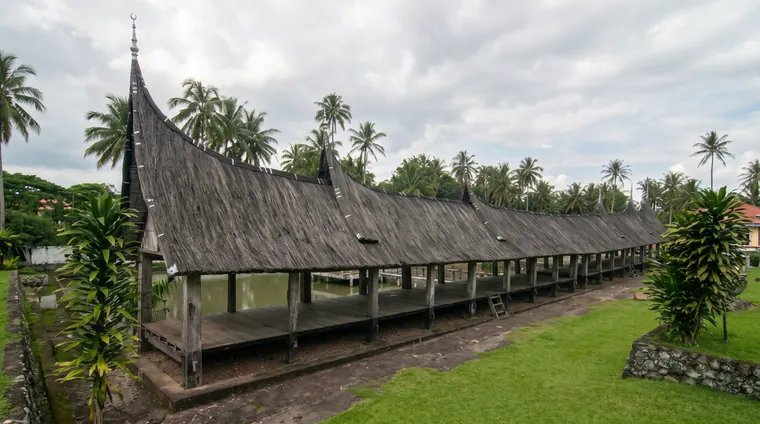

A Siberut cultural visit should begin with a willing host, not a list of encounters to buy. Before booking the journey, find out who has agreed to welcome you, what they want to share and what happens if those arrangements change. A ceremony, a home visit or a meeting with a particular person is not something to assume.
This guide helps you assess a proposed visit. It does not identify a community currently receiving guests or confirm access for your dates.
Understanding Siberut without expecting a living museum
Siberut is one of the Mentawai Islands off Sumatra’s west coast. For cultural background, the Indigenous Mentawai Community Research Report describes the uma as both a clan-related term and a longhouse important to cultural and ceremonial life. Its survey was conducted in Matotonan, southern Siberut, in November 2011 by a Mentawai research team.
That place and date matter. The report offers a community perspective from a particular study, not a description of every household today. Nor is it a directory of homes open to travelers. Use it to prepare thoughtful questions, then let the people hosting you explain their own lives.
Avoid choosing an organizer on promises of an “untouched” community or guaranteed “authentic” rituals. Such language tells you little about whether the proposed encounter is welcome.
What a Siberut cultural visit might involve
Ask what has actually been discussed with the host. Conversation, a walk or learning about a skill might be possibilities, but none is a confirmed inclusion here. A clear description of one agreed activity is more useful than an impressive list no one has approved.
The report also discusses sikerei, associated with cultural and spiritual practice. That background does not establish that any individual accepts visitor meetings. Do not build your trip around observing private rituals or request that one be arranged for a photograph.
An experience prepared for visitors need not be dismissed as less worthwhile. The important questions are who shapes it, whether participation is voluntary and what the hosts themselves want visitors to understand.
Questions to settle before paying
Ask the organizer for enough detail to make an informed choice:
- Who is the host or local group, and have they agreed to this proposed visit on these dates?
- What is included, what remains uncertain and which spaces or activities are private?
- Who will interpret, and how will your questions and the host’s answers be translated?
- How are the host, guide and interpreter paid? Which transport, meals and accommodation are included in the quote?
- What happens if the host declines, transport changes or the visit cannot go ahead? Ask for cancellation and refund terms in writing.
A short exchange with the host, through an interpreter if necessary, can clarify expectations better than another itinerary photograph. If the answers remain vague, postpone the commitment rather than assuming the details will resolve themselves on arrival.
Photography is a separate conversation
Agreeing to receive visitors is not blanket permission to record them. Ask the person involved before taking a close photograph, recording a conversation or sharing an identifiable image. Ask a parent or guardian about photographs of children and respect the child’s wishes as well.
Explain the intended use, particularly if an image is for public or commercial use. If a person changes their mind, stop. A guide’s permission does not replace the subject’s consent.
Inside a home, wait to be shown where you may go and what you may touch. Discuss gifts or contributions with your host rather than arriving with assumptions about what a family needs. Payment covers the agreed arrangement; it does not buy access to everything around it.
Build the transport plan around the confirmed host
Get the exact host location before deciding whether the visit fits your trip. Ask the organizer to describe each transfer from your mainland departure point to where you will sleep, including any walking or smaller-boat sections. Confirm physical demands, washing and sleeping arrangements, drinking-water provision and a plan for disruption before accepting the itinerary.
For any proposed protected-area section, ask the responsible authority which permissions apply. A cultural invitation and authorization to enter a protected area are separate matters. This guide does not verify a permit procedure or an open route.
Use How to Get to Mentawai from Padang for the broader transfer-planning questions, then confirm actual services with the operator. Leave a buffer before a fixed onward flight rather than relying on an unverified same-day connection.
If you are adding this to a surf holiday, check your accommodation’s exact location first. Our Mentawai surf planning guide addresses the separate choice of surf base; it does not establish that a cultural visit is nearby or included.
When to leave the visit for another trip
A Siberut cultural visit makes more sense when you can accept changes to both the encounter and the journey. If your only available day depends on a particular ceremony, a tightly timed crossing or access no one can confirm, leave it out.
Proceed when there is a willing host, a clear agreement and a workable journey. Leave room for a modest visit: an unhurried conversation may be all that is offered, and that should be enough.