Solok Radjo is an Arabica coffee producers’ cooperative based in Nagari Aie Dingin (also written Aia Dingin), Lembah Gumanti, Solok Regency, in the highlands of West Sumatra. It is relevant to travelers who want to understand how coffee is produced and processed—not just drink a cup while passing through Alahan Panjang.
There is evidence of a Solok Radjo coffee-processing facility promoted for educational tourism. But that does not mean you can arrive unannounced, enter production rooms, or expect an active harvest-to-roasting demonstration.
Is Solok Radjo worth including? Yes, if coffee production interests you and the visit you want can be confirmed. Otherwise, a coffee stop during a Twin Lakes journey may be the more realistic option.
What Is Solok Radjo?
Koperasi Produsen Serba Usaha Solok Radjo works with Arabica coffee producers in Solok Regency. Its Karya Kreatif Indonesia business profile lists an address in Jorong Data, Nagari Aie Dingin, Lembah Gumanti and describes partner farmers, post-harvest processing, and green and roasted coffee products.
The cooperative matters because the coffee supply chain involves more than a single farm. Farmers grow and harvest cherries, while collection and processing activities prepare coffee for later trading and roasting. Those functions may involve different people and locations.
A registered cooperative address is evidence of an organization, not proof that the address is a public visitor entrance.
Where Is Aie Dingin, and Which Location Should You Visit?
Aie Dingin is a nagari in Lembah Gumanti, Solok Regency, in the wider highland area associated with Alahan Panjang. It is not Solok City or South Solok Regency.
Location descriptions for Solok Radjo are not interchangeable. The cooperative profile identifies Jorong Data, while a regional tourism listing for Pabrik Kopi Solok Radjo gives a Jalan Padang–Surian address. Reporting also describes a café associated with the processing destination.
These sources confirm coffee-related operations in the area, but they do not establish that the registered office, visitor reception, café, farm and processing area all share one entrance or operating schedule.
Before setting off, ask your host for the exact meeting point and the specific experience available. Do not navigate to a brand name and assume you will reach the right facility.
For the nearby highland travel context, see Calvoya’s Twin Lakes guide.
Is the Coffee Factory Open to Visitors?
A Radio Republik Indonesia report dated 16 July 2026 presents Pabrik Kopi Solok Radjo as an educational coffee destination and describes post-harvest processing and a café. The regional tourism listing also promotes educational activities around the factory.
That is stronger evidence than a coffee brand merely appearing on a map. It supports the existence of an educational-tourism concept. It does not establish current public opening hours, a booking system, admission prices, language support, or permission to enter every production area.
If an educational visit is the main reason for your trip, contact the relevant operator in advance and request a confirmed program. Without that confirmation, do not describe the factory as a guaranteed walk-in attraction.
What Could You Learn About Coffee Processing?
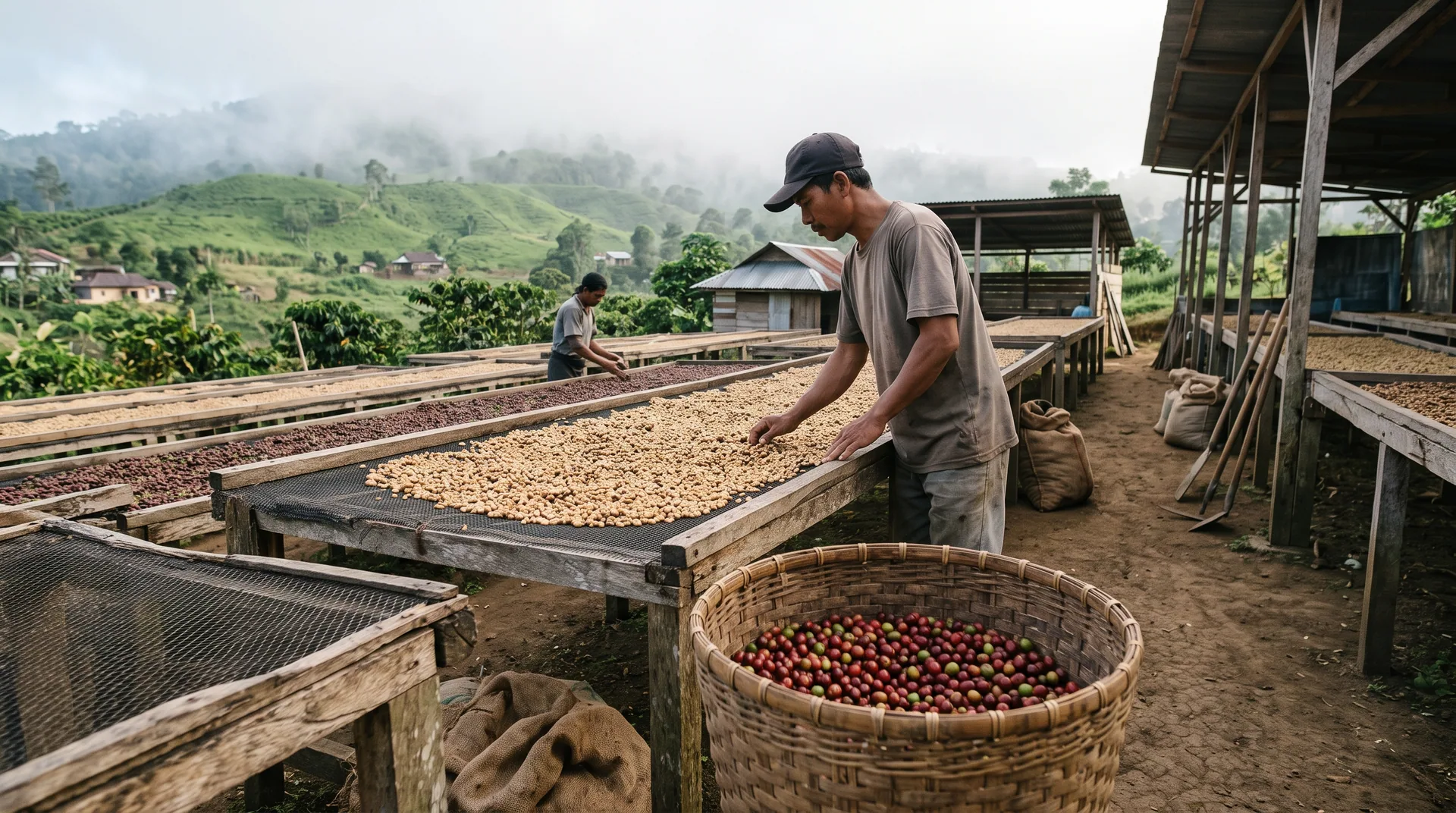
The tourism description identifies several approaches used in Solok Radjo’s coffee operations, including natural, honey, and fully washed processing. These terms concern how the harvested coffee fruit is handled before the beans are dried and prepared for roasting.
During a properly arranged visit, a host may be able to explain:
- how cherries are received and assessed;
- why the chosen processing method matters;
- how drying and sorting work;
- how processed coffee is prepared for sale;
- whether roasting or tasting is included in that particular program.
The list describes useful topics for an origin visit, not a verified live-demonstration schedule. Fresh cherries, active machinery and drying coffee will depend on production activity and permission at the time.
If production is quiet, an explanation can still be informative. Just distinguish hearing about a method from watching it happen.
Coffee Stop or Educational Visit: Which Is Right for You?
A short coffee stop
This is suitable when the Twin Lakes and the highland journey are your main priorities. You can try coffee at a confirmed open café or seller without requiring access to production facilities. Ask about the coffee’s origin rather than assuming every drink was grown at the same location.
A processing-focused appointment
This is more appropriate when you want to understand the cooperative and what happens to coffee after harvest. Confirm the host, address, areas accessible to visitors, and what activity is likely to be taking place.
A deeper coffee-focused day
This may appeal to travelers interested in farming, producer organization, processing and tasting. However, do not assume one Solok Radjo booking includes all these stages. Each proposed activity needs to be confirmed before the itinerary is presented as a farm-to-cup experience.
Can Solok Radjo Fit With the Twin Lakes?
Yes, as a possible combination in the Solok highlands. The important distinction is whether you want a brief coffee stop or an arranged visit that occupies a meaningful part of the day.
For a landscape-focused day, choose a limited number of stops around Lake Diatas, Lake Dibawah and Alahan Panjang, then add coffee only if the chosen place is operating and the route works.
For a coffee-focused day, arrange the appointment first. Build the lake stops around the confirmed meeting time rather than expecting every viewpoint and production activity to fit automatically.
Calvoya’s published Padang to Sawahlunto via Solok guide also explains why time spent in the Solok highlands must be balanced against the next destination.
What if You Are Continuing to Sawahlunto?
A journey that includes Padang, the Twin Lakes, Solok coffee country and Sawahlunto has several distinct purposes. Lake scenery, coffee production and mining heritage each deserve attention, and they compete for the same usable travel-day hours.
If Sawahlunto’s museums matter to you, consider keeping coffee brief or scheduling the heritage visits for another confirmed opening period. A detailed processing appointment should not be added on top of a full lake program and then described as an easy transfer.
The better choice depends on your starting point, hotel location and confirmed visiting arrangements—not an unverified fixed driving time.
Will You See Coffee Harvesting?
Not necessarily. Coffee trees and post-harvest facilities operate according to agricultural and production schedules. A visitor might encounter fresh cherries, drying coffee, stored beans or no active processing.
Published product information about harvest periods does not guarantee that picking or processing will be visible on your travel date. If that is what you particularly want to see, ask the host what is expected and whether the activity can be observed safely.
Roasting or tasting may still be possible separately from harvesting, if specifically arranged.
How Is This Different From Nagari Lasi?
Nagari Lasi in Agam Regency suits travelers based around Bukittinggi. Calvoya has a dedicated Nagari Lasi Coffee Guide and an advertised Bukittinggi Coffee Trail built around arranged farm, processing and tasting stops.
Solok Radjo in Aie Dingin is most relevant to an itinerary already moving through the Solok highlands. Its cooperative and processing context provides a different focus, but a specialist visit should not be represented as a confirmed Calvoya product unless its host and inclusions are arranged.
This is a comparison of travel geography and available planning evidence, not a ranking of coffee quality.
What to Confirm Before You Go
If Solok Radjo is more than an incidental coffee break, ask for:
- the exact address or map pin for the appointment;
- the name of the host or operator accepting visitors;
- the type of visit: café, processing explanation, farm, or a combination;
- the confirmed date, time and any charges;
- areas permitted for visitors and photography;
- whether tasting, translation or transport is included;
- a backup plan if weather or production activity changes.
Follow the host’s directions around machinery and working areas. For any farm component, wear suitable footwear and respect private land and production operations.
Is Solok Radjo Worth Adding to Your Itinerary?
Choose a Solok Radjo educational visit when learning about a working coffee cooperative and processing is an important goal—and a suitable host can confirm access. Otherwise, a simple coffee stop may be enough on a Twin Lakes journey.
For a customized highland route, Calvoya’s Journey Designer lets you specify whether you want to taste coffee, meet a producer or learn about processing. Those are different requests and should not be treated as interchangeable.
The useful question is not just where Solok Radjo coffee is served, but what part of its production story you can genuinely visit.