West Sumatra coffee is not one single origin.
The province includes different growing areas, farmer groups, processors, elevations, and production systems. For travelers, that means a coffee-origin visit should not begin with the question, “Which coffee is best?” A more useful question is:
Which coffee area fits my route, and what part of coffee production do I actually want to understand?
Two practical areas to compare are Agam, especially Nagari Lasi near the Bukittinggi highlands, and Solok, where coffee production is part of the agricultural landscape around areas such as Lembah Gumanti and Alahan Panjang.
They are not interchangeable experiences. Lasi works naturally as a focused coffee day from Bukittinggi, while Solok fits more naturally into a longer highland road journey through the southern part of West Sumatra.
For broader regional planning before choosing either area, see Calvoya’s West Sumatra destination guide.
West Sumatra Is a Coffee Region, Not a Single Origin
Travelers often encounter labels such as “Sumatra coffee” or “West Sumatra coffee” far from Indonesia. Those labels are useful geographically, but they can hide how much variation exists within the province itself.
Agam and Solok are separate regencies with their own coffee-growing areas and production networks. Official agricultural information documents Arabica coffee in both regions, but that does not mean every farm, lot, processing method, or cup tastes the same.
It is better to understand origin as a combination of:
- place and elevation;
- farm and farmer practices;
- coffee variety;
- harvest timing;
- post-harvest processing;
- roasting;
- brewing.
This is why broad claims such as “Agam coffee tastes like this” and “Solok coffee tastes like that” are usually too simplistic.
For a traveler, the more reliable comparison is between the experience available at each origin and how that experience fits the journey.
Agam: Coffee Around the Bukittinggi Highlands
Agam Regency surrounds much of the highland area near Bukittinggi, and coffee is grown in several parts of the regency.
For travelers, Nagari Lasi in Canduang is particularly useful because it can be connected with a stay in Bukittinggi. Arabica coffee from Lasi is documented in official Agam agricultural listings, including natural- and washed-process products.
Lasi therefore gives visitors a practical way to move beyond drinking coffee in a cafe and see where part of the local supply begins.
What can you see in Lasi?
A properly arranged Lasi visit may include:
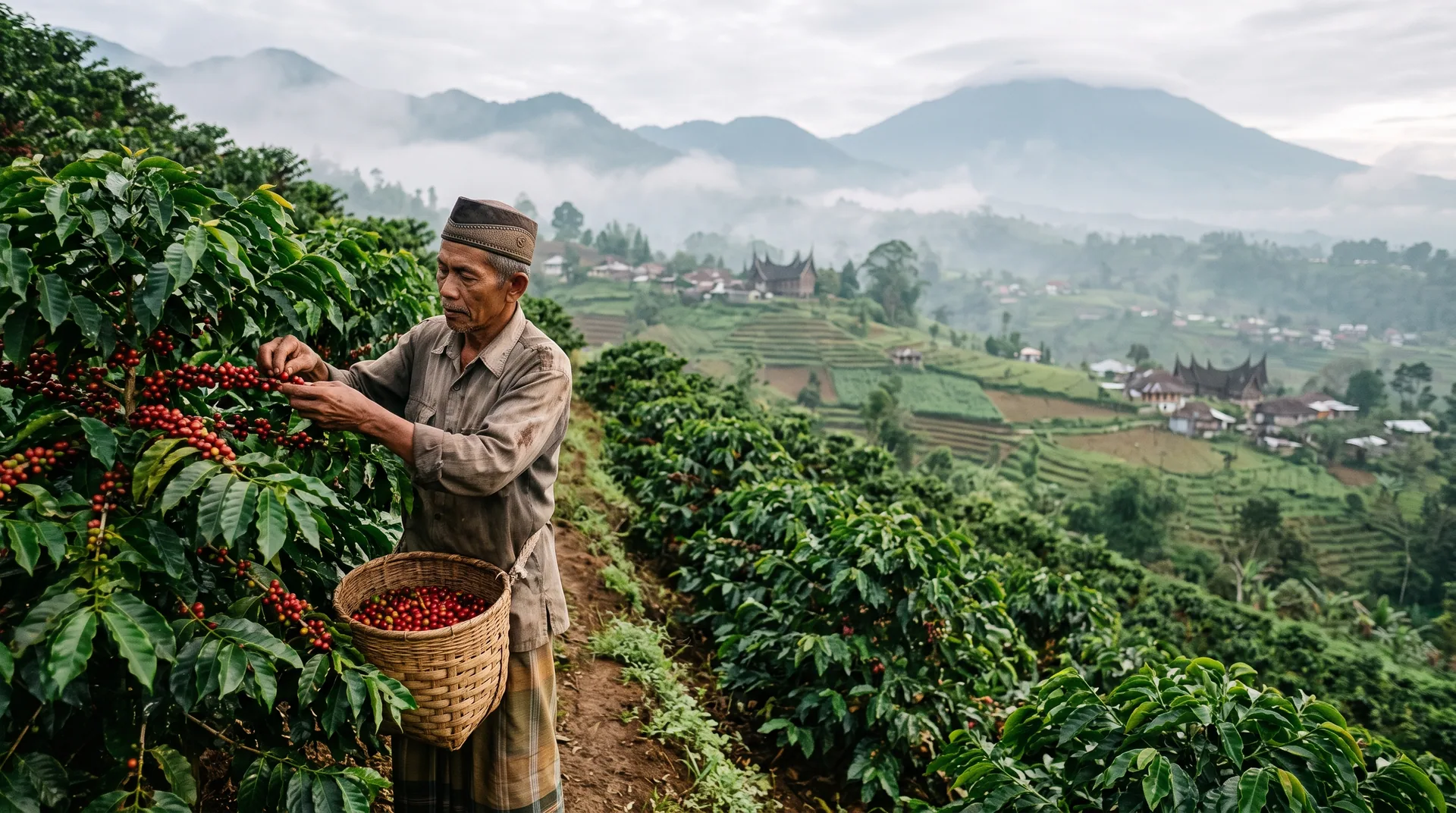
- a coffee-growing area;
- a local coffee farm;
- post-harvest processing;
- a Lasi coffee tasting;
- conversation about local production;
- later stops related to roasting or traditional coffee preparation in Bukittinggi.
Calvoya’s existing Nagari Lasi Coffee Guide explains the farm, processor, and tasting experience in more detail.
The key point is that Lasi is not a staged coffee museum. Farms and processing areas are working places, and what is happening will depend on the day, weather, agricultural cycle, and local availability.
A visitor may see active processing on one date and a quieter production environment on another. The value of the visit is understanding the connection between the landscape, the producer, the processor, and the cup rather than expecting a fixed demonstration.
Why Lasi Works Well From Bukittinggi
Lasi is especially practical when Bukittinggi is already part of the itinerary.
Instead of rebuilding the trip around a remote coffee destination, travelers can use Bukittinggi as their highland base and dedicate a focused part of the trip to coffee.
This works well for people who want:
- a farm-oriented visit;
- local processing context;
- coffee tasting;
- a slower cultural day rather than a long sightseeing checklist;
- an experience that can return to Bukittinggi afterward.
Calvoya’s current Bukittinggi Coffee Trail follows this logic, connecting Nagari Lasi with a farm visit, local processor, Lasi coffee tasting, traditional roasting, and village-style coffee culture.
If you are already planning several nights in Bukittinggi, Lasi is usually the simpler of the two origin areas discussed in this guide to add as a dedicated coffee experience.
For wider planning around the city, see the Bukittinggi destination guide.
Solok: Coffee in the Southern Highlands
Solok offers a different type of coffee context.
Official agricultural data from Solok Regency records Arabica cultivation and production in the regency. For travelers, one of the most visible coffee names in the area is Solok Radjo, based in the highlands of Nagari Aia Dingin, Lembah Gumanti.
Solok Radjo operates within a producer-cooperative model connected with local farmers. Its processing activity provides a useful window into how coffee moves from harvested cherry through post-harvest handling before it reaches roasting and brewing.
This makes the Solok experience useful for understanding something different from a simple cafe stop: how coffee can move through a cooperative and processing system before reaching the drinker.
What Can You Expect Around Solok Radjo?
The visitor experience around Solok Radjo is particularly useful for understanding coffee processing and education.
Depending on the arrangement and activity taking place, visitors may encounter elements such as:
- coffee processing facilities;
- explanation of post-harvest methods;
- roasting context;
- coffee tasting;
- cupping or coffee education when available;
- discussion of the relationship between farmers and the cooperative.
This distinction matters.
A visit to Solok Radjo should not automatically be described as a coffee-farm walk unless farm access has specifically been arranged. The better-established visitor experience centers on coffee production, processing, and education.
If walking through a working farm is one of your main goals, confirm that separately before traveling.
Why Solok Works Better as Part of a Highland Route
Solok becomes particularly interesting when the traveler is already moving through the southern highlands.
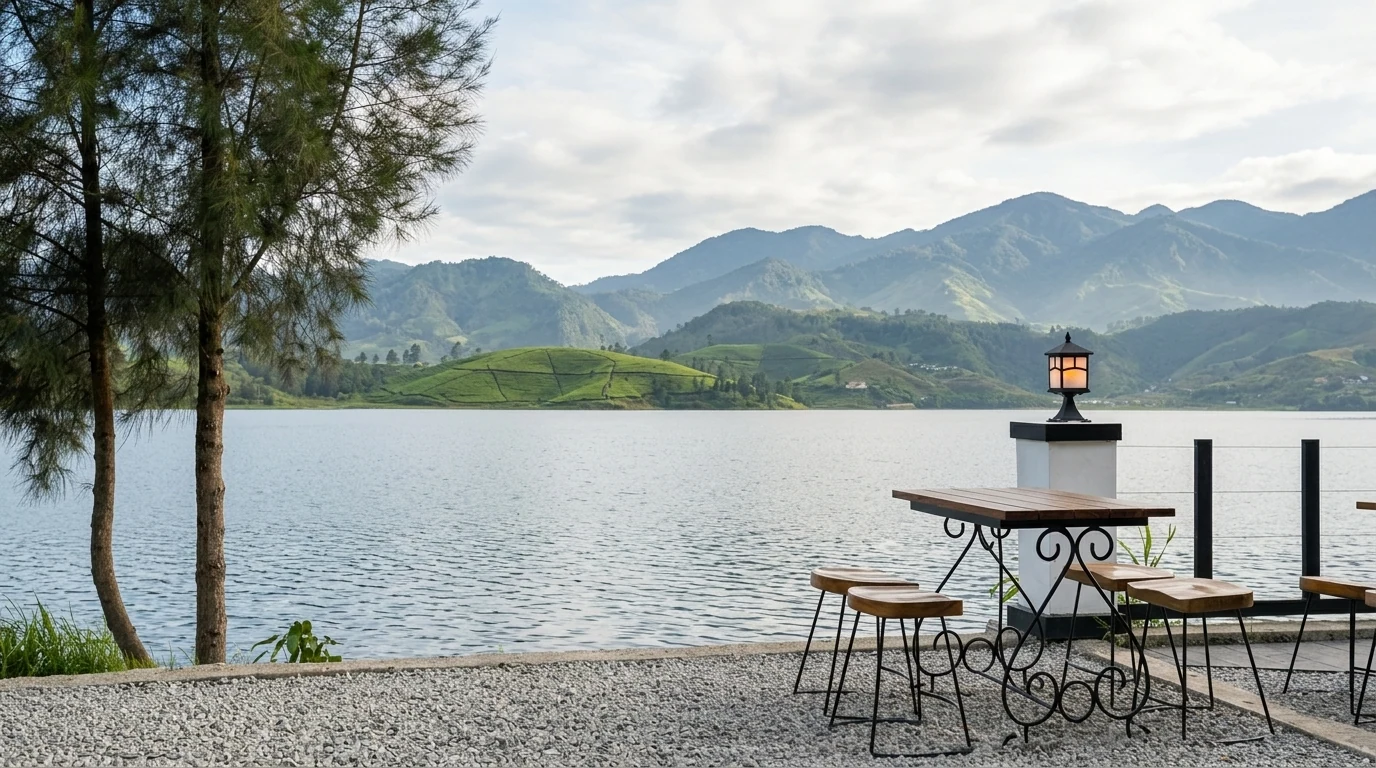
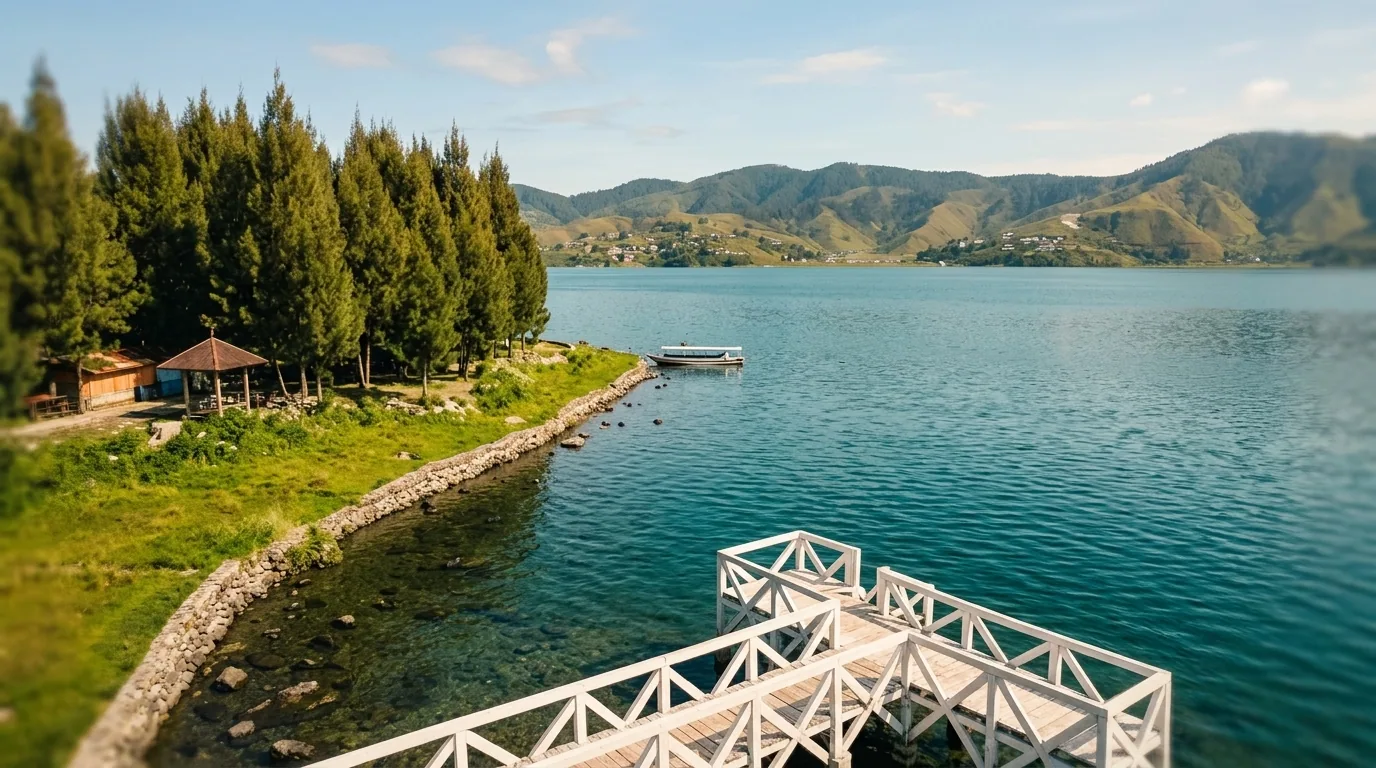
The area around Alahan Panjang includes the Twin Lakes, agricultural land, cool highland scenery, and routes that can continue toward Lake Singkarak, Sawahlunto, Tanah Datar, or Bukittinggi.
That makes coffee part of the journey rather than a destination that requires unnecessary backtracking.
Calvoya’s Twin Lakes West Sumatra guide explains the geography around Lake Diatas, Lake Dibawah, and Alahan Panjang in more detail.
For travelers following a longer road journey, Calvoya’s West Sumatra Scenic Loop connects the Twin Lakes and Solok coffee country with Sawahlunto, Lake Singkarak, Tanah Datar, and Bukittinggi.
This is the stronger reason to choose Solok: the coffee experience fits naturally into a wider highland route.
Agam or Solok: Which Coffee Origin Should You Visit?
There is no useful universal winner. Choose according to your route and what you want to learn.
Choose Agam and Lasi if:
- Bukittinggi is already your base. Lasi can be included without redesigning the wider itinerary.
- You specifically want a farm-oriented experience. Calvoya’s current Lasi route includes an arranged coffee farm visit.
- You want to see both growing and local processing context. The Lasi experience can connect those stages within one focused day.
- You are interested in coffee culture as well as production. The route can continue into roasting and local-style coffee preparation around Bukittinggi.
- You have limited time. It is easier to treat Lasi as a dedicated coffee day from an existing highland stay.
Choose Solok if:
- You are traveling through Alahan Panjang or the Twin Lakes. Coffee fits naturally into this geographic route.
- You want to understand processing and cooperative activity. Solok Radjo provides a clearer window into this side of the coffee chain.
- Your trip is primarily a road journey. The coffee stop can be combined with highland landscapes rather than becoming a separate return trip.
- You are continuing toward Singkarak, Sawahlunto, or Tanah Datar. Solok can sit naturally within the direction of travel.
- You are interested in coffee production beyond the farm itself. Processing, roasting, and the cooperative structure can be as informative as seeing coffee trees.
Consider both if:
- coffee is one of the main interests of your West Sumatra trip;
- you have enough days to avoid rushing;
- you want to compare a smaller farm-and-processor experience with a broader cooperative and highland production context;
- your itinerary already moves through both Bukittinggi and the Solok highlands.
The important rule is simple: do not drive long distances merely to collect two coffee stops if the route does not otherwise make sense.
What Does a Coffee-Origin Visit Actually Show You?
The journey from coffee tree to cup involves more stages than many visitors expect.
A simplified chain may include:
- Growing: coffee trees develop and produce cherries on the farm.
- Harvesting: ripe cherries are picked when the agricultural cycle and conditions allow.
- Sorting: harvested fruit may be separated according to quality or ripeness.
- Processing: the fruit and seed are handled using a chosen post-harvest method.
- Fermentation and drying: the exact steps depend on the processing method being used.
- Green coffee: dried coffee is prepared for storage, sale, or further handling.
- Roasting: heat transforms green coffee into roasted beans.
- Brewing: the roasted coffee finally becomes the drink served in a cup.
A single visit may show only some of these stages.
That is normal.
A farm does not harvest cherries every day of the year. A processor may be busy or quiet depending on current supply. A roaster may operate on a schedule that has nothing to do with the traveler’s arrival time.
A credible coffee-origin visit should therefore explain what is actually happening on the day, rather than manufacturing activity simply to make the tour look complete.
Can You Just Arrive at a Coffee Farm?
Do not assume so.
A coffee farm is working agricultural land, and a processing facility is a workplace. Neither should automatically be treated like a public attraction with continuous opening hours.
For Lasi, farm and processor access should be arranged in advance. Calvoya’s existing route coordinates those visits around local availability rather than relying on travelers simply turning up.
Solok Radjo has a more established visitor and educational role, but it is still sensible to confirm the planned experience before making a special journey there.
Before traveling, ask:
- Is the farm or processor expecting visitors that day?
- Which part of the production process is likely to be active?
- Is a tasting included?
- Is farm access included, or only the processing facility?
- Is advance coordination required?
- How much walking is involved?
- Is photography appropriate in all areas?
Those questions are more useful than simply asking, “Is there a coffee tour?”
When Is the Best Time to Visit a Coffee Farm?
There is no single date that guarantees every stage of coffee production will be visible across West Sumatra.
Coffee activity depends on location, agricultural cycles, weather, farm conditions, and the type of experience being arranged.
A visit can still be worthwhile when harvesting is not active. Coffee trees, growing conditions, processing equipment, conversations with producers, roasting, and tasting can all help explain how the local coffee system works.
However, if your main goal is specifically to see ripe cherries, harvesting, or active post-harvest processing, confirm expected conditions with the host or operator for your actual travel dates.
Do not book an origin visit based only on a generic online statement about “harvest season.”
Do Agam and Solok Coffees Taste Different?
They can, but this is the wrong place to make a blanket flavor comparison.
Coffee from the same broad region can taste different because of:
- farm location;
- elevation;
- variety;
- cherry selection;
- processing method;
- fermentation;
- storage;
- roast profile;
- brewing method.
Even within Lasi, natural- and washed-process Arabica coffees can represent different post-harvest approaches. That alone is enough reason not to reduce an entire origin to one tasting note.
If flavor comparison matters to you, taste specific coffees side by side and ask what farm, process, roast, and harvest they represent.
That tells you far more than a generic description of “West Sumatra flavor.”
Visiting Coffee Farms Respectfully
Coffee tourism works best when the traveler remembers that the places being visited are part of people’s working lives.
A few principles help:
- Arrange access rather than entering cultivated land uninvited.
- Ask before photographing farmers, workers, homes, or processing activity.
- Do not expect normal work to stop for a demonstration.
- Wear footwear suitable for uneven or potentially wet agricultural ground.
- Expect plans to change if weather or farm activity changes.
- Buy local coffee when appropriate, but do not treat purchasing as an obligation.
- Listen to how producers describe their own coffee rather than imposing a romantic story on the visit.
The strongest origin experience is usually not the most staged one. It is the one that helps you understand how coffee connects land, work, processing, and local life.
How to Build Coffee Into a West Sumatra Itinerary
If coffee is a secondary interest, choose the origin that already fits your route.
For a Bukittinggi-based trip
- stay in Bukittinggi;
- use Lasi as a focused coffee-origin day;
- return to Bukittinggi afterward;
- continue with the rest of the highland itinerary without unnecessary backtracking.
For a route through the Solok highlands
- travel through Alahan Panjang and the Twin Lakes area;
- include a Solok coffee stop within that journey;
- continue toward Lake Singkarak, Sawahlunto, Tanah Datar, or Bukittinggi according to the wider route.
For a coffee-focused trip using both areas
- treat Solok and Agam as separate chapters of the journey;
- allow the road direction to connect them naturally;
- avoid trying to visit both origins as a rushed out-and-back excursion from one city;
- leave enough time for local availability and working-farm conditions.
This is where coffee becomes part of understanding West Sumatra rather than another item on a sightseeing checklist.
What to Confirm Before Booking an Origin Visit
Before committing to a coffee experience, confirm:
- the exact location of the farm, processor, cooperative, or roastery;
- whether farm access is actually included;
- which production stages may be visible on your travel date;
- whether coffee processing is likely to be active;
- whether tasting or cupping is included;
- whether roasting will be demonstrated or simply discussed;
- how much walking is required;
- what footwear is appropriate;
- whether a local host or guide will be present;
- whether photography has any restrictions;
- how long the visit realistically takes;
- how the stop fits the wider driving route.
This prevents one of the most common problems in special-interest travel: an itinerary uses the words “coffee farm” even though the actual experience is little more than drinking coffee near a growing area.
Which Origin Makes More Sense for Your Trip?
If you are staying in Bukittinggi and want a focused introduction to coffee growing, local processing, and coffee culture, Lasi in Agam is the more natural choice.
If you are already traveling through Alahan Panjang and the southern highlands and want to understand coffee processing within a wider agricultural landscape, Solok fits the route more naturally.
If coffee is a major reason for coming to West Sumatra, visiting both can add useful contrast — but only when your itinerary has enough time to connect them without rushing.
Calvoya’s Journey Designer can be used to build coffee into a wider West Sumatra route based on your dates, hotel sequence, level of coffee interest, and the parts of production you most want to understand.
The most useful principle is not to chase an origin name.
Choose the coffee visit that helps you understand the place — and that genuinely fits the journey you are already making.