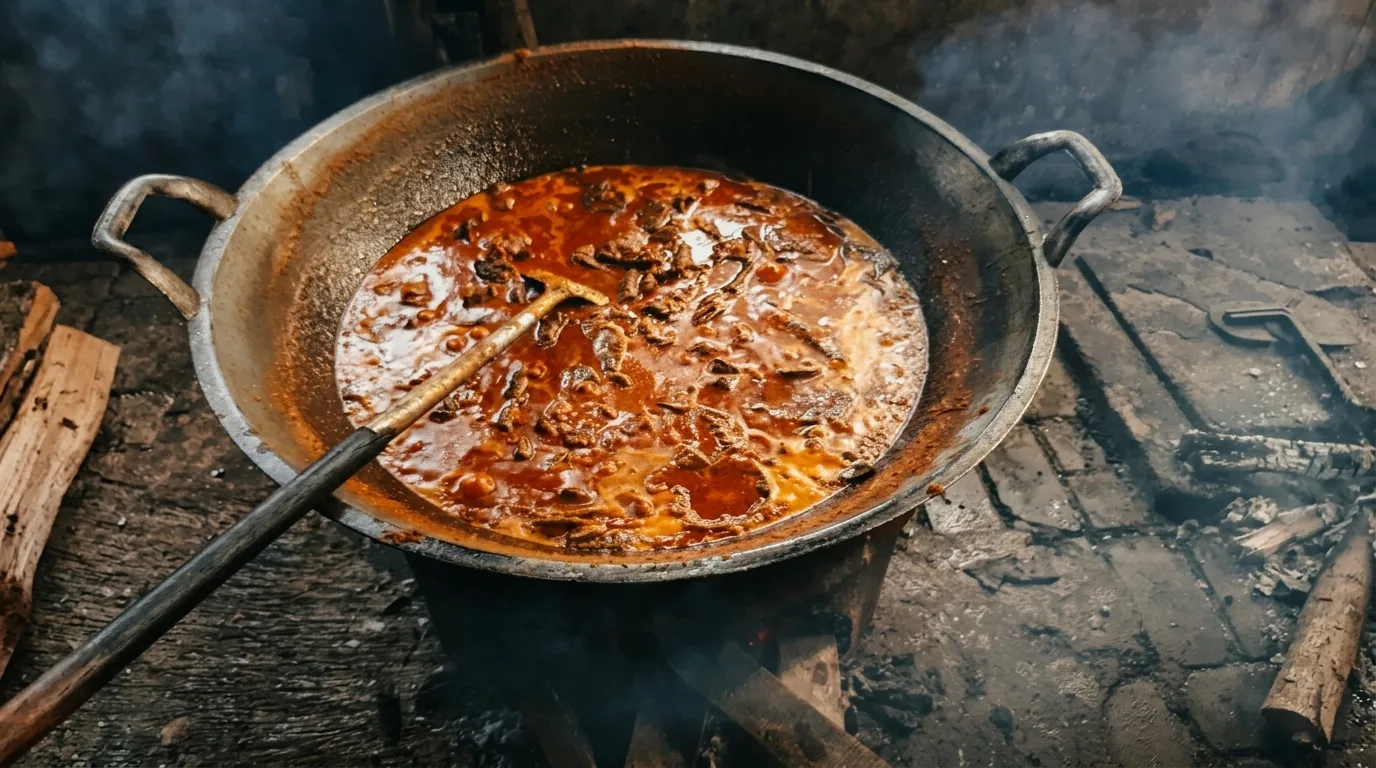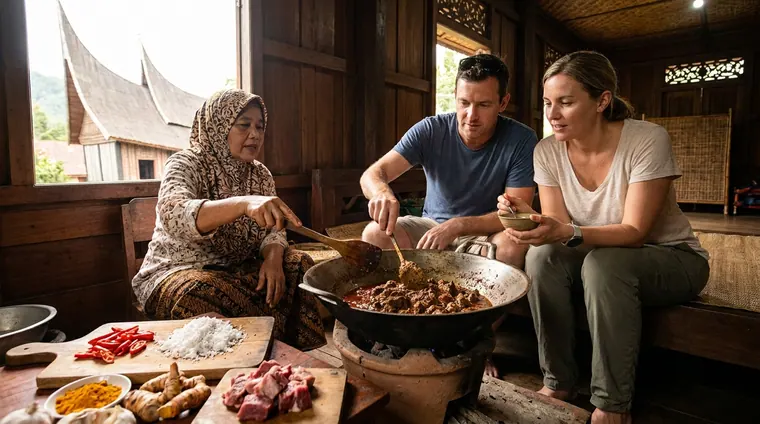
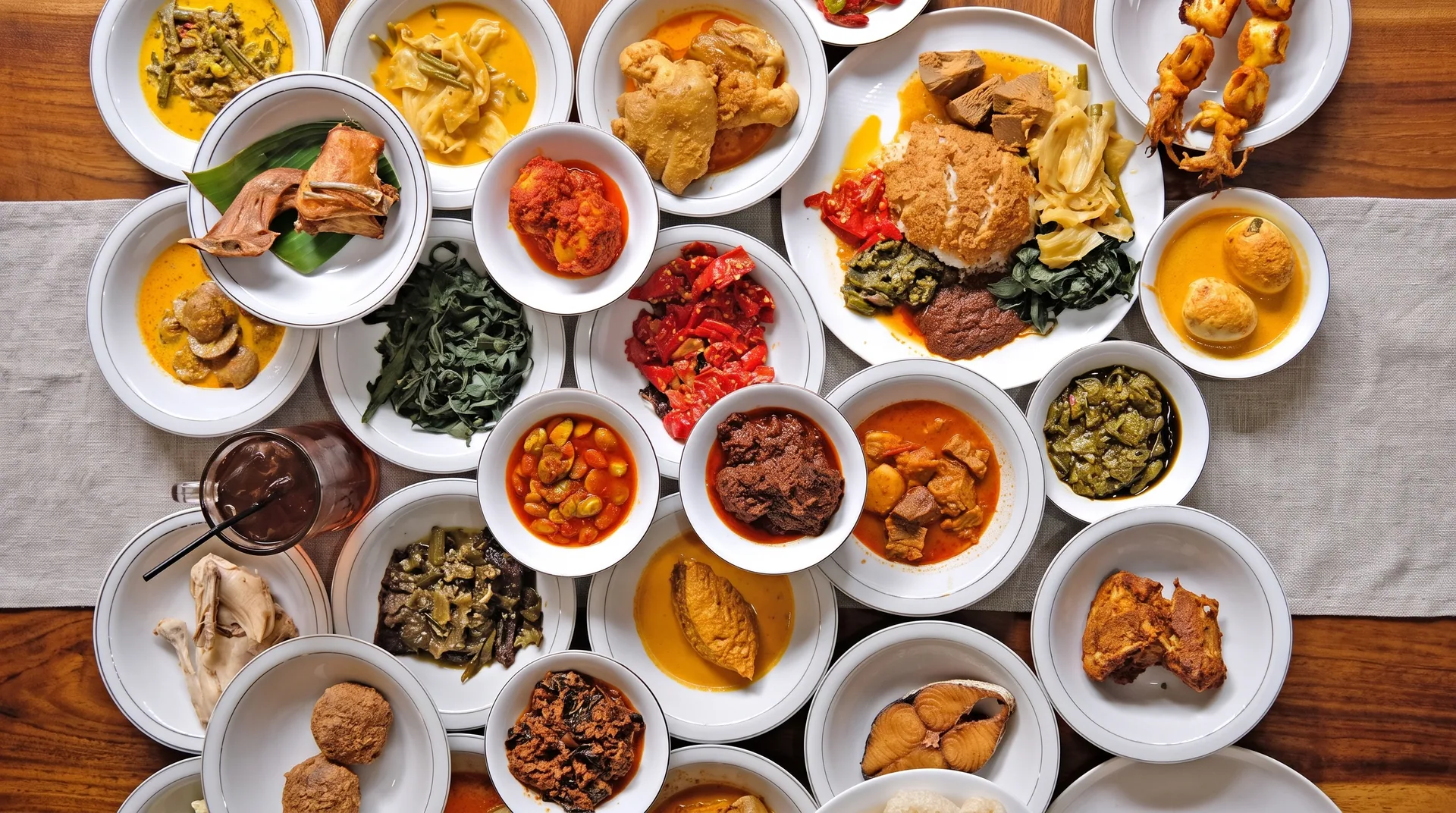
Rendang may be the best-known Minangkabau dish, but it represents only one part of the food travelers encounter in West Sumatra.
A meal may include beef, chicken, fish, soup, gulai, vegetables, sambal, and several prepared side dishes. The selection can feel confusing on a first visit, especially when the food is displayed behind a counter or several plates arrive at the table.
Start with a few dishes, ask about unfamiliar ingredients, and add more after seeing the portions.
What should you order first?
A simple rice meal
Start with
Rice, one main dish, and a vegetable or leafy side.
Why it works
You can explore the cuisine without filling the table with more food than you need.
If you prefer beef or chicken
Look for
Rendang, ayam pop, dendeng, or sate Padang.
Keep in mind
Ask which meat or cut is used when this affects what you can eat.
If you want fish or soup
Look for
Asam padeh or soto Padang, depending on what has been prepared.
Keep in mind
Ask about the main ingredients before choosing an unfamiliar dish.
If you prefer less heat
Ask
Which dishes are milder, then request the sambal separately.
Keep in mind
The main dish may already contain chili, even when the sambal comes on the side.
Minangkabau food, nasi Padang, and nasi Kapau
Minangkabau food refers broadly to the culinary traditions of the Minangkabau people. The term Padang food is also widely used for this cuisine, particularly outside West Sumatra.
Nasi Padang generally means rice served with a selection of prepared Minangkabau dishes. Diners may choose from beef, chicken, fish, eggs, vegetables, sambal, and several kinds of gulai.
Nasi Kapau refers to rice served with a selection of Kapau-style dishes. It is closely associated with Kapau and the Bukittinggi area. The available lauk and presentation can differ between sellers.
Travelers planning to spend time in the highlands can read the Bukittinggi travel guide. The Minangkabau culture guide gives more context on local customs and everyday etiquette.
How ordering works at a Padang restaurant
The serving system is not identical in every restaurant. Travelers will usually encounter food selected from a display or a collection of prepared dishes brought to the table.
Choosing from the display
Many restaurants place their dishes behind a counter or glass display. Choose rice, then point to the lauk you would like.
This is often the easiest system for a first visit because you can see the food before ordering. Ask the staff when an ingredient or cut of meat is unclear.
Ini apa?
What is this?
Ini daging apa?
What meat is this?
Apakah ini memakai jeroan?
Does this contain offal?
Pointing is normal. Asking before ordering is more reliable than guessing from the colour or appearance of a dish.
When several dishes are brought to the table
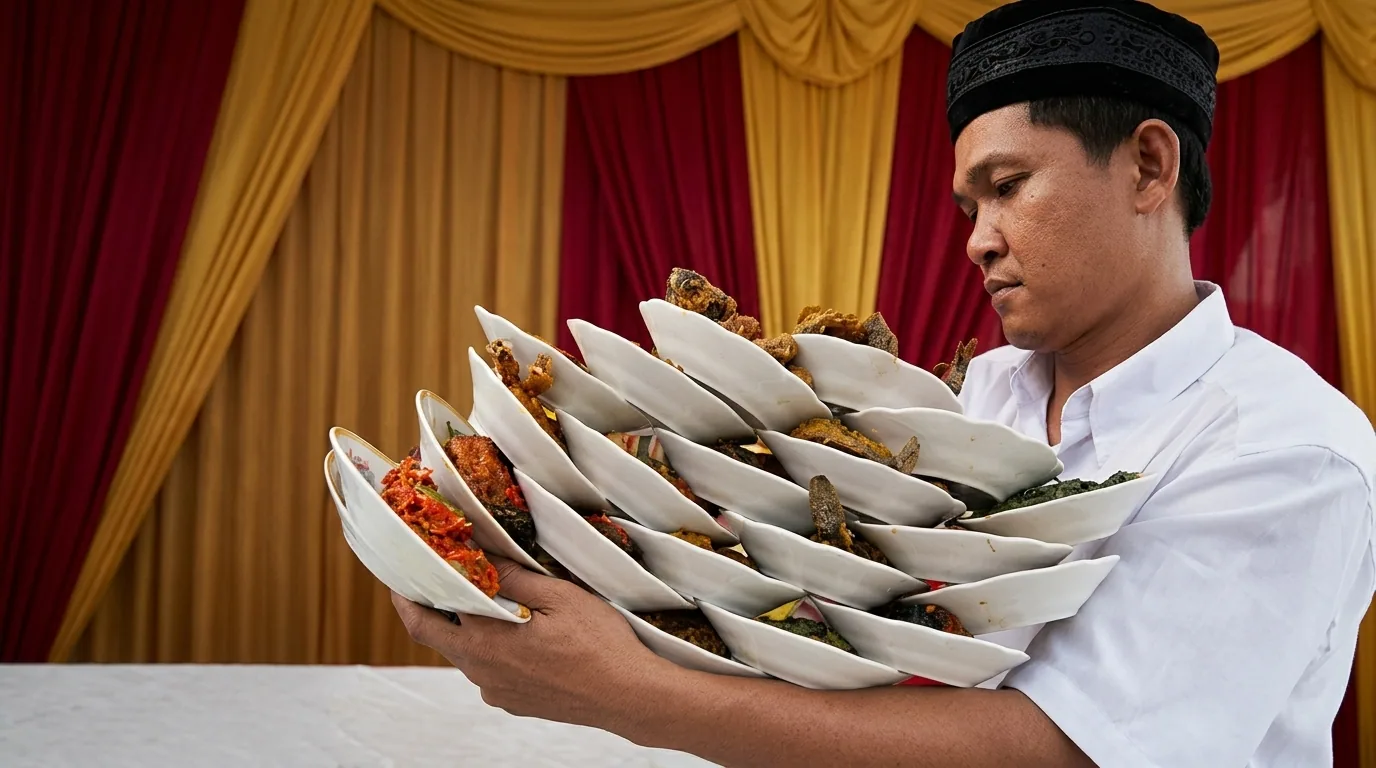
In some restaurants, several small plates may be placed on the table.
The way these dishes are recorded and charged can differ. Ask before taking food from the plates when the system or price is unclear.
Kalau yang di meja ini, hitungnya bagaimana, ya?
How are the dishes on the table charged?
Do not assume every plate on the table is included in one fixed price.
Minangkabau dishes to try beyond rendang
Recipes, accompaniments, and spice levels can differ between kitchens. The descriptions below offer a practical introduction rather than a fixed definition of every version.
Ayam pop
Ayam pop is a chicken dish recognised by its pale appearance, but the sambal served with it can still be spicy.
Ask for the sambal separately when you are unsure about the heat.
Dendeng
Dendeng is thinly prepared beef served in several styles.
Dendeng balado is commonly paired with chili, while dendeng batokok is flattened before being served with sambal.
Asam padeh
Asam padeh is a sour and spicy dish commonly prepared with fish.
Its sharp flavour gives it a different character from coconut-based gulai. The sauce can be quite hot, so ask about the spice level before ordering.
Sate Padang
Sate Padang is served with a thick, seasoned sauce rather than peanut sauce.
The meat used can vary. Ask what is being served when the type or cut matters to you.
Soto Padang
Soto Padang is a soup commonly prepared with beef and several garnishes.
It offers a soup-based choice for travelers who do not want to select several separate dishes from a display.
Gulai cubadak
Gulai cubadak is made with young jackfruit cooked in a seasoned gulai sauce.
The main ingredient is plant-based, but the finished dish should not automatically be assumed to be vegetarian.
Cassava leaves and vegetable sides
Cooked cassava leaves are commonly served beside rice and richer dishes. Other vegetable sides may include eggplant, young jackfruit, or vegetables prepared that day.
Ask about the cooking liquid when you avoid animal-derived ingredients.
How spicy is Minangkabau food?
Many Minangkabau dishes use chili, but the level of heat differs between dishes and kitchens.
Prepared dishes may be difficult to change after cooking. Ask which available choices are milder instead of asking the kitchen to remove chili from food that has already been prepared.
Yang tidak terlalu pedas yang mana?
Which one is less spicy?
You can also request the sambal separately:
Sambalnya dipisah, ya.
Please serve the sambal separately.
Requesting sambal separately does not make the main dish mild. Chili may already be part of its sauce or seasoning.
What to ask about ingredients and offal
Some Minangkabau dishes use cuts of meat that may be unfamiliar to visitors. Offal can appear in gulai, soup, satay, or dishes displayed beside more familiar cuts.
Travelers who do not eat offal can say:
Saya tidak makan jeroan.
I do not eat offal.
Then ask:
Apakah ini memakai jeroan?
Does this contain offal?
Vegetable dishes should not automatically be treated as vegetarian. Sauces, stocks, and cooking liquids may contain animal-derived ingredients.
Travelers who also need halal and prayer information can read the halal travel guide to West Sumatra.
Travelers with serious allergies should name the exact allergen and ask about both ingredients and shared preparation. Some kitchens may not be able to guarantee complete separation.
Ordering a few dishes first is usually more practical than filling the table before understanding the portions. When several plates are served, ask how they will be charged before taking food from them.
You do not need to try everything in one visit. Choosing one unfamiliar dish at each meal is enough to discover what you enjoy without wasting food or making every meal feel like a task.
Calvoya can include local food stops in a custom West Sumatra journey based on the route, pace, and food preferences of the group.
FAQ
What food is West Sumatra famous for besides rendang?
Popular choices include ayam pop, dendeng, asam padeh, sate Padang, soto Padang, gulai cubadak, cassava leaves, and nasi Kapau.
Is Minangkabau food always spicy?
No. The heat differs by dish and kitchen. Ask which choices are milder and request sambal separately.
How do I order at a Padang restaurant?
You may choose dishes from a display or encounter a system where several plates are brought to the table. Ask how the dishes will be charged when the arrangement is unclear.
What is the difference between nasi Padang and nasi Kapau?
Nasi Padang generally refers to rice served with a selection of Minangkabau dishes. Nasi Kapau refers to rice served with Kapau-style dishes and is closely associated with Kapau and the Bukittinggi area.
What should I say if I do not eat offal?
Say:
Saya tidak makan jeroan.
I do not eat offal.
Ask which meat or cut is used before ordering an unfamiliar dish.