Silungkang is a textile-weaving area in Sawahlunto City, West Sumatra, known for its songket tradition. It offers a different reason to explore Sawahlunto beyond the coal-mining museums: the chance to see finished textiles and, with an appropriate arrangement, learn about the people who weave them.
The important distinction is between shopping for songket and visiting a working weaver. Silungkang has documented craft activity and tourism listings, but those do not establish that every venue offers an on-demand loom demonstration.
If Sawahlunto is already part of your journey, Silungkang may be a worthwhile addition. This guide explains which type of visit to plan, what is documented, and what needs confirmation before you go.
Why Is Silungkang Known for Songket?
Silungkang is a district within Kota Sawahlunto, where songket weaving remains a recognized regional craft. The Indonesian government’s intangible cultural-heritage register lists Songket Silungkang in the traditional skills and crafts category under Ministerial Decree 362/M/2019.
This is recognition as Indonesian intangible cultural heritage (Warisan Budaya Takbenda Indonesia), not UNESCO World Heritage status. Sawahlunto’s separate UNESCO recognition concerns the Ombilin coal-mining heritage landscape, not Silungkang songket.
Indonesia’s national tourism portal describes songket from Silungkang as a handwoven textile associated with Minangkabau dress and customary occasions. Contemporary products can also include accessories and other items made with woven cloth.
For travelers, the value is less about memorizing every motif and more about finding out who made a particular piece and how the craft is practiced today.
Where Is Silungkang Compared With Sawahlunto’s Old Town?
Silungkang District is administratively part of Sawahlunto City, but a textile stop in Silungkang is not the same destination as the old coal-mining town and its museums. The places may require separate travel within the municipality.
This matters if you are organizing a day around the Sawahlunto travel guide. Visiting a museum, exploring the old town and meeting a textile artisan are different activities. The practical order depends on the exact workshop or shop you arrange, your hotel and the road you are taking.
Do not assume that a business identified only as ‘Silungkang’ sits beside a particular museum or directly on your chosen route into town.
Where Can Travelers Encounter Silungkang Songket?
There is no single verified, all-inclusive songket attraction that automatically combines shopping, loom demonstrations and a craft lesson. Three references are useful, but they describe different things.
Silungkang Art Centre: A Textile-Shopping Reference
The Indonesia Travel listing for Silungkang Art Centre describes a place in the Silungkang area associated with finished songket, clothing and textile-based crafts.
That makes it a relevant shopping and product-discovery lead, not proof of a bookable workshop. The page does not provide a sufficiently specific, independently confirmed visitor schedule for an active weaving demonstration. Check the exact current location and opening arrangements before making it a fixed stop.
Silungkang Duo: Documented Village Craft Activity
The national tourism-village directory for Silungkang Duo identifies songket as part of the village’s cultural economy. Its songket product listing also describes weaving traditionally carried out in domestic settings.
These records support the presence of artisans and songket products. A listed product is not automatically a guided visitor experience, and a home-based workshop is not open to visitors without permission. Ask the village tourism contact or a specific producer whether a hosted meeting is possible.
Sentra Tenun Silungkang: A Newer Public Initiative
The Sawahlunto municipal government reported that Sentra Tenun Silungkang was inaugurated on 29 May 2026 as an initiative to support weavers and craft development.
The announcement does not establish visitor opening hours, tour bookings or demonstrations. It also does not show that Sentra Tenun Silungkang and Silungkang Art Centre are the same venue. Do not plan around entering the new centre until its operator confirms what is available.
Can You Actually Watch Songket Being Woven?
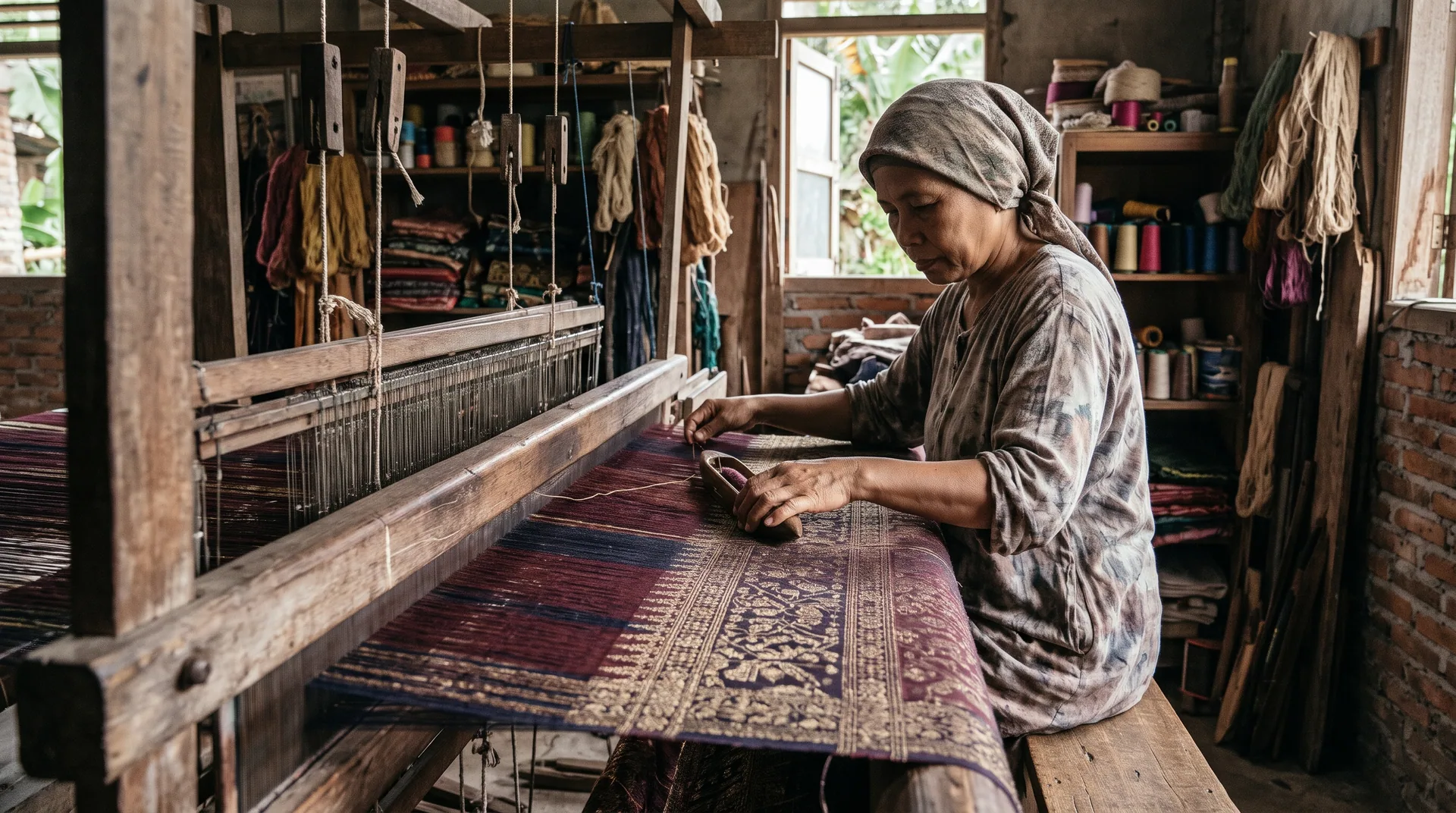
Possibly, but arrange it first. Official tourism information establishes that weaving is practiced in Silungkang, including in residential settings. It does not establish a public timetable for observing a loom in operation.
If seeing the work matters to you, ask who will host the visit, whether a weaver expects to be working, and whether an explanation can be provided. A session might include a discussion of threads, motifs or completed pieces; it should not be described as a hands-on class unless that activity is explicitly offered.
A brief visit to a shop can still be worthwhile, but call it viewing or buying textiles, not a ‘weaving workshop’ when no artisan interaction has been confirmed.
What Should You Look for in a Silungkang Textile?
The national tourism portal identifies motifs associated with Silungkang songket, including Pucuak Rabuang, Itiak Pulang Patang, Bungo Tanjung and Sisik Ikan. These names provide useful conversation starters when a knowledgeable maker or seller can point out a design on an actual cloth.
Do not assume that every item uses those motifs, or that a named motif belongs exclusively to Silungkang. Ask about the particular textile rather than assigning a generic meaning to every pattern.
If you intend to buy something, useful questions include:
- Origin: where was this specific piece woven, and by whom if known?
- Technique: was it woven by hand, and can the seller explain how it was made?
- Materials: what are the ground fabric and decorative threads made from?
- Dimensions and use: is it intended as a sarong, shawl, garment fabric or accessory?
- Care: how should it be stored, cleaned or packed for travel?
Metallic-looking thread does not prove the presence of precious gold or silver. Nor does a ‘traditional’ label, by itself, establish the materials or labor behind an individual product.
Sawahlunto’s municipal tourism reporting has also documented small craft products made from Silungkang songket offcuts. These can be alternatives for travelers who do not need a full-length ceremonial cloth. Confirm availability and prices with the seller, not an old online listing.
How Is Silungkang Different From Pandai Sikek?
Silungkang and Pandai Sikek are separate weaving locations with distinct travel contexts. Silungkang belongs to the Sawahlunto area. Nagari Pandai Sikek, in X Koto, Tanah Datar Regency, fits routes around Bukittinggi and Padang Panjang.
Calvoya’s Pandai Sikek Songket Guide already explains that village and its weaving-related experiences. This article focuses on where to encounter Silungkang’s makers or textiles while exploring Sawahlunto.
For most visitors, location and confirmed access are more useful decision factors than declaring one weaving tradition superior or more authentic. Both should be approached as living craft work, not guaranteed performances.
How to Add Silungkang to a Sawahlunto Journey
If the Mining Museums Are Your Main Priority
Choose the heritage sites you most want to see, with their current opening arrangements in mind. Add a confirmed Silungkang textile stop only if travel between locations and the remaining day allow it.
A short shop visit can be easier to accommodate than a hosted meeting with a weaver. If the weaving experience is your main interest, secure the host’s agreement before allocating the museum stops.
If You Are Coming From Padang Through Solok
The Padang to Sawahlunto via Solok route guide describes a scenic journey involving the Solok highlands and Sawahlunto. Adding Silungkang is a separate choice, not an automatic stop on every version of the road route.
If your day already includes Twin Lakes scenery or coffee in the Solok highlands, consider putting the textile appointment on a Sawahlunto-based day instead of trying to complete every experience during a transfer.
If Weaving Is the Main Purpose of Your Trip
Start with a specific artisan or host, not a list of loosely described centres. Agree on what can be seen and where, then design your route around that visit. This is more dependable than treating a district-wide craft tradition as a single tourist attraction.
What About the Silungkang Songket Carnival?
The Sawahlunto International Songket Silungkang Carnival (SISSCa) is a separate cultural event. The municipal government has documented editions of the carnival, including in 2026. It is not a daily weaving demonstration.
If you want to attend a future edition, verify the event dates and programme from the organizer. A regular Silungkang visit should not be advertised as including a parade or festival performance.
What to Confirm Before You Visit
Before committing to a textile-focused stop, establish the exact place and the type of experience. Ask whether it is a shop, a private workshop, a village-hosted encounter or a public centre; whether a weaver will be present; and whether photography or handling textiles is permitted.
Also confirm the meeting point, proposed time, language support and any hosting charge or purchase expectation. Domestic workspaces and artisan tools require the same respect as other private workplaces.
The available listings do not establish a single current set of opening hours, ticket prices or tour conditions across Silungkang’s different locations. Do not use a generic tourism listing as a substitute for confirmation.
Is Silungkang Songket Worth Adding to Your Trip?
Yes, when textiles and craftsmanship interest you and Sawahlunto is already on your route. A visit can add the city’s living creative economy to its more familiar industrial-heritage story.
For a casual interest, a confirmed textile shop may be enough. For deeper learning, an arranged artisan visit is more valuable than several unverified stops. If you are based mainly around Bukittinggi, consider Pandai Sikek’s separate route instead.
To plan a private Sawahlunto journey around a particular textile experience, contact Calvoya with your dates, starting point and whether your priority is shopping, meeting a weaver or observing weaving. That distinction should be settled before any workshop visit is promised.