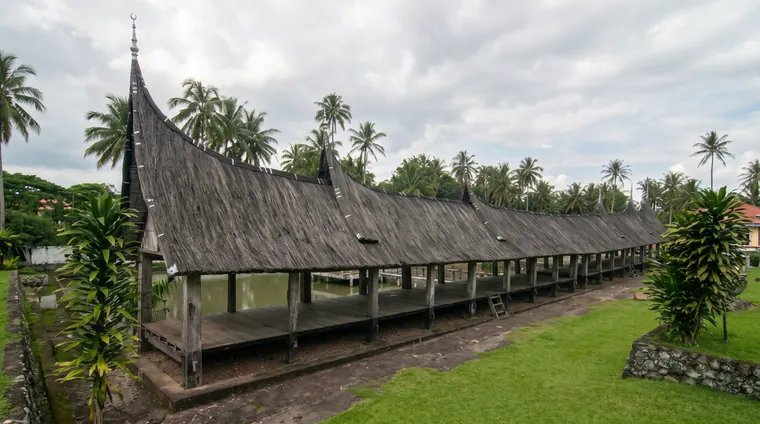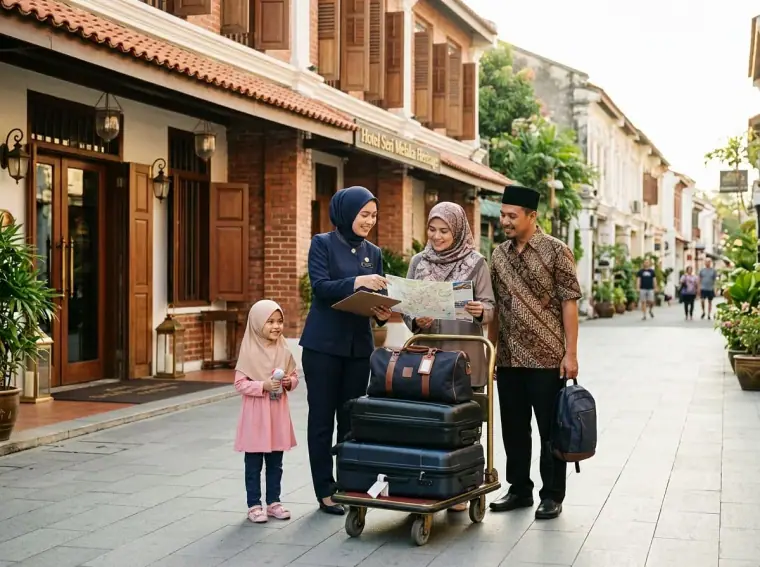
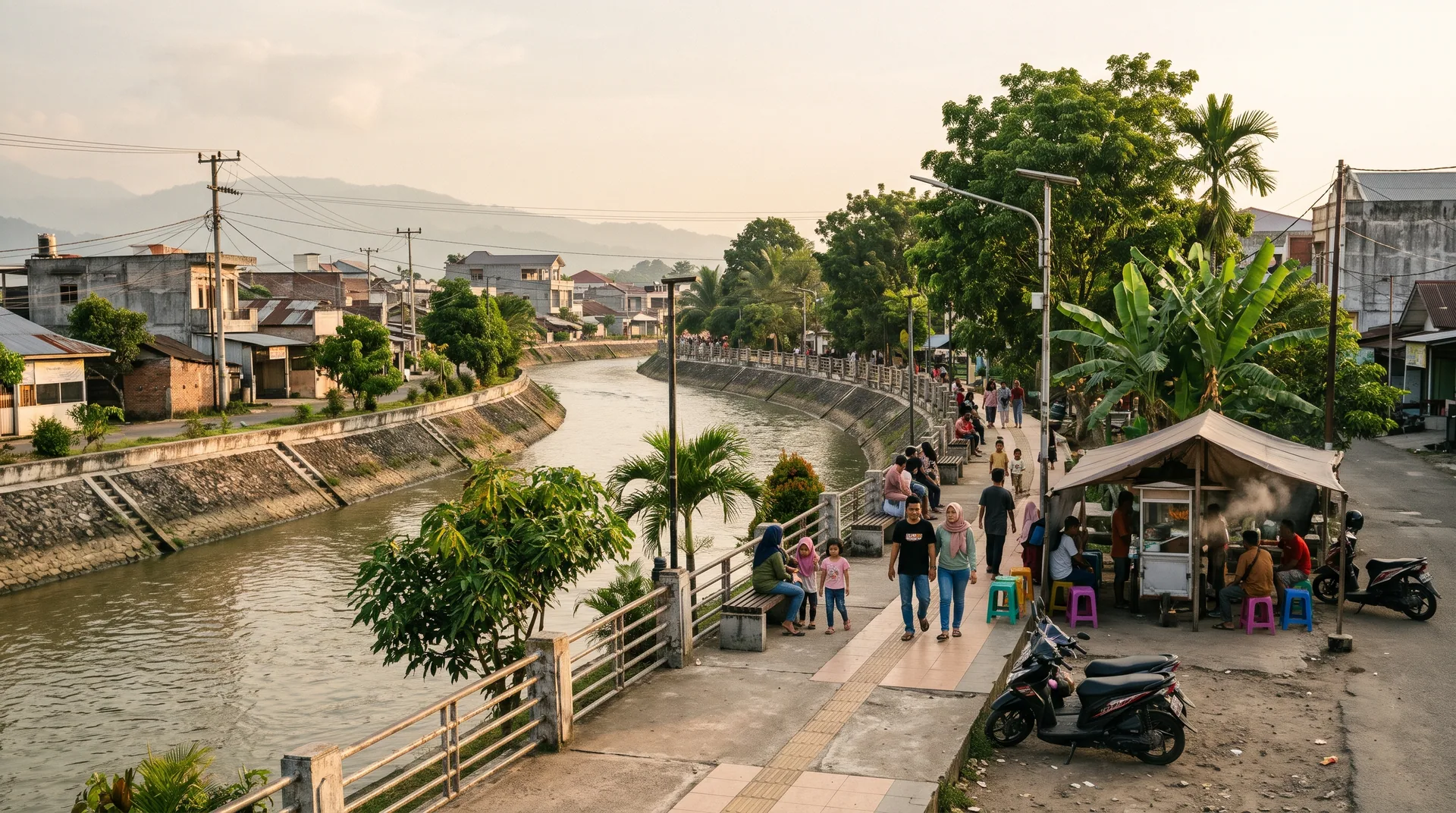
Payakumbuh is a city in West Sumatra that travelers often pass through between Bukittinggi, Harau Valley and the road toward Riau. It deserves attention in its own right for local food, working markets, riverside public spaces and urban heritage—whether as a meal stop or a place to spend the night.
The key to planning it well is geography. Kota Payakumbuh and Kabupaten Lima Puluh Kota are separate administrative areas. Harau Valley and Kelok Sembilan belong to Lima Puluh Kota Regency, not to Payakumbuh City, even though the city is frequently used as their gateway.
Should you stop in Payakumbuh? If you enjoy local food or want a practical break between Bukittinggi, Harau and the Riau road, yes. If your main goal is waterfalls and cliffs, give Harau the time it deserves rather than turning this city guide into a second Harau itinerary.
Where Is Payakumbuh, and Why Does It Matter?
Payakumbuh lies east of Bukittinggi on a road corridor that also connects the region with destinations in Lima Puluh Kota and onward travel toward Riau. On a west-to-east journey, it can provide a useful urban stop before or after a rural stay.
It is important to distinguish three layers of a trip:
- Payakumbuh City: food, markets, riverside stops, accommodation and urban services.
- Lima Puluh Kota Regency: destinations including Harau Valley and Kelok Sembilan, with separate local roads and access points.
- The onward Riau corridor: a longer road journey toward the provincial border and places such as Pekanbaru, not a short excursion within Payakumbuh.
This distinction prevents common planning mistakes. A hotel with a Payakumbuh address is not automatically inside Harau Valley. Likewise, a place advertised as ‘near Payakumbuh’ may be outside the city boundary and require additional driving.
What Is Payakumbuh Known For?
Food is one of Payakumbuh’s clearest identities. The city government has promoted Payakumbuh City of Randang and supported small rendang-producing businesses, including a production centre. This is a local food-industry identity, not a claim that rendang originated in Payakumbuh.
The city also has recognizable local landmarks: the Jembatan Ratapan Ibu bridge and memorial, the Batang Agam riverfront, and Ngalau Indah in the Pakan Sinayan area. These are different from the cliffs and waterfalls for which the wider Lima Puluh Kota region is better known.
A rewarding Payakumbuh stop does not need a long attraction checklist. One good meal, a short look at the city, and time to continue comfortably can be enough.
What Food Should You Try in Payakumbuh?
Randang and the City’s Food-Producing Identity
The city has documented support for rendang producers, including a sentra IKM randang in the Padang Kaduduak area. For a visitor, the practical experience is to enjoy rendang at a restaurant or look at locally packaged products from an identifiable producer. The production centre is not a confirmed walk-in tour or cooking-class venue.
Sate Danguang-Danguang
Sate Danguang-Danguang is worth seeking out during a Payakumbuh food stop. It is associated with Danguang-Danguang in Lima Puluh Kota Regency, and sellers also serve it in Payakumbuh City. A commonly described characteristic is its thick, yellow-toned sauce, but preparation varies. Ask which meat or offal is used rather than assuming every stall offers the same version. This is a regional food to try in the city, not a dish claimed to originate within city limits.
Batiah and Other Snacks
Batiah is a crisp snack made from glutinous rice and closely associated with Payakumbuh. Galamai (also called kalamai) is another sweet found locally, although it is part of a wider Minangkabau food tradition rather than an exclusively Payakumbuh product.
If you want edible souvenirs, check the ingredients, producer details, packaging and shelf life rather than relying on a generic ‘local specialty’ label. For the wider cuisine and how to order a rice meal, see Calvoya’s West Sumatra Food Guide.
What Can You See in Payakumbuh City Itself?
Jembatan Ratapan Ibu: A City Landmark With a Difficult History
Jembatan dan Patung Ratapan Ibu, in the Ibuh area beside the Batang Agam River, commemorate people killed during the struggle for independence. The city tourism office recounts this history as the origin of the bridge’s name. It is an urban memorial, not a recreational attraction. Visit respectfully and do not stop in traffic to take photographs.
Batang Agam: The City’s Riverside Space
The Taman Batang Agam area is an officially documented public riverfront space in Payakumbuh Barat. It can provide a short city break, but public-space and access arrangements have been changing during 2026. City authorities reported pedestrian-area vehicle controls and additional site reorganization in July and August 2026. Choose a specific public entrance and follow the current parking and access instructions; do not assume an uninterrupted waterfront promenade.
Pasar Ibuh: Everyday Market Life
Pasar Ibuh is an active traditional-market area, suitable for travelers interested in everyday trade rather than a staged visitor attraction. The city government documented market reorganization around Pasar Ibuh in 2026, including work affecting trader locations and pedestrian areas.
Separately, a major fire damaged Blok Barat of the central Pasar Payakumbuh shopping district on 26 August 2025. Do not assume that the damaged shopping block, Pasar Ibuh and every city-centre market lane are the same place or have an unchanged layout. Confirm which section you want to visit, and ask before photographing vendors.
Ngalau Indah: A City-Side Nature Option
Ngalau Indah, in the Pakan Sinayan area of Payakumbuh Barat, is documented in the official tourism-village directory as a hill and cave attraction. It is a city-side nature alternative for travelers who are not making a dedicated Harau visit.
The listing does not confirm that cave interiors, paths or guided activities are accessible on every date. Check the conditions and available areas before going; if Harau already fills the nature part of your trip, there is no need to add Ngalau Indah.
How Does Payakumbuh Fit With Harau Valley?
The most useful relationship is city versus valley. Payakumbuh supplies urban services and food stops; Harau Valley, in Lima Puluh Kota Regency, is where travelers go for its cliff-lined valley, village landscapes, waterfalls and stays within the landscape.
You might eat in Payakumbuh before continuing to a Harau homestay, stop in the city after a valley morning, or choose a Payakumbuh hotel when the next day’s journey points elsewhere. None of these choices makes the city and valley interchangeable.
For waterfall areas, accommodation and walks, read the dedicated Harau Valley Travel Guide. For transfers and realistic allowances, use the Harau Valley Travel Times guide.
What About Kelok Sembilan and Gunung Bungsu?
Kelok Sembilan is in Harau District, Lima Puluh Kota Regency, east of the main Payakumbuh area on the road corridor toward Riau. It is an active mountain road, not a city attraction; stop only where road conditions and traffic rules permit.
Gunung Bungsu paragliding also belongs to a separate outdoor-activity itinerary in the wider Lima Puluh Kota area. Flying depends on local weather and operator approval, so it should not be treated as a guaranteed city-stop activity.
Calvoya already has separate guides for Kelok Sembilan and Gunung Bungsu paragliding. They are linked here for geography and itinerary decisions, not repeated as Payakumbuh attractions.
Can You Stop in Payakumbuh Between Bukittinggi and Riau?
Yes. Payakumbuh is a logical place to consider on a Bukittinggi–Lima Puluh Kota–Riau road journey, but the best use of the city depends on the direction of travel.
Traveling east from Bukittinggi: a meal or market stop in Payakumbuh can precede an onward journey toward Harau, Kelok Sembilan or Riau. If you also plan a substantial Harau visit, avoid treating the city stop as an additional half-day without adjusting the rest of the route.
Traveling west from Riau: Payakumbuh can be a place for a break or an overnight before continuing toward Bukittinggi and the central West Sumatra highlands. A long overland day needs allowance for traffic, weather, mountain roads and border-area conditions.
Do not use a fixed travel-time claim for the whole of Riau: it is a province, not one pickup point. Even travel to or from Pekanbaru depends on the actual start, road conditions and breaks. Check current navigation for your date.
Should You Stay in Payakumbuh, Harau or Bukittinggi?
Stay in Payakumbuh if you want city dining, an urban overnight stop, or a useful position for the next day’s road journey. Confirm the actual hotel address and whether parking, breakfast and your preferred dinner options suit your arrival.
Stay in Harau when the valley landscape is the purpose of the visit and you want more time near the cliffs, waterfalls or village roads. A Payakumbuh hotel is not the same as waking up in the valley.
Stay in Bukittinggi if your priority is a broader central-highland base with urban heritage, markets and access to other classic West Sumatra routes. Payakumbuh may then work as a food stop on the way east.
The best base is not necessarily the town closest on a small-scale map. Consider the exact hotel, onward road, arrival time and what you want to do after breakfast.
How Much Time Should You Give Payakumbuh?
For travelers mainly passing through, a proper meal and one short city stop may be all that is needed. Those especially interested in food and everyday city life can devote a longer session to the market, riverside and a local meal.
An overnight makes sense when it reduces a long road day or suits the next destination. It should not be assumed mandatory for everyone visiting Harau. Conversely, a traveler intending to explore several city stops should avoid booking a tight transfer that leaves no room for parking, traffic or changing market conditions.
Practical Notes for a Payakumbuh Stop
- Choose the purpose first: food, market, riverfront, memorial or overnight. Avoid scheduling every stop without a reason.
- Use precise place names: Payakumbuh City, Lima Puluh Kota Regency and Harau Valley are different locations.
- Confirm market access: the central shopping area was affected by the 2025 fire, and Pasar Ibuh has had separate 2026 reorganization. Do not assume older maps reflect current circulation.
- Check nature-site access: Ngalau Indah’s presence in an official directory does not confirm access to every cave or trail.
- Plan the next transfer: road conditions toward Kelok Sembilan and Riau can change. The final connection to a Harau hotel also deserves attention.
- Ask about ingredients: a satay or rice dish may contain offal, and a vegetable-based dish is not automatically vegetarian.
For practical transport choices across the region, see Calvoya’s Getting Around West Sumatra guide.
Is Payakumbuh Worth Adding to Your Itinerary?
Yes, when you treat it as a city with its own food and urban life, rather than renaming the attractions of Lima Puluh Kota. Its strongest role for many international travelers is a meaningful food stop or well-positioned overnight between Bukittinggi, Harau and the Riau road.
If your time is limited, choose one meal and perhaps one city landmark, then keep the valley visit focused on Harau. If you are interested in regional food or traveling slowly across Sumatra, the city deserves more attention.
To work Payakumbuh into a private journey, contact Calvoya with your dates, starting city, accommodation plans and whether the priority is food, Harau or onward travel toward Riau. The useful itinerary begins with the route you actually need, not a long list of places described as ‘near Payakumbuh’.