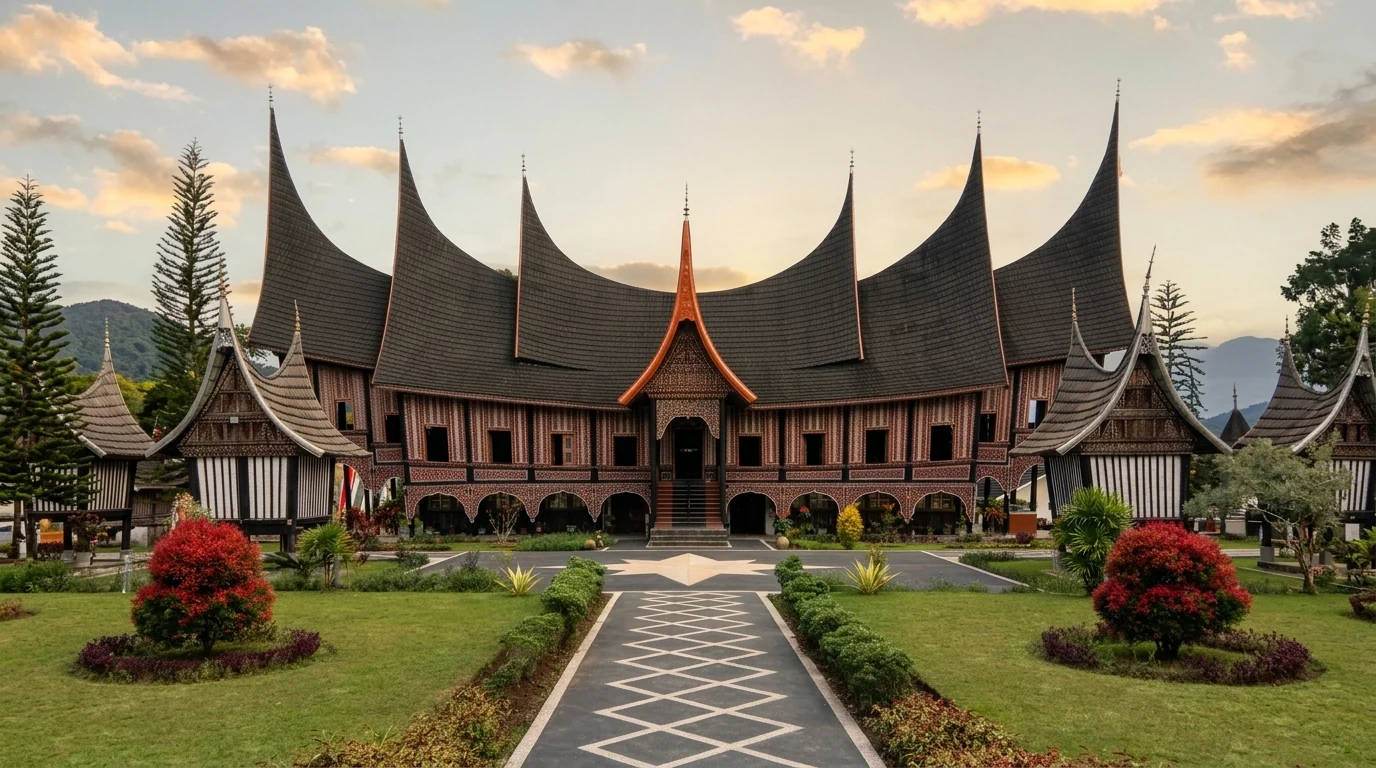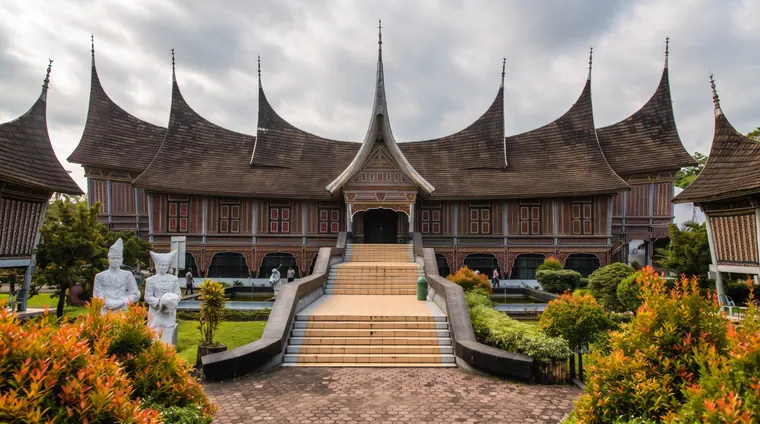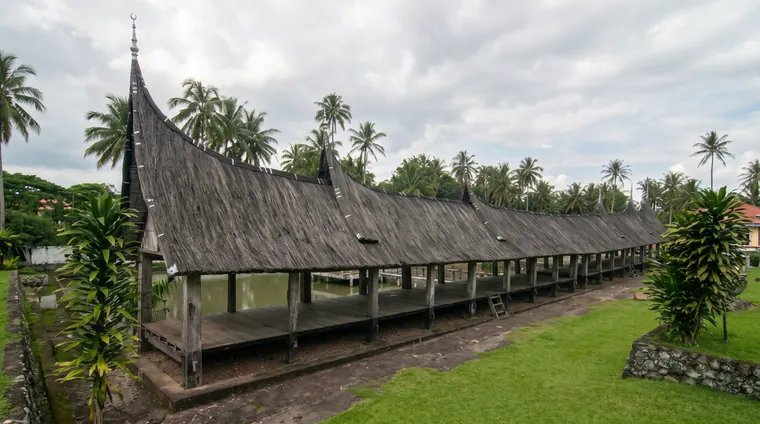
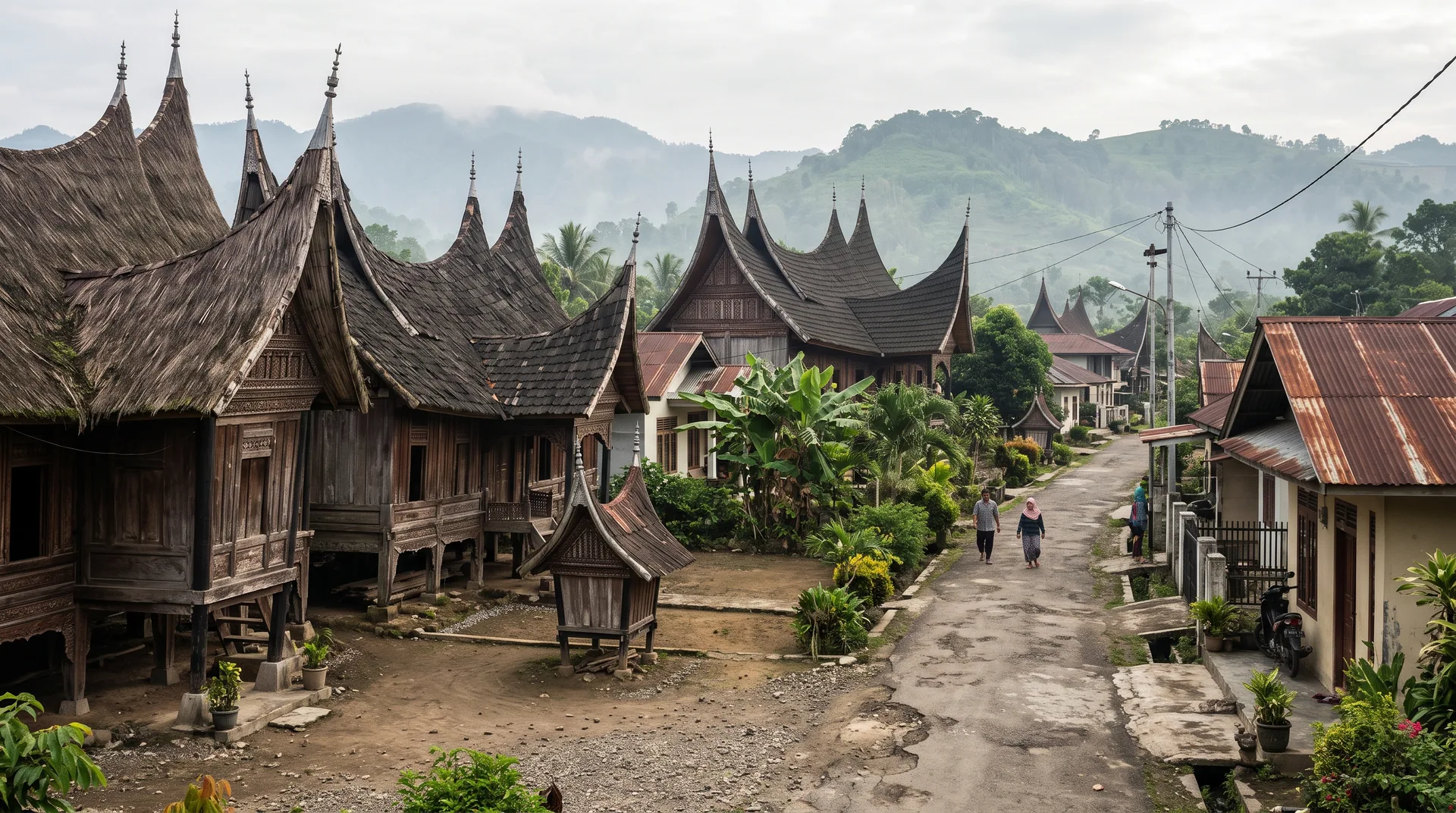
Saribu Rumah Gadang is a heritage settlement in Nagari Koto Baru, Sungai Pagu, South Solok Regency (Solok Selatan), West Sumatra. Its main attraction is not one famous traditional house. It is the concentration of Rumah Gadang—Minangkabau traditional houses—within a village where community life continues around them.
This distinction matters when deciding whether to travel to South Solok. You can see Rumah Gadang elsewhere in West Sumatra, including on shorter trips around Tanah Datar. Saribu Rumah Gadang is worth considering when you want to see how a group of traditional houses relates to an inhabited settlement, and when you have enough time for the road journey.
Is Saribu Rumah Gadang worth visiting? Yes for travelers with a strong interest in architecture and Minangkabau heritage; not necessarily for a short first-time itinerary based around Padang and Bukittinggi. This guide helps you decide which kind of visit is realistic, how to approach the route, and whether to stay overnight.
What Is Saribu Rumah Gadang?
The name is commonly translated as a thousand Rumah Gadang. It is the name of the heritage area, not confirmation that exactly 1,000 houses stand there today.
Indonesia’s official tourism-village directory places Desa Wisata Saribu Rumah Gadang in Koto Baru, Sungai Pagu, South Solok. Rather than an isolated palace, the attraction is a group of traditional houses within a broader settlement.
The houses do not all have the same history, condition or current use. Some buildings have undergone conservation, while the village also includes ordinary homes and community spaces. Do not imagine a settlement frozen in the past, and do not assume that every traditional house is open to visitors.
The value is seeing architecture at the scale of a neighbourhood, including the relationship between houses, lanes and local life.
Where Is Saribu Rumah Gadang in West Sumatra?
South Solok Regency is different from Solok Regency and Solok City. The names are similar, but they describe different administrative areas and travel destinations.
For a first-time visitor, the basic mental map is:
- Padang: the main coastal city and a common starting point for a West Sumatra trip.
- Solok highlands / Alahan Panjang: an area that can form part of a southward journey, depending on your chosen route.
- South Solok / Sungai Pagu: the regency and district containing Saribu Rumah Gadang, in the wider Muara Labuh area.
- Bukittinggi and Tanah Datar: destinations on the better-known central-highland circuit, not immediate neighbours of Saribu Rumah Gadang.
The heritage area involves a substantial journey from Padang. A 2020 government report described a road distance of 147 km from central Padang, but that historical figure should not be treated as a current door-to-door travel estimate. Your starting point, route, weather and road conditions affect the journey.
The main planning consequence is clear: South Solok is not a quick detour from Bukittinggi, Pagaruyung or Pariangan. It deserves its own travel allowance.
Why Is the Area Culturally Important?
A single Rumah Gadang can help you understand a curved gonjong roof, timber construction, carved decoration or the building’s traditional relationship with family and adat (customary life). Saribu Rumah Gadang gives you another perspective: how multiple houses stand within a settlement.
The area is also part of an ongoing heritage-preservation story. The Ministry of Public Works reported in April 2021 that a revitalization project for the Saribu Rumah Gadang area had been completed. It involved the restoration of traditional houses and improvements to the surrounding public environment.
That conservation work should prevent one common misconception. This is not an untouched architectural time capsule. The buildings and their surroundings have histories of use, repair and change.
For an explanation of gonjong, rangkiang, house forms and cultural meanings, use Calvoya’s Rumah Gadang architecture guide. This article focuses on visiting the settlement, not repeating a general guide to traditional architecture.
What Will You Actually See?
The main experience is moving through the accessible village area and seeing traditional houses as part of a lived landscape. Depending on local access and any arranged interpretation, a visit may involve:
- House exteriors: roof shapes, wooden façades and differences between buildings.
- Village lanes and compounds: the spatial relationship between traditional houses and neighbouring structures.
- Signs of conservation: repaired or restored elements alongside later changes.
- Local interpretation: information about individual houses or community history when a suitable local host or guide has been arranged.
The tourism-village directory also lists cultural activities and homestays. Those listings show the kinds of offerings associated with the destination; they do not confirm that a particular performance, guide, room or house interior will be available on your travel date.
Do not count on interior access without permission from the relevant family or operator. If a specific performance or hosted experience is central to your visit, obtain a confirmed arrangement before departing.
Saribu Rumah Gadang vs Pagaruyung Palace
These are different ways of encountering Minangkabau architecture.
Istano Basa Pagaruyung, near Batusangkar in Tanah Datar, is a reconstructed palace building used as a museum. It offers a defined visitor site where palace architecture and cultural interpretation are the primary focus. Indonesia’s national museum registry identifies it as a museum and describes its reconstruction history.
Saribu Rumah Gadang is a settlement with multiple traditional houses, public lanes and resident activity. Its distinctive value is understanding the buildings in relation to one another and to the community around them.
If you have limited time on the Bukittinggi–Tanah Datar route, Pagaruyung is generally easier to incorporate. If the larger settlement context is your reason to travel, Saribu Rumah Gadang offers a different experience that requires more commitment.
Neither is a substitute for the other. Calvoya’s Pagaruyung Palace guide covers the palace itself.
Saribu Rumah Gadang vs Pariangan Village
Pariangan, in Tanah Datar, is also an inhabited Minangkabau settlement with older buildings and cultural significance. It can fit into a journey based around Bukittinggi and Pagaruyung.
Saribu Rumah Gadang is in South Solok. Its concentration of traditional houses is the specific reason to make the longer journey.
The difference should not be framed as one village being more authentic than the other. Both are inhabited places, not unrestricted outdoor museums. For most travelers, the deciding factor is which village experience fits their interests and travel route.
For a shorter cultural excursion, see the Pariangan Village guide and Tanah Datar day-trip guide.
Is It Worth Traveling Into South Solok?
The strongest reason to go is not that you have never photographed a Rumah Gadang. It is that you want to spend time in a place where numerous traditional houses form part of the same settlement.
Saribu Rumah Gadang is particularly suitable for:
- travelers interested in vernacular architecture or the history of Minangkabau communities;
- photographers who value buildings in their village context, while respecting residents’ privacy;
- visitors who enjoy locally guided cultural interpretation;
- repeat visitors looking beyond the common Padang–Bukittinggi–Tanah Datar circuit;
- travelers already planning a longer South Solok journey.
It is a weaker fit when you have just a few days in West Sumatra, dislike long road journeys, or simply want a quick photograph of a traditional roof. In those cases, cultural stops around Tanah Datar may provide a more practical introduction.
Day Trip from Padang or Overnight in South Solok?
A same-day journey from Padang and back can be considered, but the road travel in both directions will occupy a substantial part of the day. Do not treat it as an easy half-day excursion.
A return trip is more reasonable when you can start early, have a reliable transport plan, and want a focused visit rather than several arranged cultural activities.
An overnight in the South Solok area can make the itinerary more comfortable if Saribu Rumah Gadang is a major reason for traveling. It gives you the option to separate the road journey from a slower village visit and reduces the pressure to return to Padang the same evening.
That is a planning recommendation, not a promise about accommodation quality or availability. Although homestays appear in official tourism listings, confirm the specific property, location, facilities and booking arrangements before relying on one.
How Long Should You Allow for the Village Visit?
Treat the journey to South Solok and time on site as two separate commitments.
A brief village orientation may be enough to appreciate several house exteriors. It will not provide the same experience as a hosted visit with explanations about family buildings, conservation or local history.
If you are arranging interpretation, photography or a cultural program, let the confirmed activity determine the time required. Avoid publishing a precise minimum visit length when access and arrangements vary.
The goal is to leave enough time to observe the settlement without turning the visit into a rushed photo stop after a long drive.
How to Build Saribu Rumah Gadang Into a Longer Route
Pattern 1 — Padang → Solok Highlands → South Solok
A route through parts of the Solok highlands may fit a journey toward South Solok, depending on the roads selected. Alahan Panjang is a possible route component, not a compulsory attraction or a guaranteed shortcut.
If Saribu Rumah Gadang is your main objective, avoid automatically filling the day with Twin Lakes viewpoints and long coffee stops before reaching South Solok. Decide where to stay and preserve time for the village.
Pattern 2 — A South Solok Extension After the Central Highlands
Travelers who begin around Bukittinggi, Pariangan or Pagaruyung can add South Solok later, but it should be treated as a separate road stage—not another nearby Tanah Datar stop.
This works better for longer itineraries. Reconsider hotel locations and the order of destinations rather than repeatedly returning to the same base.
Pattern 3 — An Overland Route Already Passing Through South Solok
If the wider journey already takes you through Sungai Pagu or the Muara Labuh area, Saribu Rumah Gadang may require less additional travel than a dedicated return journey from Padang.
Still verify the actual road connections and where you will stay afterward. A plausible line on a map does not establish driving time or current road suitability.
For general guidance on fitting travel days together, see How to Plan a West Sumatra Itinerary Without Rushing It.
How to Get There
For international travelers making a multi-stop heritage journey, a private vehicle with a driver can be a practical choice. It allows you to coordinate the village visit, accommodation and any onward travel without depending on unconfirmed local connections.
Public transport options should be checked afresh before departure. Do not assume a service runs daily, that it reaches the exact part of Koto Baru you want to visit, or that a suitable return connection will be available.
If you travel independently, plan the final connection to the village and your departure from the area before leaving Padang or Solok. Calvoya’s Getting Around West Sumatra guide explains the broader trade-offs between drivers, rental vehicles and public transport.
Visiting an Inhabited Heritage Settlement Respectfully
A heritage village remains a place where people live and use buildings for their own purposes. Its cultural value does not give visitors unrestricted access.
- Stay on publicly accessible lanes or paths indicated by your host.
- Ask before entering a house, courtyard or private compound.
- Request permission before photographing residents, especially children or domestic activities.
- Do not assume an open door means visitors are welcome inside.
- Dress modestly and respect prayer, family and community activities.
- Follow your guide or host’s instructions about where photographs and visits are appropriate.
These precautions are part of appreciating the place, not obstacles to seeing it. For wider context, read Calvoya’s Minangkabau culture guide.
Practical Planning Notes
Use the exact location. Search for Saribu Rumah Gadang, Koto Baru, Sungai Pagu, Solok Selatan rather than Solok alone.
Confirm road conditions. Ask about the route shortly before departure, especially after heavy rain. Do not treat a historical driving estimate as a guaranteed schedule.
Confirm what can be visited. Tourist-directory entries do not mean every house interior, arts activity or host is available without notice.
Check accommodation independently. Verify where you will sleep, what is included and how to reach the property.
Keep the day selective. A dedicated South Solok visit does not combine naturally with a full day of Bukittinggi or Tanah Datar sightseeing.
Should You Add Saribu Rumah Gadang to Your Itinerary?
Add it when the concentration of traditional houses within a living Minangkabau settlement is important enough to justify a separate South Solok journey. The experience is different from visiting the reconstructed Pagaruyung Palace or stopping briefly in Pariangan.
If your first West Sumatra trip is short, you can still learn a great deal about Rumah Gadang on the more accessible central-highland circuit. South Solok is better treated as an intentional extension than a compulsory stop.
For a journey built around the heritage settlement rather than an unrelated standard package, Calvoya’s Journey Designer is an appropriate place to outline travel dates, overnight preferences and cultural interests. Road arrangements and local access should then be confirmed before the itinerary is finalized.
Saribu Rumah Gadang is worth the effort when you come to experience a settlement, not simply to collect another photograph of a pointed roof.